






Definition & Meaning
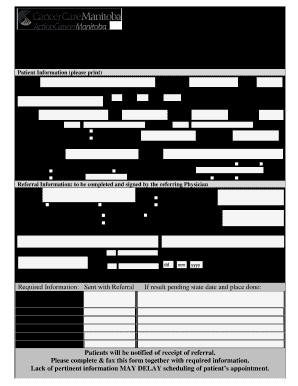
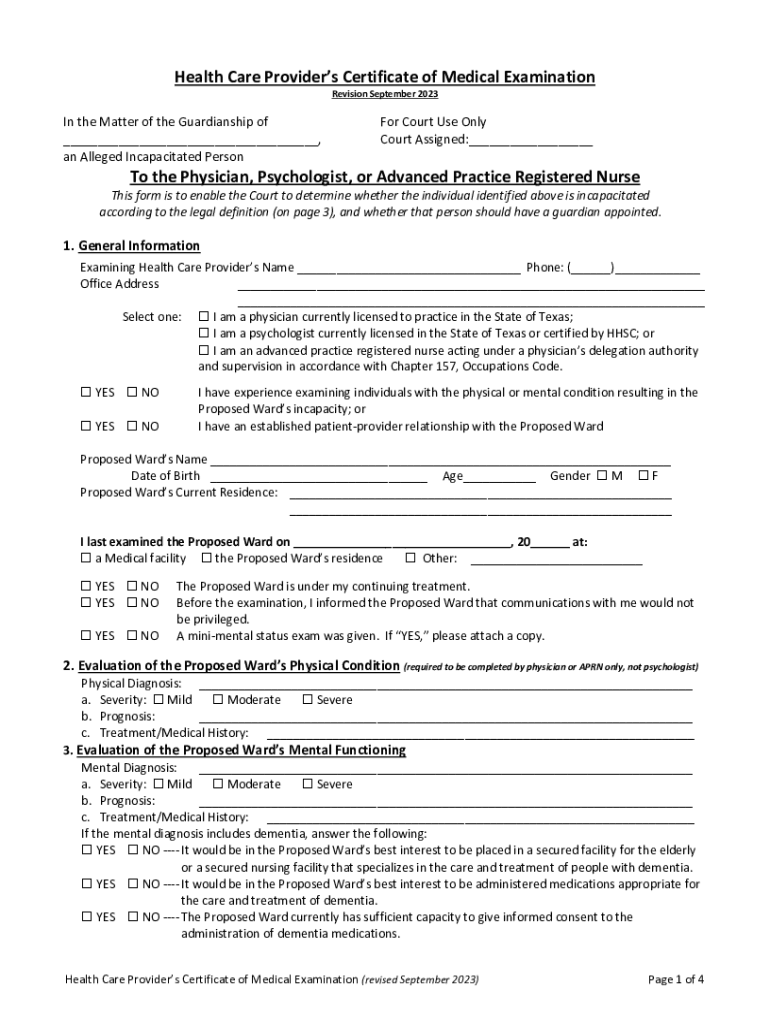
The Health Care Provider's Certificate of Medical Examination is a crucial document used to evaluate whether an individual is incapacitated and requires guardianship. It serves as a comprehensive assessment tool that allows health care providers to deliver an expert analysis of a patient's physical and mental state. The form is designed to capture detailed information on the individual's cognitive abilities, decision-making capacity, and any existing developmental disabilities. This template is particularly significant in Texas, where it helps define legal incapacity under state law, guiding decisions related to personal and financial guardianship.
How to Use the Health Care Provider's Certificate of Medical Examination
Health care providers use this form to communicate their findings about a patient's health status comprehensively. When filling out the form, providers must assess and document various facets of the person's condition, including general health, mental competence, and any disabilities affecting decision-making. Additionally, the form allows providers to recommend the most suitable care placement options for the patient. Upon completion, the form should be submitted to the relevant judicial or legal authorities overseeing guardianship cases, ensuring that decisions are informed by the most accurate medical assessment available.
Steps to Complete the Health Care Provider's Certificate of Medical Examination
-
Gather Necessary Information: Before beginning the form, the provider should have access to the patient’s medical history, current health records, and any previous cognitive or developmental assessments.
-
General Information Section: Start by filling in the patient's personal details, including name, date of birth, and relevant contact information.
-
Evaluate Physical and Mental Conditions: Carefully assess the patient's physical health, mental stability, and cognitive deficits. Note any conditions that might impact the patient's day-to-day decision-making abilities.
-
Document Cognitive Abilities: Use this section to provide insights into the patient's ability to comprehend, process information, and make responsible decisions.
-
Assess Developmental Disabilities: Document any developmental disabilities and their potential impact on the patient's independence and decision-making skills.
-
Recommendation for Care Placement: Based upon the assessment, recommend appropriate care arrangements for the patient. This includes decisions about whether the patient requires supervised care or can continue living independently.
-
Finalize and Submit: Review the entire form for accuracy, sign it, and submit it to the appropriate legal or judicial entities handling guardianship cases.
Key Elements of the Health Care Provider's Certificate of Medical Examination
- Patient’s Personal Information: Captures essential identification details of the individual being assessed.
- Health Evaluation: Documents the patient’s current physical and mental health conditions.
- Cognitive Assessment: Evaluates the individual’s understanding, memory, and reasoning capabilities.
- Decision-Making Abilities: Assesses the patient’s capacity to make informed and responsible choices.
- Care Recommendations: Provides a professional judgment on suitable living arrangements based on the patient’s health status.
Who Typically Uses the Health Care Provider's Certificate of Medical Examination
Primarily, this document is utilized by health care professionals such as physicians, psychiatrists, and psychologists involved in evaluating a person's capacity for independent living. Furthermore, legal entities, such as family law attorneys and court-appointed guardians, rely on this certificate to make informed decisions about guardianship and care for individuals deemed incapacitated.


Important Terms Related to the Health Care Provider's Certificate of Medical Examination
- Incapacity: The legal term describing an individual’s inability to manage personal and financial affairs due to mental or physical limitations.
- Guardianship: A legal relationship wherein a court assigns an individual the responsibility to care for another person deemed unable to manage their own affairs.
- Cognitive Deficits: Refers to impairments in mental functions such as memory, attention, and decision-making skills.
Legal Use of the Health Care Provider's Certificate of Medical Examination
This form plays an essential role within the legal framework of guardianship cases. In Texas, the health care provider’s assessment within this certificate significantly influences court decisions regarding the assignment of a guardian. By outlining the patient's incapacity in precise medical terms, this form provides legal professionals with a robust foundation to argue for or against the necessity of guardianship. Additionally, it adheres to Texas law, which defines terms and conditions under which an individual is deemed incapacitated.
State-Specific Rules for the Health Care Provider's Certificate of Medical Examination
In Texas, specific regulations govern how this certificate is used in legal proceedings. Health care providers must ensure that the form complies with Texas laws defining legal incapacity. Furthermore, providers should be familiar with any state-specific procedural requirements for submitting the form to judicial bodies handling guardianship matters. Understanding these regulations ensures the form's legitimacy and its role in legal proceedings is upheld, reinforcing the fair treatment and protection of potentially incapacitated individuals.