




01. Edit your form online
Type text, add images, blackout confidential details, add comments, highlights and more.

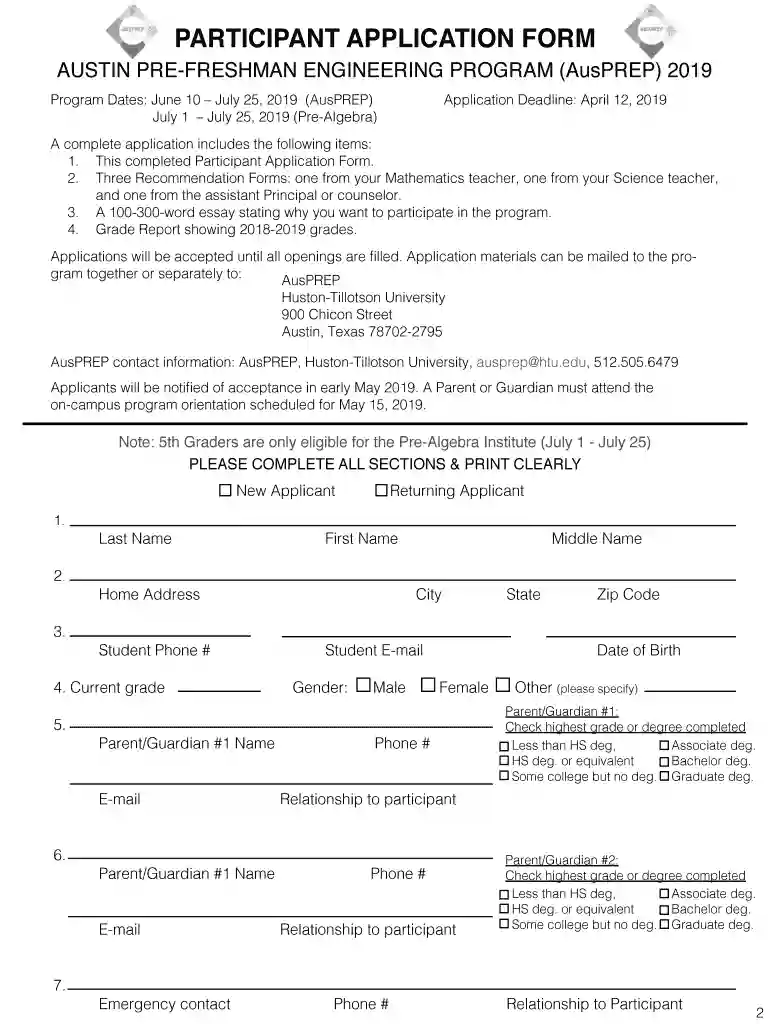
Type text, add images, blackout confidential details, add comments, highlights and more.

Draw your signature, type it, upload its image, or use your mobile device as a signature pad.

Send it via email, link, or fax. You can also download it, export it or print it out.
The phrase "Application deadline is April 12, 2019, or until all openings are filled" defines a specific period by which applications must be submitted. This implies a fixed date combined with a conditional clause where the timeframe may close earlier if the available spots are filled. This structure is commonly used for programs, courses, or positions with limited capacity, such as academic admissions or job postings, indicating both a strict date and potential variability depending on interest levels and responses.
When presented with an application deadline like April 12, 2019, it's crucial to plan your submission timetable carefully. Always aim to complete and submit your application well before the expiration date to secure a spot. Consider preparing all necessary materials, including any supporting documents, recommendations, or essays, well in advance. This approach accounts for unexpected delays or the possibility of the application closing early due to high demand.
Legally, an application deadline like April 12, 2019, or until all openings are filled, establishes a binding timeline that must be followed by applicants. It obligates the receiving institution to adhere to the same timeline and conditions for fairness and consistency. Failure to comply can risk being disqualified or not considered for the opportunity.
Missing the application deadline or failing to fulfill submission requirements can result in disqualification. For academic and job applications, non-compliance generally means that your opportunity to participate or be considered for the position is forfeited.
Eligibility often includes requirements related to age, residency, educational background, or professional experience. Ensuring that you meet these criteria before applying is essential to avoid wasted effort and resources.


While the deadline provided is consistent, specific criteria and documentation requirements may vary by state. This is particularly true for residency-based applications or those involving state-specific regulations and qualifications.
We've got more versions of the Application deadline is April 12, 2019, or until all openings are filled form. Select the right Application deadline is April 12, 2019, or until all openings are filled version from the list and start editing it straight away!
At DocHub, your data security is our priority. We follow HIPAA, SOC2, GDPR, and other standards, so you can work on your documents with confidence.
The SUNY application must be filed by October 1 to receive priority consideration for the spring semester. November 1: Supplemental Materials Deadline AllRead more
applications until October 1, 2019, at 12:00 p.m. Eastern Time with April 1, 2019, start dates may be filed no earlier than January 1, 2019 at 12:00:00.000 a


