






Definition and Purpose of the Handicap Parking Form (pdf)
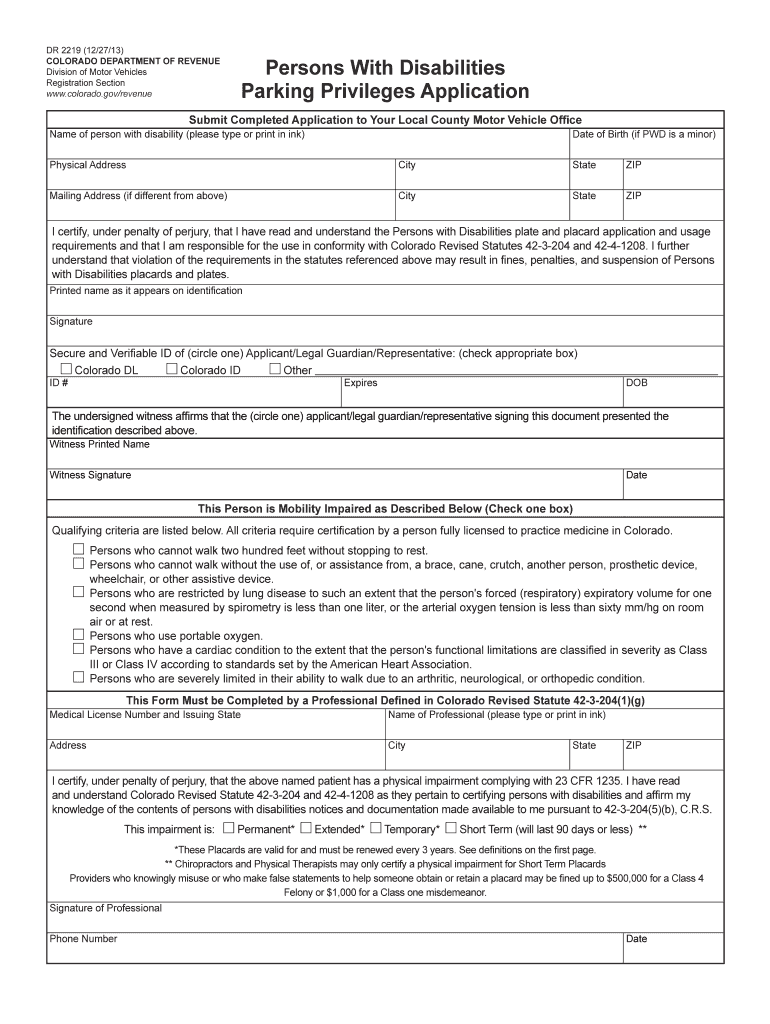
The Handicap Parking Form (pdf) is a crucial document for individuals seeking parking privileges designated for persons with disabilities. This form allows applicants to apply for disability placards or license plates, enabling them to access designated parking spaces. These accommodations ensure accessible parking close to destinations, reducing mobility challenges for individuals with disabilities. The form encapsulates essential information about eligibility requirements and is structured to comply with state-specific laws and regulations.
Key Components
- Applicant Information: Includes personal details such as name, address, contact information, and vehicle details if applying for a license plate.
- Medical Certification: A section where a licensed medical professional validates the applicant's disability status.
- Type of Permit: Applicants can specify whether they are applying for a permanent, extended, temporary, or short-term placard.
Practical Scenarios
For example, an individual with a temporary mobility impairment due to surgery can use the form to apply for a temporary placard. In contrast, someone with a permanent disability might apply for a permanent placard or license plate.
Steps to Complete the Handicap Parking Form (pdf)
Filling out the Handicap Parking Form requires careful attention to detail. Here is a step-by-step guide to help navigate this process:
- Gather Personal Information: Start by collecting personal identification details such as Social Security number, driver’s license, or state ID number.
- Consult with a Medical Professional: Schedule an appointment with a licensed physician to complete the medical certification section.
- Complete the Applicant Section: Fill in all required fields with accurate information, ensuring no sections are left incomplete.
- Review and Sign: Double-check completed sections for accuracy and sign the form where necessary.
- Submit the Form: Depending on state regulations, submit the application via mail, online, or in person at the designated agency.
Common Pitfalls
- Failing to provide necessary documentation, such as evidence of identity and residency.
- Incomplete or incorrect medical certification, leading to application denial.
Obtaining the Handicap Parking Form (pdf)
Acquiring the Handicap Parking Form is a straightforward process, facilitated by the accessibility of digital resources.
Methods to Obtain
- State DMV Websites: Most state departments of motor vehicles provide downloadable PDFs of the form.
- In-Person Visits: Forms can be obtained directly from DMV offices or equivalent agencies.
- Healthcare Providers: Some medical offices may offer the form as a service to patients who require them.
Variations Across States
While the forms are generally similar, slight differences may exist due to specific state laws. Always ensure the form aligns with the particular requirements of your state of residence, which might involve additional documentation or procedures.
Eligibility Criteria for Handicap Parking
Determining eligibility for receiving a disability parking placard depends on specific criteria that classify various disabilities.


Common Eligibility Conditions
- Physical Disabilities: Conditions affecting the ability to walk without the aid of assistive devices.
- Vision Impairment: Severe visual impairments that qualify under state-specific criteria.
- Cardiopulmonary Conditions: Chronic heart or lung diseases limiting mobility.
Medical Professional's Role
A licensed physician must certify the disability, outlining the medical condition's nature and expected duration to justify the need for accessible parking privileges.
Legal Use of the Handicap Parking Form (pdf)
Proper application and use of the Handicap Parking Form ensure compliance with legal standards and avoid potential misuse or penalties.
Compliance Requirements
- Accurate Representation: Ensure all information, particularly medical certification, accurately represents the applicant's condition.
- Usage Terms: Adhere strictly to designated parking privileges—avoiding use of placards beyond their expiration date.
- Renewal: Stay mindful of renewal dates to avoid lapses in permit validity.
Penalties
Misuse of disability placards, such as using another person’s placard or providing false information, can incur significant penalties, including fines or revocation of parking privileges.
Key Elements of the Handicap Parking Form
The structure of the Handicap Parking Form is intended to capture all necessary information efficiently.
Core Sections
- Applicant Identification: To confirm the identity and residency of the applicant.
- Medical Certification: Offers medical validation of the disability claim.
- Permit Details: Specifies the type and validity period of the requested disability placard or plate.
Additional Documentation
- Proof of Identity: A copy of a driver’s license or state ID is typically required.
- Vehicle Registration: For applications involving license plates.
State-Specific Rules for Handicap Parking
Each state in the U.S. may have unique regulations regarding the issuance and use of handicap parking permits.
Variations in Requirements
- Documentation: Some states might require additional medical documentation.
- Validity Periods: Timeframes for temporary permits can vary significantly.
Accessing State Resources
Consulting the local DMV or equivalent authority’s website can provide detailed insights into state-specific requirements and updated information on the application process.
Importance of Using the Handicap Parking Form (pdf)
Utilizing the Handicap Parking Form ensures individuals with disabilities receive necessary accommodations and uphold a legitimate credential for accessible parking.
Benefits
- Access to Designated Parking: Enables convenient access to public and private facilities.
- Legal Protection: Upholds the rights protected under national and state disability regulations.
Understanding and properly executing the use of this form assures equitable treatment and accessibility for individuals with disabilities, supporting their mobility and independence.