




01. Edit your form online
Type text, add images, blackout confidential details, add comments, highlights and more.

Type text, add images, blackout confidential details, add comments, highlights and more.

Draw your signature, type it, upload its image, or use your mobile device as a signature pad.

Send it via email, link, or fax. You can also download it, export it or print it out.
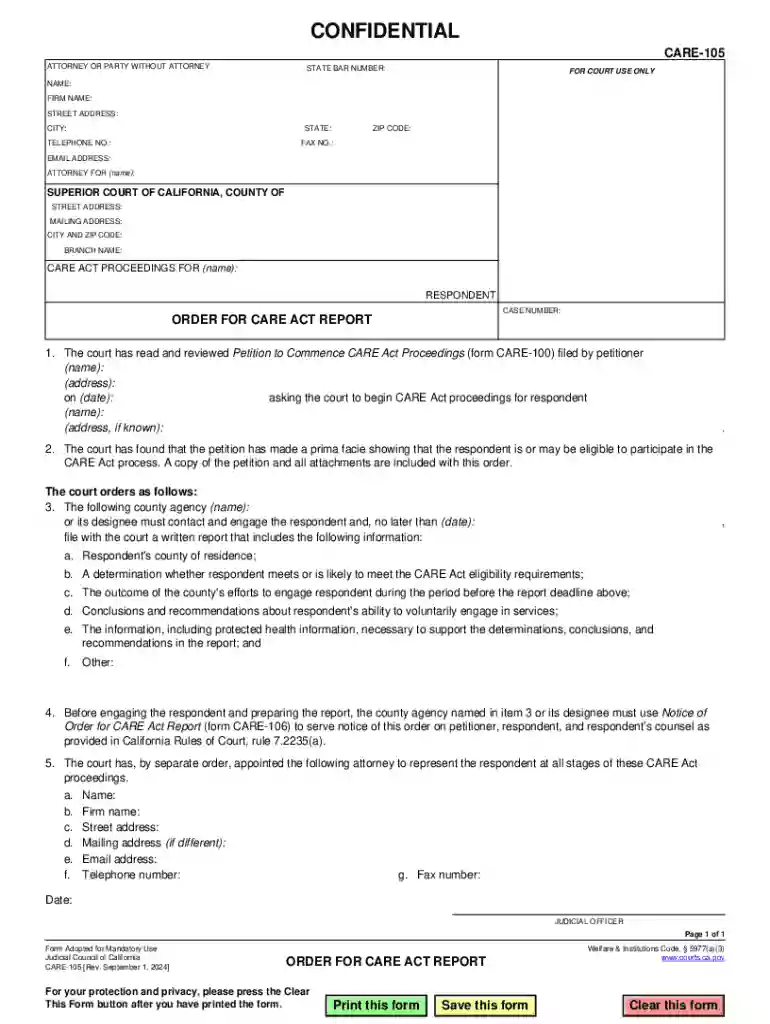
The CARE Act proceedings are legal processes established to evaluate the eligibility and need for participation in programs designed to assist individuals under the Community Assistance, Recovery, and Empowerment Act. They involve detailed assessments managed by county agencies to ensure that potential beneficiaries receive the necessary support. This form is primarily used in California and serves as a formal directive to initiate a comprehensive review of a respondent's circumstances and requirements.
To effectively utilize the CARE Act proceedings form, it is essential to follow a structured approach:
Assessment Initiation: Initiate the process by submitting a formal request for assessment to the relevant county agency. This can involve direct submission via mail, email, or an online portal provided by the agency.
Documentation Preparation: Gather all necessary documents that reflect the respondent's current situation. This includes personal identification, financial records, and medical history if applicable.
Agency Review: Once submitted, the agency reviews the documentation to determine eligibility. This may involve interviews or further documentation requests to ensure all aspects are covered.
Completing the form for CARE Act proceedings involves several steps:
Personal Information: Fill out the respondent's personal details, including full name, address, and contact information.
Background Information: Provide detailed background information that may influence eligibility, such as employment status, income level, and family dynamics.
Legal Representation: If the respondent has legal representation, include the attorney's contact information and ensure an attorney-client relationship is established.
Supporting Documents: Attach all necessary supporting documents that substantiate the claims made within the form.
Final Review: Review the completed form for accuracy before submission.
CARE Act proceedings are crucial for those seeking assistance under the act due to their structured approach to assessing eligibility and need. This process helps ensure that resources are appropriately allocated to those who qualify, fostering equitable access to necessary support services. Engaging in these proceedings can result in participants receiving tailored assistance aimed at overcoming specific hurdles they face.
This form is typically used by:
Individuals in Need: Those who seek formal evaluation to determine their eligibility for support under the CARE Act.
County Agencies: Agencies responsible for conducting assessments and delivering services to eligible individuals.
Legal Representatives: Attorneys who represent respondents, ensuring their client's rights and needs are adequately considered during the proceedings.


The form includes several critical sections:
Respondent Information: Captures key personal data necessary for identification and assessment purposes.
Assessment Criteria: Details specific criteria used to evaluate eligibility, including income, health status, and existing support systems.
Notification Procedures: Outlines how all involved parties will be informed about proceedings and outcomes.
Attorney Details: Information about appointed or hired attorneys represents the respondent during the proceeding.
The CARE Act proceedings form serves as a lawful document that initiates the evaluation process under state regulations. It ensures transparency and accountability in assessing needs and eligibility, making it a fundamental aspect of the legal framework supporting individuals under the CARE Act.
Understanding the terminology used in the CARE Act proceedings form is crucial:
Utilizing this form can involve various scenarios:
County-Initiated Assessments: When a county agency identifies potential candidates for CARE Act services and initiates assessments using the form.
Direct Applications: Individuals directly applying for assessment to gain access to CARE Act services, often with the assistance of their attorney.
In each case, accurate and complete documentation is vital to ensure fair and timely evaluation.
We've got more versions of the CARE ACT PROCEEDINGS FOR (name): form. Select the right CARE ACT PROCEEDINGS FOR (name): version from the list and start editing it straight away!
At DocHub, your data security is our priority. We follow HIPAA, SOC2, GDPR, and other standards, so you can work on your documents with confidence.




Aug 20, 2025 The responsibility of a DSS to conduct an assessment of a report of abuse, neglect, or dependency is addressed in G.S. 7B-302. An assessment isRead more
CARE ACT PROCEEDINGS FOR (name): RESPONDENT FOR COURT 1. I (enter your name here): am asking the court to find that (name of the person you want services for


