Definition and Meaning of the Appellants Civil Appeal Mediation Statement
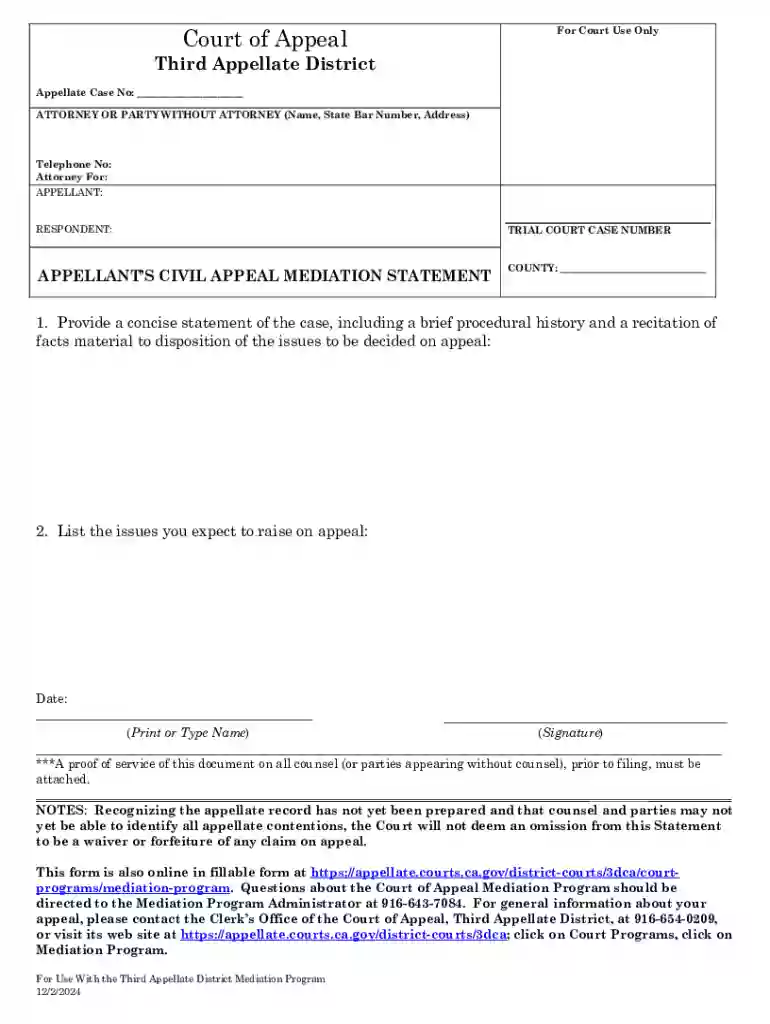
The "Appellants Civil Appeal Mediation Statement" is a legal document used in the Third Appellate District Court in the United States during civil appeals. It serves as a mediation statement that aims to provide a comprehensive overview of the appeal case. The appellant must present a concise case statement, elaborate on the procedural history, and specify the issues to be raised on appeal. The document plays a critical role in laying out the foundational arguments and background of the appeal, facilitating the mediation process between disputing parties.
Key Components of the Statement
- Concise Case Statement: The appellant outlines the fundamental aspects of the case.
- Procedural History: Provides a chronological account of the case's progression through the legal system.
- Issues to be Raised: Identifies the specific legal questions or matters for the appellate court to address.
How to Use the Appellants Civil Appeal Mediation Statement
Using the Appellants Civil Appeal Mediation Statement requires careful preparation and understanding of the requirements. The form is intended to streamline the mediation process by delivering a clear and precise presentation of the case's critical elements.
- Gather Case Information: Assemble all relevant documents and details related to your appeal.
- Draft the Statement: Write a clear, concise case statement and include necessary legal arguments.
- Identify Key Issues: List the legal issues intended for resolution during the appeal.
- Submit for Mediation: Use the form during your appeal mediation session to aid in negotiations.
Practical Tips
- Time Sensitivity: Complete and submit the statement promptly to align with mediation schedules.
- Clarity and Precision: Use precise language to avoid ambiguity in your case description and issues.
Steps to Complete the Appellants Civil Appeal Mediation Statement
Correctly filling out the Appellants Civil Appeal Mediation Statement ensures that all relevant information is communicated effectively for mediation.
- Review Court Instructions: Understand all guidelines provided by the Third Appellate District Court.
- Complete Each Section Thoroughly: Enter your case statement, procedural history, and raised issues.
- Proof and Edit: Carefully review for accuracy and clarity; ensure all information is complete.
- Proof of Service: Follow instructions for submitting proof that all involved parties have received necessary documents.
Detailed Steps
- Gathering Data: Compile necessary information such as case numbers and involved parties.
- Documentation: Assemble supporting evidence to substantiate the claims and history provided.
Why Use the Appellants Civil Appeal Mediation Statement
The Appellants Civil Appeal Mediation Statement is pivotal for structuring the mediation process in civil appeals, primarily because it promotes efficiency and clarity.
- Facilitates Discussion: Provides a structured overview of the case, ensuring all parties are informed.
- Promotes Fair Resolution: Helps to identify areas of agreement and contention early in the process.
- Streamlines Legal Process: Reduces the time needed to understand the case's background during mediation.
Benefits
- Effective Communication: Ensures clear alignment between parties.
- Focus on Critical Issues: Highlights major legal questions, focusing discussions.
Legal Use of the Appellants Civil Appeal Mediation Statement
The legal utility of the Appellants Civil Appeal Mediation Statement lies in its formal application within the court system to bolster the mediation process.
- Mediation Preparation: Assists in preparing both legal teams and the court for the mediation process.
- Legal Compliance: Ensures adherence to procedural requirements dictated by appellate courts.
Compliance and Requirements
- Mandatory Filing: Adhering to court protocols regarding form submission timelines.
- Accuracy in Presentation: Legal ramifications may arise from incorrect data presentation; accuracy is critical.
State-Specific Rules for the Appellants Civil Appeal Mediation Statement
While this document is generally used under the jurisdiction of the Third Appellate District Court, state-specific regulations may affect its completion and use.
- Local Court Rules: Varying rules about submission deadlines and formats exist, depending on the state.
- State-Specific Procedures: Some regions may have unique provisions or exceptions impacting mediation statements.
Considerations
- Research Local Laws: Understanding local variations can prevent procedural errors.
- Consult Legal Professionals: Engage attorneys familiar with state-specific appellate court processes.
Examples of Using the Appellants Civil Appeal Mediation Statement
Real-world applications of this form highlight how it functions within the legal process to support civil appeals.
- Civil Rights Case: Efficiently outlined unresolved legal issues, facilitating a focused mediation session.
- Contract Dispute: Provided a clear narrative of procedural history, aiding judges in understanding case complexities.
Illustrative Scenarios
- Corporate Litigation: Ensured all parties were on the same page regarding complex legal proceedings.
- Family Law Appeals: Streamlined discussions by focusing on previously overlooked procedural elements.
Key Elements of the Appellants Civil Appeal Mediation Statement
Several essential components define the effectiveness and comprehensiveness of the mediation statement.
- Comprehensive Case Description: Concisely narrates the background and specifics of the appeal case.
- Detailed Procedural History: Chronologically presents the case's journey through the court system.
- Focused Legal Issues: Clearly identifies the legal questions needing resolution during the appeal.
- Proof of Service Instructions: Guides the user through the necessary steps for serving involved parties.
Main Points
- Accuracy: Ensures all information is factually correct and reflective of the case's reality.
- Clarity: Facilitates understanding across counsels, mediators, and the court.
- Completeness: Prevents remands stemming from omitted critical information.
By adhering to the guidelines and requirements within each section, the Appellants Civil Appeal Mediation Statement can effectively contribute to orchestrating a more structured and purposeful mediation process.