






Definition & Purpose of the ON-GOING TRAINING PACKET EXEMPT AGENCIES
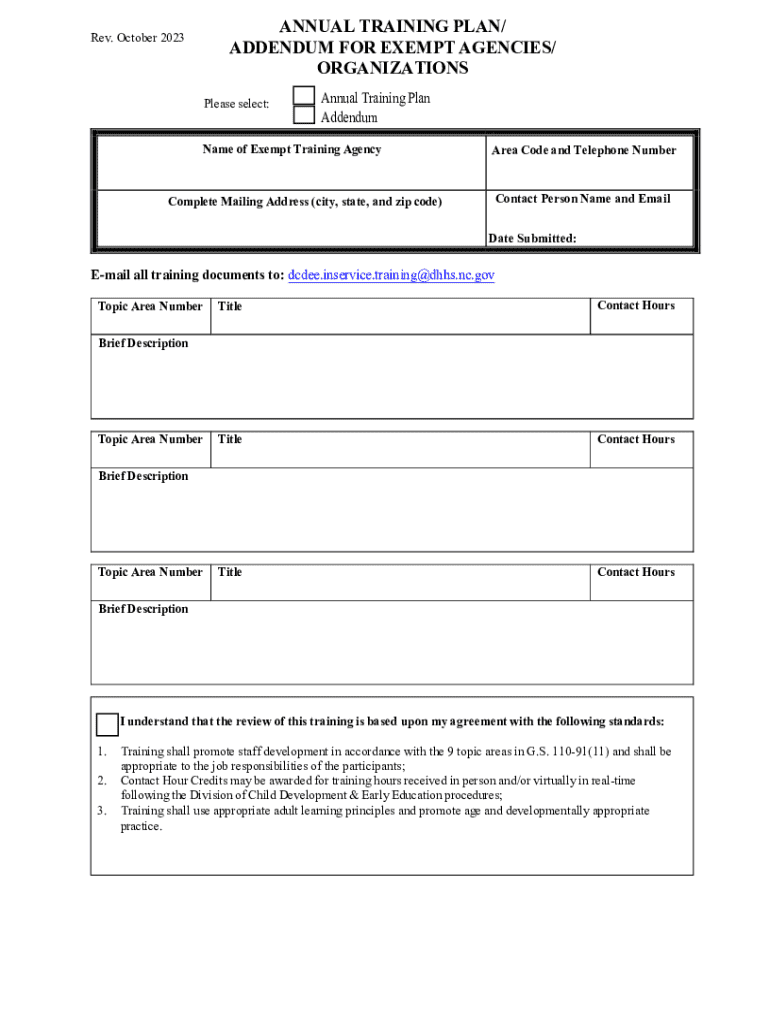
The ON-GOING TRAINING PACKET EXEMPT AGENCIES form is targeted at exempt organizations that fall under the guidance of the North Carolina Division of Child Development and Early Education (DCDEE). These agencies are typically not required to obtain prior approval for their training programs. However, they must submit an Annual Training Plan and maintain rosters of the training sessions conducted. This document serves as a guideline to outline the ongoing training responsibilities, requirements, and compliance standards that exempt agencies must adhere to in North Carolina.
Steps to Complete the ON-GOING TRAINING PACKET EXEMPT AGENCIES
- Collect Relevant Information: Gather details about the training topics, timelines, and involved personnel.
- Develop the Annual Training Plan: Include the essential components like training objectives, evaluation strategies, and record-keeping methods.
- Align with Evaluation Processes: Ensure that your training methodology and assessments meet the recommended standards.
- Submit the Training Plan: Send the completed plan to the designated DCDEE office following the outlined submission method.
- Maintain Training Rosters: Keep a detailed record of all attendees and ensure safe storage for potential audits or reviews.
Key Elements of the ON-GOING TRAINING PACKET
This form comprises several crucial components that exempt agencies need to address:
- Training Topics: Extensive detailing on the areas of focus for each training session.
- Evaluation Methods: Strategies for assessing the effectiveness of training initiatives.
- Record-Keeping: Documentation requirements for attendance, feedback, and outcomes.
- Recognized Organizations: List of agencies that are considered exempt, which can impact the nature of the training plans.
Legal Use and Compliance
Although the exempt agencies do not require prior training approval, they must comply with the submission and accountability guidelines specified by the DCDEE. Agencies must ensure their Annual Training Plan aligns with state regulations, ensuring all mandatory elements are completed. Non-compliance can result in review and possible penalties, emphasizing the need for accurate documentation and submission.
Required Documents
To complete the ON-GOING TRAINING PACKET EXEMPT AGENCIES, the following documentation is essential:
- Detailed Training Plan: Outlining objectives, topics, and methods.
- Attendance Rosters: Documenting attendees for each training event.
- Evaluation Reports: Analysis of training effectiveness and participant feedback.
- Submission Cover Page: Including agency details and contact information.
Important Terms Related to the ON-GOING TRAINING PACKET
- Exempt Agencies: Organizations not needing prior training approval but must still submit plans.
- Annual Training Plan: A formal schedule and overview of all planned training activities for the year.
- DCDEE Compliance: Ensuring all guidelines set by the North Carolina Division of Child Development and Early Education are met.
Examples of Using the ON-GOING TRAINING PACKET
Exempt agencies often use this form for the following:
- Internal Training Sessions: Regular updates on policy changes and new methodologies.
- Annual Compliance Workshops: Ensuring all staff are informed about regulatory changes.
- Skill Enhancement Programs: Specialized training to boost specific skills or knowledge areas relevant to child development.
Submission Methods and Deadlines
The form must be submitted in accordance with state timelines and through the recommended submission channels. This can include online submission through the appropriate portal or mailing the completed form to the specified address. Timely submission ensures compliance and avoids any penalties for non-fulfillment of requirements.
Eligibility Criteria for Exempt Agencies
Not every organization qualifies as an exempt agency. Eligibility is determined based on DCDEE standards, which typically include nonprofit status, specific service provisions, and historical compliance records with state-guided practices.
By following these guidelines, exempt agencies can ensure they meet all necessary requirements for the ON-GOING TRAINING PACKET and align with the state's expectations for ongoing professional development within child-focused services.