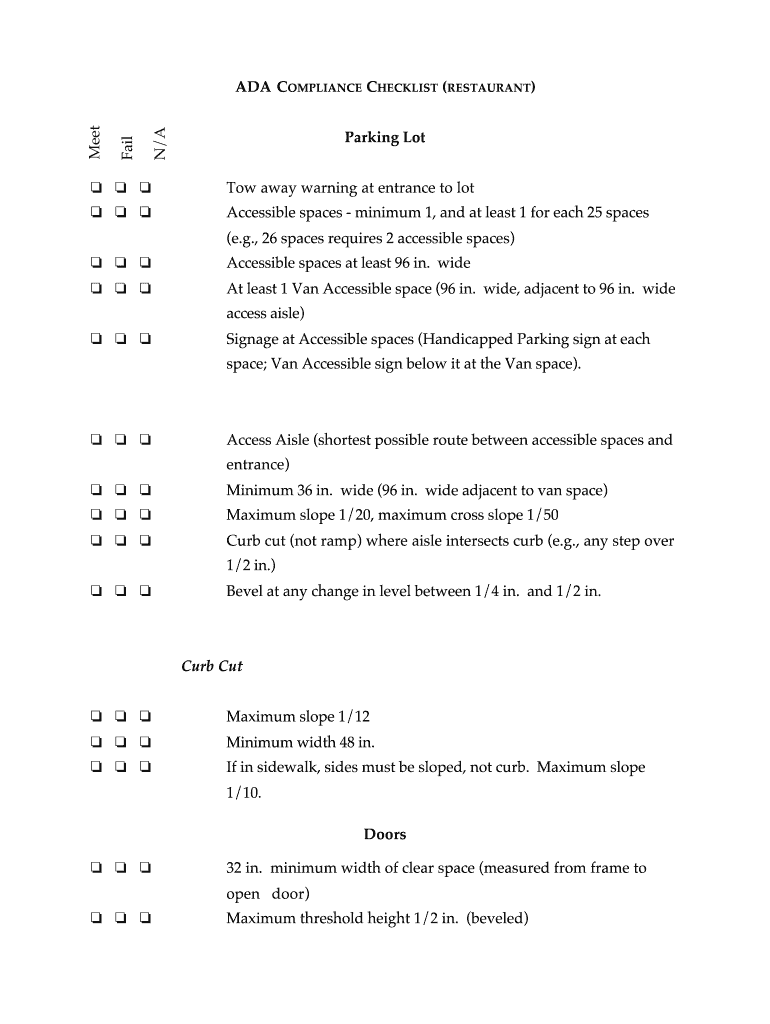







Key Elements of the ADA Compliance Checklist for Restaurants
The ADA Compliance Checklist for restaurants is a comprehensive guide ensuring that dining establishments adhere to the Americans with Disabilities Act (ADA) standards. Key elements include:
- Accessible Parking: Restaurants must have designated accessible parking spaces, ideally located near the entrance. These spaces should have appropriate signage and sufficient space for vehicle ramps.
- Entrance Accessibility: Doors should have a minimum width that allows for wheelchair access. Door handles must be usable with one hand without tight grasping.
- Restrooms: Bathrooms should include accessible stalls with grab bars and space for wheelchair maneuverability. Sink heights and soap dispensers should be within reach for individuals in wheelchairs.
- Dining Area: Tables must accommodate customers using wheelchairs with adequate knee and toe clearance. A clear path should be maintained from the entrance to the dining area.
- Service Counters: Counter heights should consider wheelchair users’ reach. Alternatively, a lower counter should be available for transactions.
Steps to Complete the ADA Compliance Checklist
Completing the ADA Compliance Checklist involves a systematic approach to assess and ensure all areas of your restaurant meet ADA standards. Follow these steps:
- Initial Assessment: Walk through your restaurant and note current facilities against the checklist standards.
- Measure and Record: Measure door widths, table heights, and counter heights. Record these to compare with ADA specifications.
- Identify Gaps: Highlight areas that fall short of compliance. This may include narrow doors, high counters, or inaccessible restrooms.
- Plan Modifications: Draft a plan for necessary modifications. Prioritize changes that will have the biggest impact on accessibility.
- Implement Changes: Renovate or redesign necessary aspects of your restaurant to meet ADA requirements.
- Re-Evaluate: After implementing changes, reassess with the checklist to ensure compliance.
- Document Compliance: Keep a record of the completed checklist and modifications made for future reference or inspections.
Why You Should Use the ADA Compliance Checklist
Compliance with the ADA guidelines ensures not only legality but also broad accessibility to all patrons, enhancing the inclusivity of your restaurant. Benefits include:
- Legal Protection: Adhering to ADA standards minimizes legal risks associated with discrimination claims.
- Customer Satisfaction: Accessible spaces are comfortable for all diners, improving overall customer experience and satisfaction.
- Community Reputation: Demonstrating inclusion and accessibility enhances the reputation of your establishment in the community.
- Financial Incentives: Businesses may qualify for tax credits or deductions for expenses related to ADA compliance.
- Competitive Advantage: An accessible restaurant can attract a larger customer base including individuals with disabilities and their families.
Who Typically Uses the ADA Compliance Checklist
The ADA Compliance Checklist is utilized by various stakeholders within the restaurant industry to ensure ADA standards are met. Primary users include:
- Restaurant Owners: Responsible for maintaining compliance within their establishment.
- Facility Managers: Oversee everyday operations and facility maintenance, ensuring accessible infrastructure.
- Construction Professionals: Architects and builders reference the checklist during the design and remodeling process.
- Legal Advisors: Help restaurants understand their legal obligations under the ADA.
- Compliance Officers: Conduct inspections and ensure adherence to regulatory standards.


Legal Use of the ADA Compliance Checklist
The ADA Compliance Checklist is a legal tool that aids in achieving adherence to federal law. Legal considerations include:
- Validation Documentation: Submit documentation proving ADA compliance if inspected by external auditors or for legal purposes.
- Mitigation of Legal Liability: Proactively identify and remedy potential non-compliance areas to avoid lawsuits.
- Updated Regulations: Stay informed on changes in ADA regulations to ensure ongoing compliance.
State-Specific Rules for ADA Compliance
While the ADA sets federal standards, it is crucial to be aware of state-specific accessibility codes that may vary or expand upon federal guidelines. Key considerations include:
- State Building Codes: Some states have additional building codes enhancing ADA requirements for parking, restrooms, or signage.
- Local Ordinances: Cities may implement specific ordinances requiring different accessibility standards for outdoor seating or historic buildings.
- Enforcement: State agencies may have varying procedures for enforcement and compliance audits, requiring different documentation or compliance schedules.
Examples of Using the ADA Compliance Checklist
Real-world scenarios demonstrating the use of the checklist highlight its practical applications:
- Renovation Projects: During a major renovation, a restaurant assessed its facilities using the checklist to ensure revamped spaces were fully accessible.
- New Openings: A new dining establishment utilized the checklist in the design phase to preemptively address accessibility concerns.
- Routine Inspections: A compliance officer conducts quarterly inspections using the checklist to maintain adherence to ADA guidelines.
Business Types That Benefit Most from ADA Compliance Checklist
Different types of business establishments, particularly those in the hospitality sector, greatly benefit from ADA compliance:
- Family Restaurants: Enhance accessibility for guests with children and elderly family members.
- Café and Bakeries: Welcoming environments for community patrons, increasing customer traffic.
- Upscale Dining: Cater to diverse clientele, offering inclusive experiences aligning with luxurious service standards.