






Definition and Meaning of Jd-cv-20
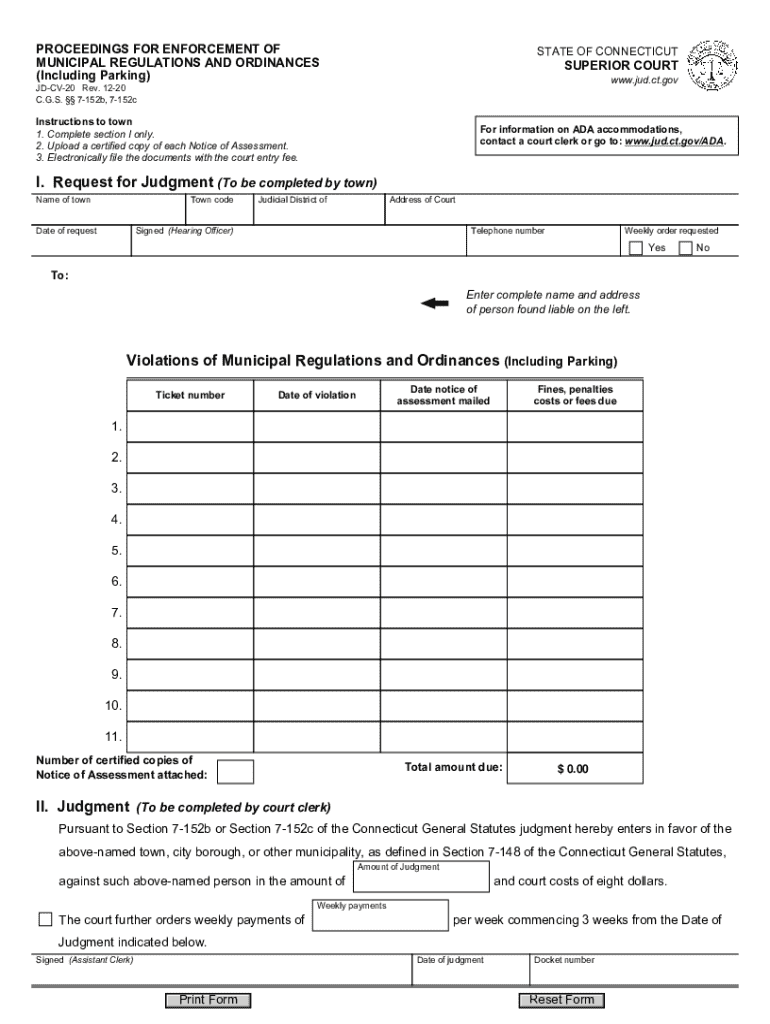
The Jd-cv-20 form is specifically associated with the legal and regulatory processes in Connecticut. This form is primarily utilized for facilitating the enforcement of municipal regulations and ordinances, focusing notably on parking violations. It assists towns in seeking judgments against individuals or entities deemed liable for such offenses. The Jd-cv-20 serves as an official instrument to bolster legal procedures, ensuring that documents are accurately filed and recorded within the necessary judicial frameworks.
Steps to Complete the Jd-cv-20
-
Gather Necessary Information: Start by collecting all relevant details, including the individual or organization's name, address, and specifics of the violation.
-
Fill Out the Form: Carefully enter the collected information into the designated fields on the form. Ensure accuracy to prevent any processing delays.
-
Attach Supporting Documentation: Include required evidence, such as violation notices or any correspondence relating to the case.
-
Verify Information: Double-check all entries for correctness. Errors could lead to the rejection of your filing.
-
Submit the Form: Depending on state guidelines, submit the form through the appropriate legal channels, which might include mailing, online submission, or in-person delivery to a courthouse.
-
Track the Submission: Follow up to ensure the document is properly processed by the relevant authorities, and note any feedback or required amendments.
Key Elements of the Jd-cv-20
- Identification: The form requires the identification details of the parties involved in the violation.
- Violation Description: A clear account of the violation, including dates, locations, and nature of the offense.
- Judgment Request: The section where the petitioner outlines the desired judgment, often involving fines or penalties.
- Documentation: Accompanying documents that support the case, such as logs, photographs, or previous notices.
How to Obtain the Jd-cv-20
-
Visit the Connecticut Judicial Branch Website: The form is typically available for download from official state websites.
-
Local Government Offices: Depending on your location, some local government offices may have physical copies.
-
Legal Counsel Assistance: Engaging a lawyer specializing in municipal law can streamline acquiring the form.
-
Public Libraries: Some larger libraries provide access to legal forms and guides.
Legal Use of the Jd-cv-20
The Jd-cv-20 is a legally binding document essential for managing municipal code violations. It plays a critical role in:
- Requesting Judgments: It officially records requests for judicial judgments against offenders.
- Regulatory Compliance: Ensures towns adhere to established procedures when addressing violations.
- Defining Liabilities: Clearly delineates the offender's responsibilities and potential penalties.
State-Specific Rules for the Jd-cv-20
The usage of the Jd-cv-20 is governed by specific legal frameworks within Connecticut:
- Compliance with State Law: Procedures must align with Connecticut's municipal code enforcement rules.
- Filing and Deadlines: Adherence to state-determined timelines for submission and follow-ups is essential.
- Document Retention: Town offices are often required to retain such documents for a designated period post-judgment.
Who Typically Uses the Jd-cv-20
- Municipal Authorities: Towns and cities use the form to manage and process violations efficiently.
- Legal Professionals: Attorneys specializing in municipal and administrative law.
- Paralegals and Administrative Personnel: Those responsible for preparing, filing, and managing documentation related to municipal infractions.


Examples of Using the Jd-cv-20
- Parking Violation Enforcement: For instances where a vehicle owner disputes a parking fine, towns use the Jd-cv-20 to escalate the issue to the judiciary.
- Public Nuisance Cases: Addresses complaints related to noise or safety hazards, moving unresolved issues to the courts for resolution.
- Code Violation Appeals: The form can initiate processes for towns to request court judgments if initial appeals are unaddressed.
Filing Deadlines for the Jd-cv-20
Meeting deadlines is crucial with the Jd-cv-20:
- Initial Filing: Must be completed by a specific date post-violation notice, usually within 30 days.
- Court Submissions: Any additional documentation or amendments should adhere to case timelines defined by the court.
- Adjustments and Appeals: Additional responses or appeals may have individual timelines.
This detailed breakdown covers essential aspects of the Jd-cv-20 form's usage, aiding individuals and municipalities in navigating the complexities of municipal code enforcement in Connecticut.