






Definition and Purpose of JV-247
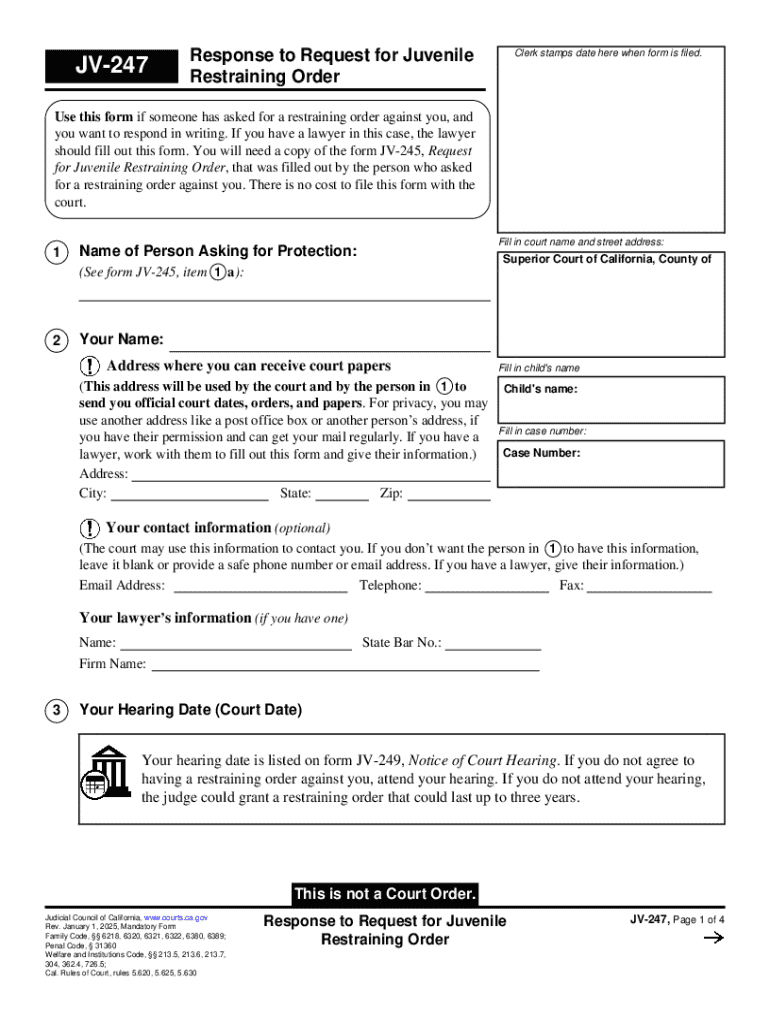
The JV-247 form is utilized in the context of juvenile restraining orders within the United States legal system. This document serves as a formal means for individuals to respond to a request for such an order. It includes sections for personal details, relationships, and an opportunity to contest specific orders outlined in the original request. One of its primary roles is to notify the court of the respondent's intent to contest the restraining order and provide a structured format for their arguments.
Importance of Attending Court Hearings
Filing a JV-247 is critical, but attending the associated court hearing holds equal importance. Failing to appear can lead to the restraining order being granted by default, irrespective of the arguments presented in the form. A presence at the hearing enables the respondent to verbally articulate their case, address any court queries, and provide additional evidence if necessary.
Steps to Obtain the JV-247
Acquiring the JV-247 form involves a few straightforward steps, particularly relevant for those navigating the U.S. judicial system for the first time. The form is generally available through local court websites or at the court clerk's office.
- Visit Local Court Website: Access the form from the official website of your county or state's court system.
- Court Clerk Assistance: Obtain physical copies at the clerk's office during business hours.
- Legal Counsel: Seek guidance from legal aid organizations or attorneys, especially if you are unsure about the process or your rights.
Completing the JV-247: A Step-by-Step Guide
Filling out the JV-247 demands careful attention to detail and accuracy. Here’s a step-by-step guide to navigate the process effectively:
- Personal Information: Accurately fill out your personal details, including name, address, and contact information.
- Details of the Relationship: Clearly describe the nature of your relationship with the person seeking the order.
- Response Sections: Provide clear responses to each specific order requested in the original application. Use additional paper if necessary.
- Additional Documentation: Compile and attach any evidence that supports your case, such as emails, text messages, or witness statements.
- Review and Proofread: Ensure all sections are filled accurately and review for any mistakes.
- Seek Legal Advice: If uncertain, consult with a legal professional to verify the form’s completeness and accuracy before submission.
Legal Implications of Using the JV-247
Using the JV-247 form carries significant legal responsibilities and consequences. It is imperative to provide truthful and complete information, as misleading statements can result in legal repercussions.
- Perjury: Falsifying information is considered a serious crime and can result in further penalties, including fines or imprisonment.
- Court Decision Impact: The arguments and evidence presented through JV-247 can greatly influence the court's decision regarding the restraining order.
- Permanent Record: Decisions made in court based on this form can become part of a public record, potentially affecting personal and professional aspects of life.
Who Typically Uses the JV-247
The JV-247 is primarily used by individuals who are served with a juvenile restraining order and wish to contest it. This group often includes:
- Family Members: Relatives who have been involved in disputes leading to temporary restraining orders.
- Acquaintances or Friends: Individuals whose relationships with the requester have led to formal legal actions, often necessitating a structured deferral request.
- Legal Guardians: Guardians contesting orders on behalf of a minor under their care.


State-Specific Rules and Considerations
While the JV-247 is generally consistent across states, variations exist due to differing state laws governing juvenile restraining orders.
- State Regulations: Check specific legal provisions applicable to juvenile restraining orders in your state, as these can affect deadlines and procedural requirements.
- Filing Deadlines: Ensure that the form is submitted within the local jurisdiction's specified timeframe to avoid dismissal.
- Court Procedures: Different states may have unique procedural steps; understanding these is crucial for compliance and successful contestation.
Important Terms Related to JV-247
Understanding key terms related to the JV-247 is essential, especially for those navigating the process without legal assistance.
- Respondent: The individual replying to the request for a restraining order.
- Petitioner: The person who has requested the restraining order.
- Restraining Order: A legal order issued to protect an individual from harassment or harm, typically involving requirements to stay a certain distance away from the petitioner.
- Contesting: The formal act of challenging the validity or necessity of the request for a restraining order through legal means.
Digital vs. Paper Submissions
While the JV-247 form is available in both digital and paper formats, it is important to consider the benefits and constraints of each method.
- Digital Submission: Offers convenience and quicker processing but requires careful attention to digital signatures and online submission guidelines.
- Paper Submission: Requires physical presence at a court or mail but is preferred by individuals less comfortable with digital processes. Ensure all sections are filled legibly.
Penalties for Non-Compliance
Failure to comply with the requirements related to the JV-247 form can result in significant penalties.
- Default Judgment: Not responding within the stipulated timeframe can lead to the restraining order being automatically granted.
- Misinformation Penalties: Providing false information can lead to legal actions, affecting future credibility in legal matters.
- Impact on Future Cases: Non-compliance may negatively influence future legal proceedings you might be involved in.
By understanding these aspects of the JV-247 form, individuals can better navigate the complexities of responding to a restraining order, ensuring that their rights and voices are adequately represented.