






Definition and Meaning
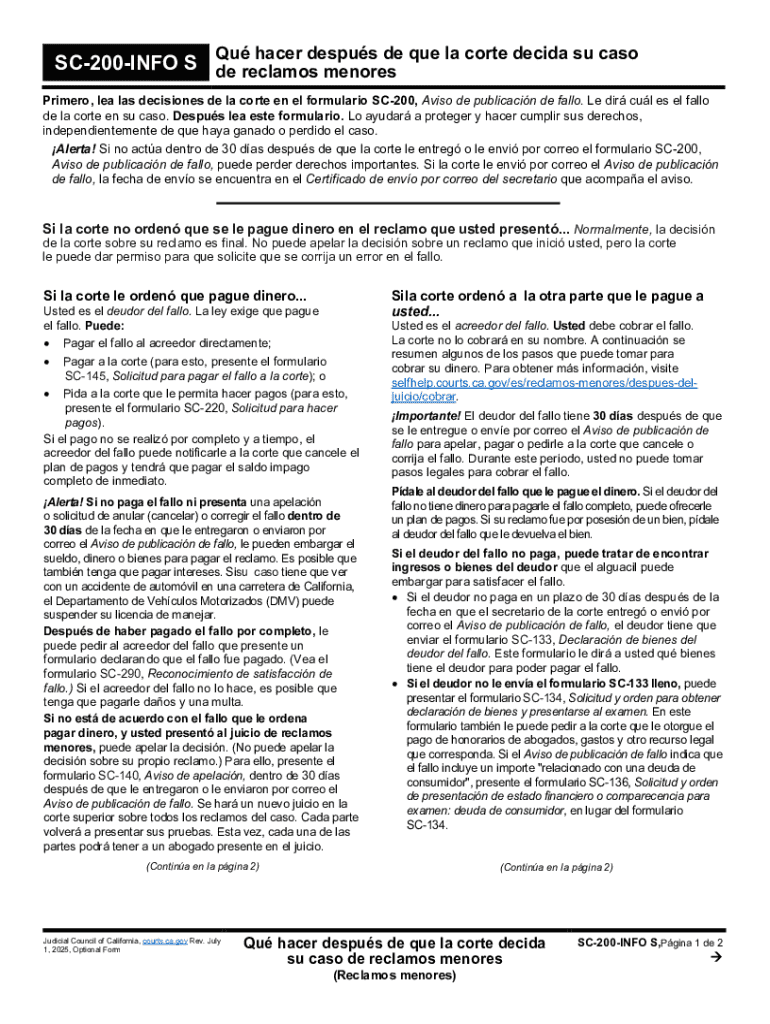
The SC-200-INFOs form, officially titled "Qué hacer después de que la corte decida su caso de reclamos menores Judicial Council for," is an informational guide designed to provide instructions for parties involved in small claims court cases in California. This document outlines the necessary steps and legal obligations for both debtors and creditors following a court decision. By clarifying procedural expectations, the form ensures that all parties are aware of their rights and responsibilities post-verdict.
Steps to Complete the SC-200-INFOs Form
- Review Court Decision: Upon receiving the court's ruling, carefully review the decision to understand the outcome and the obligations it imposes, whether it's paying a judgment or receiving a payment.
- Determine Further Actions: Identify if you're required to take actions such as filing an appeal or complying with the court-ordered payment schedule.
- Gather Necessary Documents: Compile any documents needed to proceed with actions like requesting corrections or filing appeals, as specified in the court decision.
- Meet Deadlines: Each action, such as filing an appeal or making a payment, comes with specific deadlines. Adhere strictly to these to avoid further legal complications.
- Submit Documents: Use the appropriate submission methods, whether through online portals, mail, or in-person visits to your local court, to submit required documentation or complete necessary payments.
How to Use the SC-200-INFOs Form
- Guidance on Actions: The form provides a step-by-step guide on actions like appealing a decision or negotiating payment terms, tailored to the roles of the debtor or creditor.
- Understanding Deadlines: Use the form to track crucial deadlines associated with appeals and payments to prevent oversights.
- Legal Consequences and Solutions: It helps identify legal consequences of inaction and provides pathways, such as requesting time extensions or corrections on judgments.
Key Elements of the SC-200-INFOs Form
- Detailed Steps Post-Judgment: The form offers explicit advice for handling the various possibilities after a court ruling in a small claims case.
- Common Pitfalls and Solutions: Highlights potential pitfalls parties might face, such as missing deadlines or misunderstanding judgment terms, with solutions provided.
- Template Forms: Includes templates of common forms needed for post-judgment actions like appeals, payments, or corrections.
Important Terms Related to the SC-200-INFOs Form
- Judgment: The court's final decision regarding the outcome of a small claims case, which the form helps you interpret and act upon.
- Appeal: A legal process to request a higher court review of the decision, outlined in the form if you believe the judgment was erroneous.
- Creditor and Debtor: Key roles defined within the document, each with distinct responsibilities and options following the judgment.
Who Typically Uses the SC-200-INFOs Form
- Debtors: Individuals required to fulfill a payment judgment and need guidance on compliance and potential appeal processes.
- Creditors: Successful plaintiffs looking to understand how to collect a judgment, request further legal actions, or respond to a debtor's appeal.
- Legal Advisors: Professionals assisting clients in ensuring full compliance with post-judgment legal obligations.


Legal Use and Compliance
- Post-Judgment Compliance: The form is a legal guide outlining compliance steps essential for adhering to court mandates post-judgment.
- Preventing Default and Penalties: Utilized to prevent compliance failures, which may result in further legal consequences or financial penalties.
State-Specific Rules for the SC-200-INFOs Form
- California Jurisdiction: The document is specifically tailored to the rules and requirements of California's judicial system in small claims cases.
- Local Court Variations: Some details might uniquely apply to specific courts within California, necessitating direct consultation with local court clerks.
Filing Deadlines and Important Dates
- Appeal Deadlines: Typically, parties have a limited window to file an appeal, usually between 10 to 30 days from the judgment date.
- Payment Timeframes: Clearly stated deadlines for fulfilling payment obligations as decreed by the court.
Penalties for Non-Compliance
- Legal Penalties: Non-adherence to actions within specified timeframes may result in additional legal orders or financial penalties.
- Extended Consequences: Potential for future legal action from creditors if judgments are not successfully complied with.
Required Documents
- Appeal Forms: Necessary for those seeking a review of the decision.
- Judgment Compliance Proof: Documentation of payment compliance or corrected judgment requests as stipulated by the court's decision.