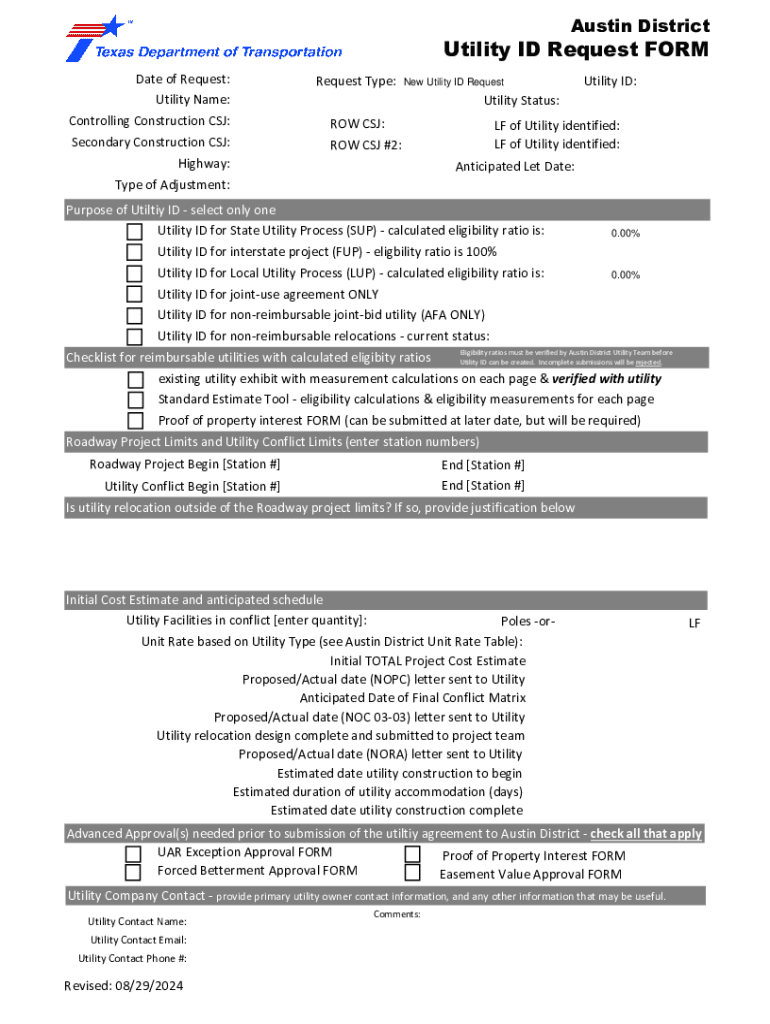







Definition & Meaning
The Utility ID Request Form is an essential document used to request utility identification related to construction projects in the Austin District. It is commonly employed to streamline and organize the process of collecting necessary utility information for infrastructure development. The form serves as a central point for gathering detailed data about utilities that may be impacted or required during construction, aiding in effective project planning and cost estimation.
Components of the Form
- Utility Information: Details about the specific utilities involved, including their types and roles in the project.
- Eligibility Ratios: Criteria to determine which utilities qualify for inclusion in the project scope.
- Project Limits: Geographic and operational boundaries within which the utility identification is valid.
- Cost Estimates: Projected financial requirements for integrating the utility services into the construction plan.
Steps to Complete the Utility ID Request Form
Completing the Utility ID Request Form requires attention to detail and an understanding of the project's scope. Follow these steps for successful completion:
- Gather Required Information: Collect detailed data on utilities, including location, type, and potential impacts on the project.
- Fill Out Sections Comprehensively: Input all requested information in the designated fields, ensuring accuracy and completeness.
- Consult the Unit Rate Table: Use the table to estimate costs based on utility type and project location, ensuring budget alignment.
- Obtain Necessary Approvals: Secure endorsements from involved parties or authorities responsible for oversight and compliance.
- Review and Submit: Double-check all entries for errors or omissions, then submit the form through the designated method, whether online or by mail.
How to Obtain the Utility ID Request Form
Accessing the Utility ID Request Form is straightforward:
- Contact the Issuing Authority: Reach out to the Austin District's relevant department to request the form.
- Visit Official Websites: Check the regional government or utility agency's site for downloadable versions.
- In-Person Collection: Obtain a physical copy from local government offices handling construction and utility coordination.
Key Elements of the Utility ID Request Form
Understanding the primary sections of the form is crucial for accurate completion:
- Utility Description: Provides a clear outline of each utility involved in the project.
- Project Scope and Limitations: Defines the operational boundaries and specific conditions of the utility integration.
- Approval Signatures: Includes a section for mandatory endorsements to confirm project compliance.
Who Typically Uses the Utility ID Request Form
Various professionals and organizations rely on the Utility ID Request Form:
- Construction Companies: For planning and integrating utilities into new or existing projects.
- City Planners: To ensure urban development aligns with existing utilities and infrastructure.
- Utility Providers: For coordinating service availability and adjustments to accommodate construction needs.


Legal Use of the Utility ID Request Form
Compliance with legal standards is crucial when using the Utility ID Request Form:
- Regulatory Adherence: Ensure the form completion aligns with local building codes and utility regulations.
- Record Keeping: Maintain copies for future reference, as they may be required for audits or inspections.
- Confidentiality Measures: Protect sensitive information included in the form, especially regarding project specifics and utility details.
State-Specific Rules for the Utility ID Request Form
While the Utility ID Request Form is specific to the Austin District, it may have unique regulations:
- Local Compliance Requirements: Understand the district’s zoning laws and utility specifications to avoid non-compliance.
- Environmental Considerations: Ensure adherence to environmental guidelines pertinent to utility and construction projects.
- Approval Processes: Follow district-specific procedures for gaining necessary authorizations and sign-offs.
Examples of Using the Utility ID Request Form
Real-world applications of the Utility ID Request Form demonstrate its value:
- Infrastructure Development: Used in planning for new roads or transportation systems, ensuring utility lines are accounted for.
- Residential Construction: Helps builders integrate necessary utility services efficiently and cost-effectively.
- Commercial Projects: Essential for large-scale developments requiring extensive utility integration, such as shopping malls or office complexes.