
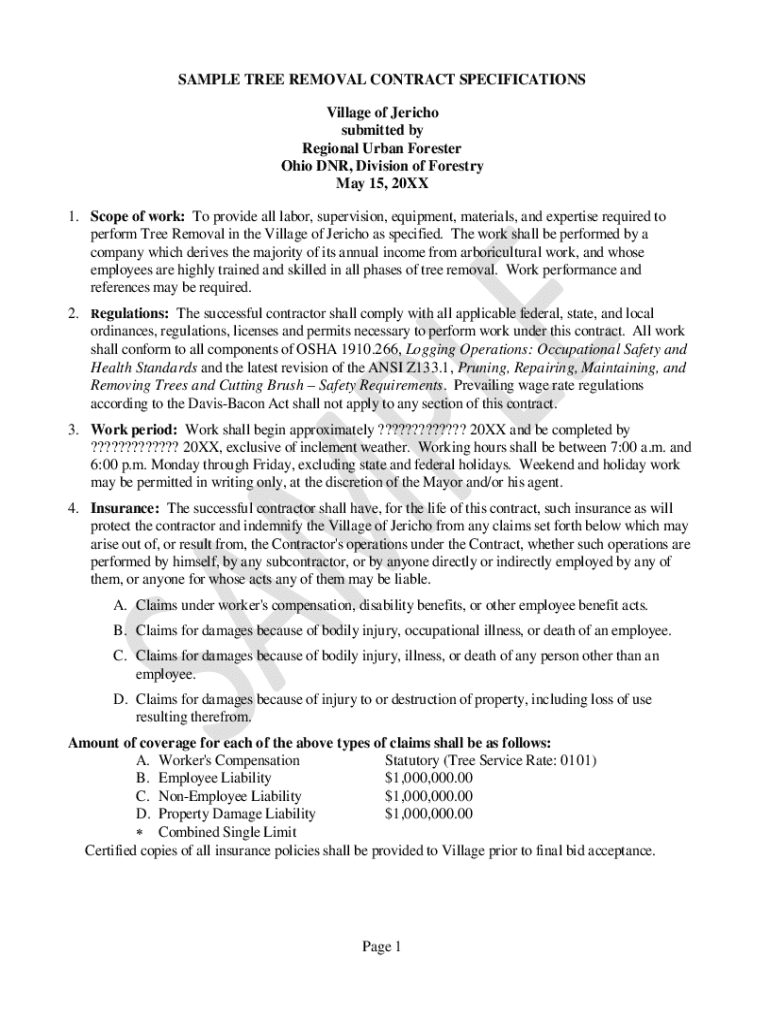







Definition and Meaning
The "Proposed Tree Removal Contract Specifications" serves as a vital document detailing the essential elements required for contracting tree removal services. This document outlines specific requirements, expectations, and responsibilities to ensure that all parties involved understand the agreed-upon terms. It includes a comprehensive breakdown of tasks, contractor qualifications, and safety standards. By providing clear and standardized guidelines, the specifications aim to facilitate effective communication and ensure compliance with both local and regional laws.
Scope of Work
The scope of work section is critical as it defines the tasks that the contractor will perform. Typically, this includes the removal of designated trees, debris management, and site restoration. Contractors are expected to outline the methods they will use, any equipment required, and the timelines for completion. This ensures there are no misunderstandings about the responsibilities and the expected outcomes.
Contractor Qualifications
This section specifies the qualifications and certifications that contractors must possess to undertake the job. It often requires evidence of professional training, safety certifications, and experience in tree removal. This requirement helps guarantee that the work will be conducted safely and professionally, minimizing the risk of accidents and ensuring compliance with industry standards.
Steps to Complete the Proposed Tree Removal Contract Specifications
Detailed Assessment
-
Site Evaluation: Conduct a thorough evaluation of the site where tree removal is proposed. Identify all trees to be removed, assess their condition, and note any environmental considerations.
-
Develop a Plan: Outline a detailed plan that includes timelines, equipment needs, and methods for removal. This plan should be discussed with all stakeholders to ensure alignment.
-
Drafting the Contract: Use the assessment and draft a contract according to the tree removal specifications. Include all necessary clauses such as payment terms, indemnification, and arbitration clauses.
Review and Finalization
-
Stakeholder Review: Allow all stakeholders, including property owners and local authorities, to review the draft contract. This stage is critical for gaining consensus and ensuring all legal and regulatory requirements are met.
-
Finalize the Contract: After incorporating feedback, finalize the document and prepare it for signing. Ensure all parties involved maintain a copy of the final contract.
Key Elements of the Proposed Tree Removal Contract Specifications
Regulations and Compliance
Contract specifications need to address compliance with local ordinances and environmental regulations. Contractors must secure necessary permits and adhere to guidelines regarding protected species and disposal of tree materials.
Insurance and Liability
The document should clearly state the insurance requirements for contractors, including general liability and worker’s compensation coverage. An indemnification clause is often included to protect property owners from liability for accidents or damages during the removal process.
Supervision and Inspection Protocols
Specifications should outline the supervision levels required during the project and specify the inspection protocols to ensure work is completed per contractual terms. Inspections may be necessary at different project stages to maintain quality control.
State-specific Rules for Proposed Tree Removal Contract Specifications
Regional Permits and Approvals
Different states or municipalities may have varying requirements for tree removal. For instance, some areas may require special permits for removing large or historic trees. It's essential to understand the specific rules applicable to the project’s location.
Compliance with Environmental Laws
State environmental protection laws can dictate how tree removal projects are carried out. This often includes considerations for wildlife habitats, stormwater management, and vegetation protection ordinances. Contractors must familiarize themselves with these laws to ensure proper compliance.
Legal Use of the Proposed Tree Removal Contract Specifications
Contractual Agreements
The tree removal contract specifications act as a legally binding agreement once signed by all parties. This document protects both the contractor and the client by clearly defining the terms, thus reducing the potential for disputes.
Dispute Resolution
Including a dispute resolution clause in the contract is crucial. This section outlines how disagreements will be managed, whether through mediation, arbitration, or litigation. Clear procedures aid in resolving conflicts efficiently.
Examples of Using the Proposed Tree Removal Contract Specifications
Municipal Projects
In municipal scenarios, these specifications often guide large-scale urban tree removal projects, ensuring that contractors follow city regulations and procedures while minimizing environmental impact.
Private Property Developments
For private residential or commercial developments, these contract specifications provide a framework that aligns the contractor's work with the property owner's expectations and legal obligations.
Important Terms Related to Proposed Tree Removal Contract Specifications
Arborist
A professional trained in the art and science of planting, caring for, and maintaining individual trees, essential for ensuring that tree removal does not adversely affect surrounding vegetation.
Indemnification
A contractual obligation in which one party agrees to compensate another for certain damages or losses, which is a common clause in removal contracts to protect stakeholders from loss.
Versions or Alternatives to the Proposed Tree Removal Contract Specifications
Revised & Custom Specifications
Depending on project size or complexity, custom versions of these specifications may be created. These versions are tailored to accommodate unique project needs or integrate advanced environmental considerations.
Template Variants
For different types of projects, such as residential versus commercial, there may be standard templates that serve as a starting point. These templates can be modified to meet specific project needs or legal requirements.




