






Definition and Purpose of the Family Child Care Emergency Preparedness and Response Plan
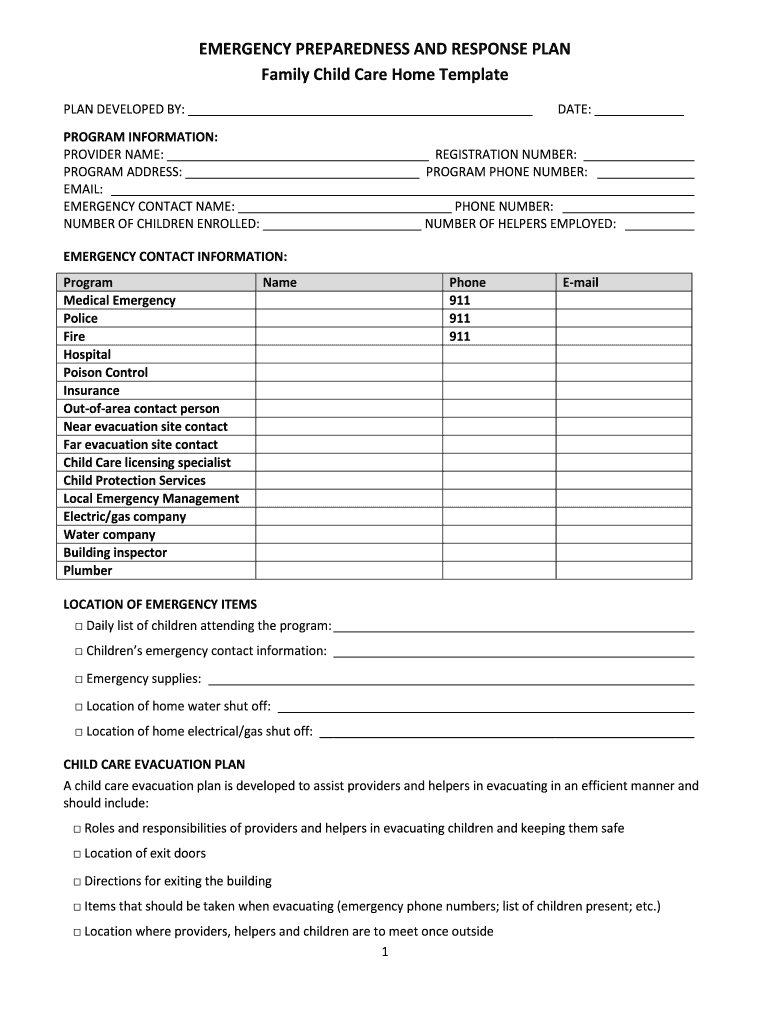
The Family Child Care Emergency Preparedness and Response Plan is a comprehensive guide designed to ensure the safety and well-being of children and staff in the event of an emergency. It encompasses essential elements such as evacuation procedures, communication strategies, and emergency contacts. The primary aim is to prepare family child care providers in the United States to effectively respond to various emergencies, such as natural disasters or lockdown situations, protecting the children under their care.
Key Components of the Plan
Emergency Contact Information
A vital section of the plan involves listing all important emergency contacts. This includes local emergency services like fire, police, and medical services, as well as contact information for each child’s guardians. Quick access to this information can be crucial in coordinating responses during an emergency.
Evacuation Procedures
The plan outlines detailed evacuation procedures to ensure orderly and timely exits during an emergency. This involves mapping out clear evacuation routes and designating a safe meeting point outside the facility. Practicing these drills regularly is essential to ensure everyone is familiar with the procedures.
Lockdown and Shelter-in-Place Protocols
For scenarios where leaving the facility is unsafe, the plan includes lockdown and shelter-in-place protocols. This section details measures to secure the premises and maintain safety indoors. It includes instructions on securing doors and windows, as well as guidelines for maintaining calm among children and staff.
Communication Strategies
Effective communication during emergencies is critical. The plan provides strategies for maintaining communication lines with parents, guardians, and emergency services. It typically includes templates for emergency alerts and updates, and advises on the use of technologies for mass communication.
Steps to Complete and Implement the Plan
Gathering Necessary Information
Begin by collecting all pertinent information needed for the plan. This includes emergency contacts, local hazard assessments, and facility layouts. Accurate information is critical for developing an effective plan.
Customizing the Plan to Your Facility
Each facility has unique needs and constraints. Personalize the plan by considering factors like facility size, location, and the specific needs of the children in your care. Customization ensures that the plan is relevant and effective.
Training and Drills
Training staff and conducting regular emergency drills is essential for ensuring readiness. The plan should include a schedule for drills and training sessions, helping to identify weaknesses and areas for improvement.
Legal and Compliance Aspects
Regulatory Requirements
The plan must comply with relevant state regulations and the legal framework governing child care facilities in the U.S. Regulations may vary by state, so it is critical to check local guidelines and adapt the plan accordingly.
Documentation and Record Keeping
Maintaining thorough records of the plan and any incidents or drills conducted is crucial for compliance and review. Proper documentation helps with accountability and provides a reference during audits or investigations.
Importance of the Family Child Care Emergency Preparedness and Response Plan
This plan is not merely a regulatory formality but a critical tool for ensuring child safety and minimizing risks during emergencies. Properly implemented, it can significantly enhance the provider's ability to protect children and staff while meeting legal and ethical obligations.