






Definition & Meaning
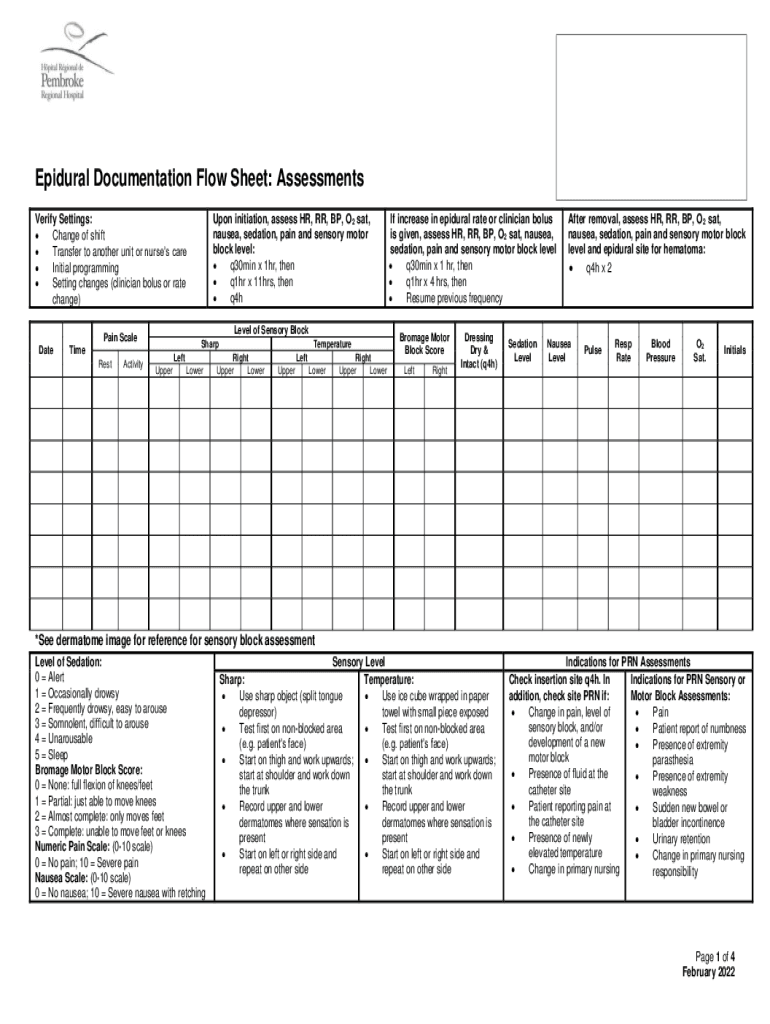
The Epidural Documentation Flow Sheet: Assessments is a detailed document designed to capture vital information concerning the administration and monitoring of epidural anesthesia in clinical settings. It serves as a structured guide for healthcare professionals to document various assessments required for patients receiving epidural anesthesia. The flow sheet includes key metrics for evaluating the effectiveness and safety of the anesthesia, ensuring that all necessary checks are meticulously recorded and accessible for ongoing patient care.
Key Elements of the Epidural Documentation Flow Sheet: Assessments
The form is composed of several critical components that collectively help in comprehensive patient monitoring. Key elements include:
- Verification of Settings: Ensures that all epidural settings are verified, including dosage and delivery method.
- Monitoring Sensory and Motor Block Levels: Assessments to determine the extent of sensory and motor block, using specific tests like sharpness and temperature examinations.
- Pain and Nausea Scales: Documentation of patient-reported pain and nausea levels, enabling adjustments in treatment as required.
- Vital Signs Monitoring: Continuous recording of vital signs to promptly identify any adverse reactions.
- Medication Administration and Verification: Accurate logging of administered drugs, including time, dosage, and verification by attending medical personnel.
Steps to Complete the Epidural Documentation Flow Sheet: Assessments
- Verify Patient Information: Ensure all patient details, such as name, age, and medical history, are accurate.
- Check Equipment Settings: Review the equipment settings for accuracy and safety before proceeding.
- Conduct Initial Assessments: Perform initial sensory and motor block assessments and document findings.
- Monitor and Record Vital Signs: Track and log vital signs at specified intervals on the form.
- Administer Medication as Prescribed: Document each medication administered with specific details.
- Conduct Ongoing Assessments: Re-evaluate sensory and motor block levels, and update the flow sheet accordingly.
- Capture Patient Feedback: Use pain and nausea scales to record patient discomfort and adjust care plans if necessary.
- Final Review and Sign-off: Review the completed form for any missing information and finalize it with a signature.
Why You Should Use the Epidural Documentation Flow Sheet: Assessments
The flow sheet is essential for maintaining a comprehensive record of patient care during epidural anesthesia. It helps:
- Ensure patient safety and quality of care by standardizing assessment protocols.
- Provide a complete legal and medical record that can be referenced for future treatments or audits.
- Facilitate communication among healthcare team members by clearly documenting every step.
- Aid in regulatory compliance by maintaining thorough and accurate records.
Who Typically Uses the Epidural Documentation Flow Sheet: Assessments
Healthcare professionals involved in anesthetic care, such as:
- Anesthesiologists: Responsible for administration and monitoring of anesthesia.
- Nurses: Conduct ongoing assessments and record patient responses.
- Pain Management Specialists: Use the documentation for devising and adjusting pain management plans.
- Medical Auditors: Review completed flow sheets for compliance with medical regulations.


How to Obtain the Epidural Documentation Flow Sheet: Assessments
Acquisition can typically occur through the following methods:
- Hospital or Clinical Resources: Healthcare facilities usually provide standardized forms as part of their operational protocols.
- Professional Medical Associations: These may offer templates to their members.
- Electronic Health Record (EHR) Systems: Many EHR platforms include digital versions of the form for integration into patient records.
Legal Use of the Epidural Documentation Flow Sheet: Assessments
The flow sheet plays a significant role in:
- Ensuring Legal Compliance: Meets regulatory standards by accurately documenting care procedures.
- Providing Evidence in Case of Litigation: Serves as an official record should medical practice come into question.
- Facilitating Medical Audits: Ensures that all procedural steps were followed and documented according to medical guidelines.
Important Terms Related to Epidural Documentation Flow Sheet: Assessments
Understanding specific terminology used within the flow sheet is crucial:
- Sensory and Motor Block: Refers to the degree of sensory and muscle function loss due to anesthesia.
- Pain Scale: A numeric or descriptive measure indicating the level of patient's pain experience.
- Vital Signs: These include key physiological metrics such as blood pressure, heart rate, and respiratory rate.
Including an understanding of these terms enhances the effective use and completion of the assessment flow sheet.