01. Edit your form online
Type text, add images, blackout confidential details, add comments, highlights and more.

Type text, add images, blackout confidential details, add comments, highlights and more.

Draw your signature, type it, upload its image, or use your mobile device as a signature pad.

Send it via email, link, or fax. You can also download it, export it or print it out.
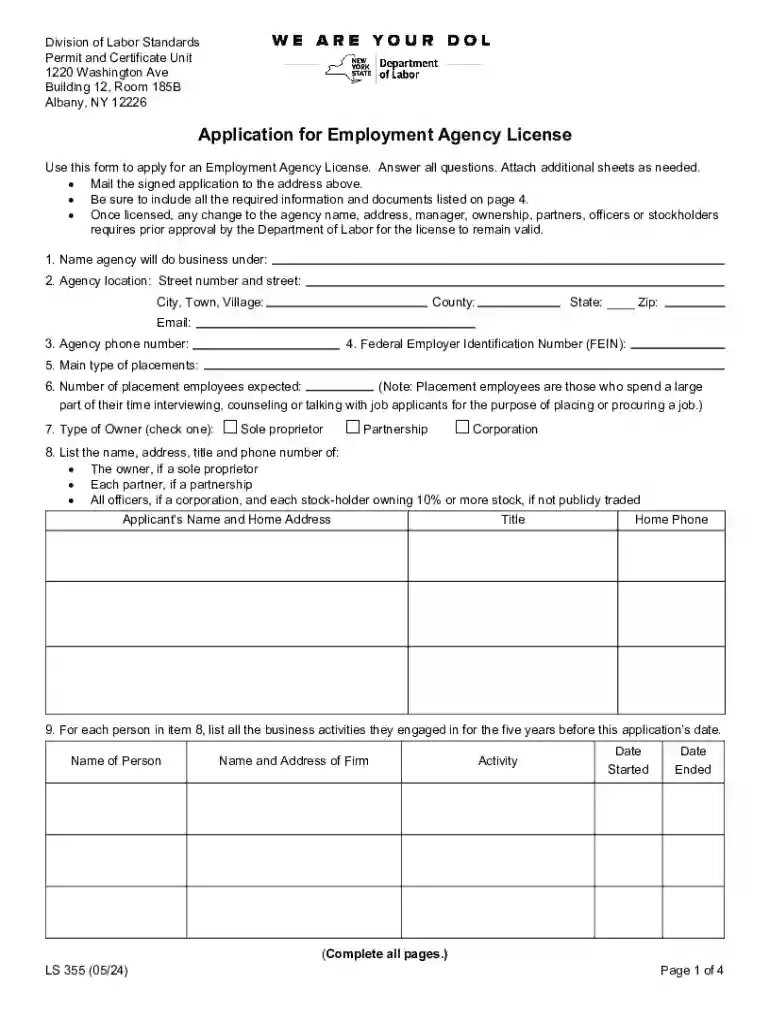
The State of New York C-105 form is utilized by employers in New York to report workers' compensation coverage. This document is often referred to as the Employers' Certificate of Workers' Compensation Insurance. It serves as a critical compliance requirement, ensuring that businesses adhere to state mandates for providing workers' compensation to their employees. The C-105 form affirms that a business has the necessary insurance coverage to protect employees in the event of work-related injuries or illnesses.
Utilizing the C-105 form involves a straightforward process, though it requires attention to detail to ensure accuracy. Employers must complete the form with relevant information about their workers' compensation insurance policy. This includes:
Ensuring that all sections are filled out accurately is crucial, as incomplete or incorrect forms may lead to compliance issues.
Filling out the C-105 form correctly can be achieved by following these steps:
Several critical components form the backbone of the C-105 form, each essential for its effective use:
These elements ensure that the document fulfills its purpose of verifying adequate insurance coverage.
The C-105 form is primarily used by employers within New York State who are required by law to provide workers' compensation insurance for their employees. This includes various business types and sizes, from small local businesses to large corporations. Additionally, insurance carriers may use the form to confirm coverage to regulatory bodies.


Legally, the C-105 form serves as evidence of compliance with workers' compensation regulations. Failure to maintain or accurately file this form may result in significant consequences, including fines or legal action. The document helps protect both employers and employees by establishing a standard of coverage and ensuring that employees have recourse in the event of workplace injuries.
New York State has specific rules governing the use of the C-105 form. Employers must file this form in accordance with state mandates, ensuring it accurately reflects the current insurance status. Certain exemptions or additional requirements may apply to specific business types or situations, necessitating consultation with legal or insurance professionals to ensure compliance.
The C-105 form can be submitted through various methods, determined by the submitting entity's preference:
Each submission method has its own set of requirements and deadlines that must be adhered to, ensuring timely and correct filing.
We've got more versions of the Get the free State of new york c 105 fillable form - labor ny form. Select the right Get the free State of new york c 105 fillable form - labor ny version from the list and start editing it straight away!
At DocHub, your data security is our priority. We follow HIPAA, SOC2, GDPR, and other standards, so you can work on your documents with confidence.