






Definition & Meaning of the Youth Group Information Form
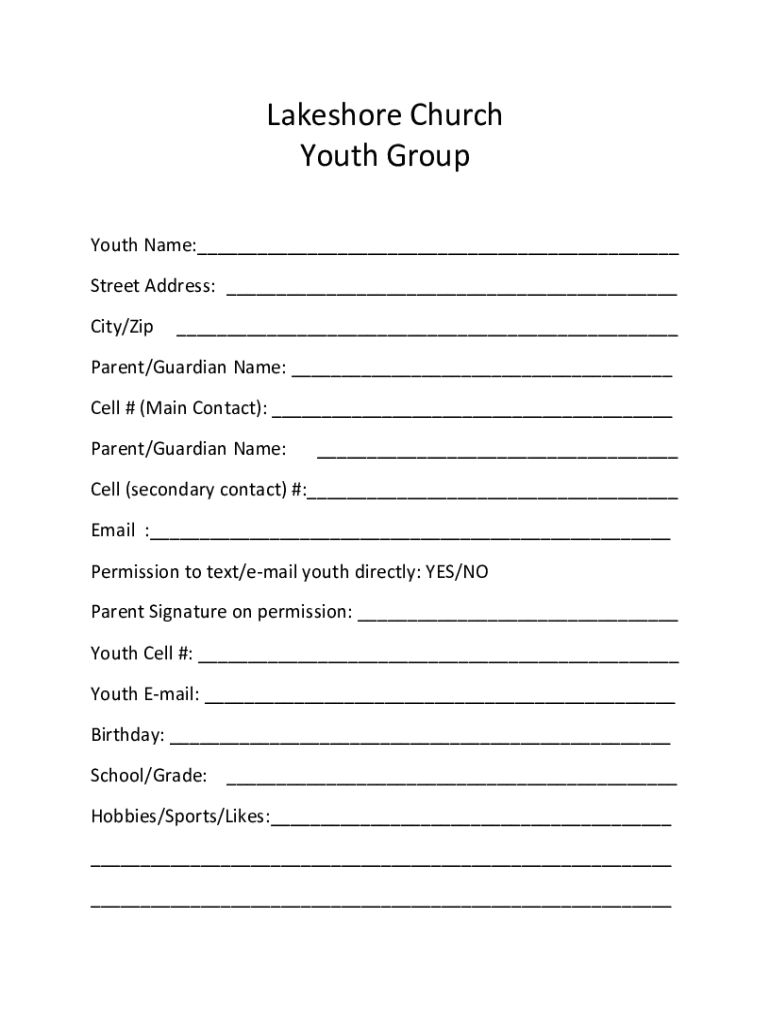
The Youth Group Information Form is a vital document primarily used by organizations such as churches and community centers to gather essential details about youth participants. This form facilitates the registration process by collecting personal information, emergency contacts, and additional data required for effective communication and organization management. By providing a structured means to gather information, it ensures that organizations can cater to the specific needs and safety of youth participants effectively.
Key Elements of the Youth Group Information Form
Understanding the core components of this form is crucial. The Youth Group Information Form typically includes:
- Participant Information: Collects basic personal details such as name, date of birth, and school grade.
- Parent/Guardian Details: Captures contact information for parents or guardians, ensuring immediate contactability if needed.
- Emergency Contacts: Includes phone numbers to reach someone quickly in case of emergencies, outside of the primary contacts.
- Medical Information: Notes any allergies or medical conditions that staff should be aware of during group activities.
- Permissions and Consents: Allows for authorization for direct communication with the youth or for participation in certain activities.
- Hobbies and Interests: Optional sections where participants can share personal interests, helping tailor programs to the youths' preferences.
Important Terms Related to the Youth Group Information Form
- Participant: Refers to the youth enrolling in the group or activity.
- Guardian: The responsible adult, either a parent or legal custodian, who consents to the youth's participation.
- Consent: Formal permission granted for participation or communication.
- Allergies/Medical Conditions: Health-related disclosures necessary for participant safety.
How to Use the Youth Group Information Form
Utilizing this form effectively involves a straightforward process. Organizations often follow these steps:
- Distribution: Provide forms in both digital and paper formats to accommodate all participants.
- Completion: Participants, along with their guardians, fill in required sections completely and accurately.
- Submission: Return the completed form to the organization via email, postal mail, or in person.
- Review and Storage: The organization reviews submissions for completeness and stores forms securely, respecting privacy and data protection standards.
How to Obtain the Youth Group Information Form
Forms can be accessed in multiple ways, depending on organizational practices:
- Online Download: Many organizations offer downloadable PDFs on their websites.
- In-Person Pickup: Some centers provide physical copies during registration events or introductory meetings.
- Email Distribution: Forms may also be distributed through email upon request.
Steps to Complete the Youth Group Information Form
Filling out the form is a systematic process:
- Read Instructions: Review all sections to understand information requirements.
- Enter Participant Details: Ensure accuracy when providing personal and contact information.
- Provide Medical Information: Clearly list any allergies or health issues.
- Check Consent Boxes: Verify understanding and agreement to consent sections.
- Review and Sign: Double-check entries for accuracy and completeness before signing and dating the form.
- Submit by Deadline: Ensure the form is submitted by any specified dates.
Legal Use of the Youth Group Information Form
This form serves legal and procedural functions:
- Documentation: Acts as a formal record of participant details and consent.
- Protection: Safeguards organizations by establishing agreed terms and participant expectations.
- Compliance: Helps ensure that activities align with parental consent and any relevant legal requirements.
Digital vs. Paper Version
Understanding format preferences can streamline collection:
- Digital Forms: Offer ease of distribution and submission, reducing paper waste and facilitating electronic storage.
- Paper Forms: May be preferred for face-to-face events or for participants with limited internet access.
Who Typically Uses the Youth Group Information Form
These forms are predominantly used by:
- Church Youth Groups: For gathering members for religious and recreational activities.
- Community Centers: When organizing social or educational programs.
- Educational Camps: During enrollment for seasonal or extracurricular camps.
These varied uses highlight the form's versatility and essential role in organized youth activities.