






Definition & Meaning of Electrical Panel Label Template
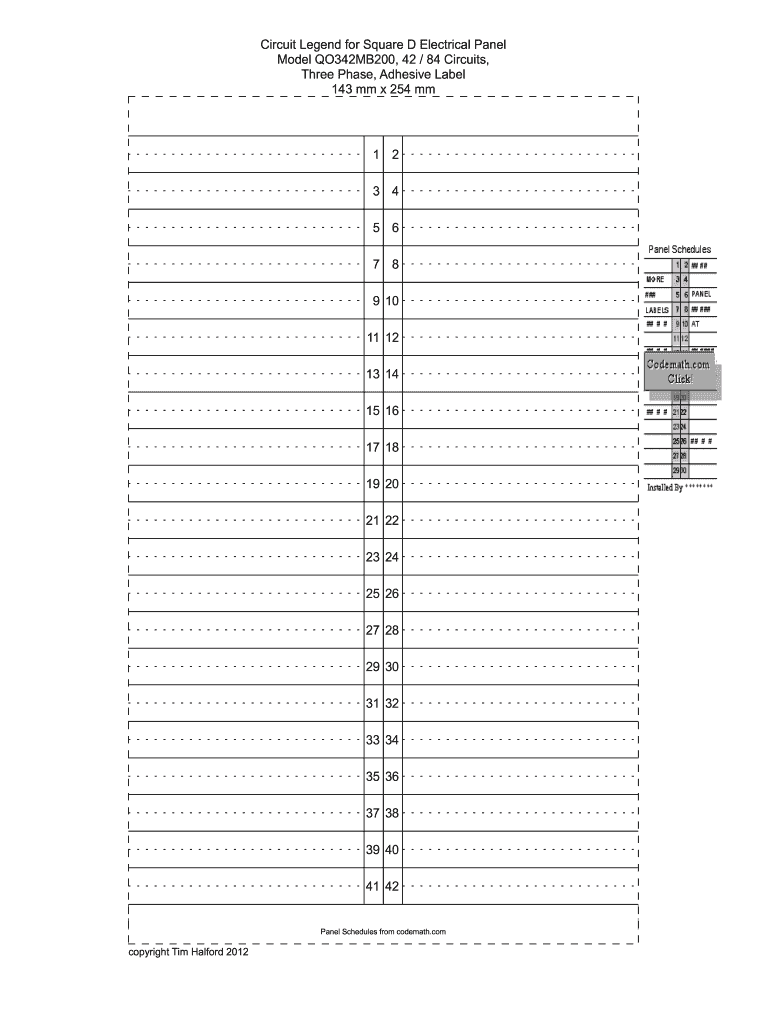
An electrical panel label template is a standardized format used for identifying and organizing circuits within an electrical panel. This template simplifies the process of labeling circuits, ensuring that each circuit's function is clearly indicated, enhancing safety and traceability. Typically, a well-labeled electrical panel can help in identifying breakers, alleviating confusion during maintenance, and ensuring that emergency responders understand the electrical layout in case of an incident.
The template usually includes sections for specifying circuit numbers, labels, and descriptions of what each circuit controls. These templates can vary in complexity; some are basic sheets where users can manually write labels, while others are preformatted digital files that can be printed or edited.
Key benefits of using an electrical panel label template include:
- Organization: Keeps circuit information structured.
- Safety: Facilitates quick identification during emergencies.
- Time-saving: Assists in maintenance and troubleshooting tasks.
How to Use the Electrical Panel Label Template
Using an electrical panel label template involves a few straightforward steps that maximize its effectiveness. Begin by acquiring the appropriate template for your electrical panel. This may be a downloadable file or a printed sheet. Once the template is available, follow these steps to use it effectively:
-
Identify Circuits: Inspect your electrical panel to note how many circuits it contains and what each one powers. This may involve switching off breakers and checking which areas of your home or building lose power when each is turned off.
-
Fill the Template: Using the information from your circuit inspection, fill in the template. Here are some common fields you might find:
- Circuit Number: Sequential number of the breaker.
- Description: What the circuit powers (e.g., kitchen outlets, living room lights).
-
Print and Apply: After completing the template, print it if it is digital or make photocopies if it is a physical document. Carefully place labels on the electrical panel next to their corresponding breakers.
-
Update as Necessary: It is important to revisit and update the labels when there are changes in electrical wiring or if new circuits are added.
Key Elements of the Electrical Panel Label Template
An effective electrical panel label template consists of several key elements that ensure clarity and detail. Consider the following components:
-
Title/Heading: A clear header stating "Electrical Panel Circuit Labels" to identify the template's purpose.
-
Circuit Number: Sequential labels for each circuit in your panel, ensuring every entry is uniquely identifiable.
-
Description Field: A space to provide details about what each circuit operates. This may include the location (e.g., “Living Room Lights”) or the device type (e.g., “Refrigerator Circuit”).
-
Color Coding: Some templates may allow color coding for different types of circuits (e.g., red for high-load, green for normal load), enhancing visual distinction.
-
Safety Symbols: Inclusion of symbols or warnings may help indicate high voltage or sensitive areas.
Utilizing these elements ensures that the labels are not just informative but also visually distinct and easy to read.
Steps to Complete the Electrical Panel Label Template
Creating an effective electrical panel label template can streamline maintenance and enhance safety. The following steps provide a structured approach:
-
Gather Tools and Information: Have the template at hand along with a marker or printer. Gather necessary details including the number of circuits and their respective uses.
-
Inspect Electrical Panel: Examine the panel while ensuring safety precautions are observed. Switch off the main power if needed to safely check circuit functionalities.
-
Document Information: As you identify what each breaker controls, record this information according to your template’s structure.
-
Fill Out the Template: Clearly fill in the template with the circuit details, being sure to avoid any handwritten errors for clarity.
-
Double-Check Accuracy: Verify that all information is correct and corresponds with the physical layout of the panel.
-
Print and Label: If digital, print the template, or if it's physical, affix it directly on or near the electrical panel for easy reference.
Who Typically Uses the Electrical Panel Label Template
Electrical panel label templates are utilized by various professionals and individuals interested in maintaining safety and efficiency in electrical management. Key users include:
-
Homeowners: Individuals looking to enhance the safety and functionality of their home’s electrical systems.
-
Electricians: Professionals who need a clear way to identify circuits during installations or maintenance.
-
Building Managers: Those overseeing commercial or residential buildings requiring organized electrical layouts for compliance and operational continuity.
-
Inspectors: Safety inspectors who evaluate electrical systems for standards compliance.
Each group benefits from having a clear, organized method for labeling circuits to maintain safety and facilitate service work.