




01. Edit your form online
Type text, add images, blackout confidential details, add comments, highlights and more.

Type text, add images, blackout confidential details, add comments, highlights and more.

Draw your signature, type it, upload its image, or use your mobile device as a signature pad.

Send it via email, link, or fax. You can also download it, export it or print it out.
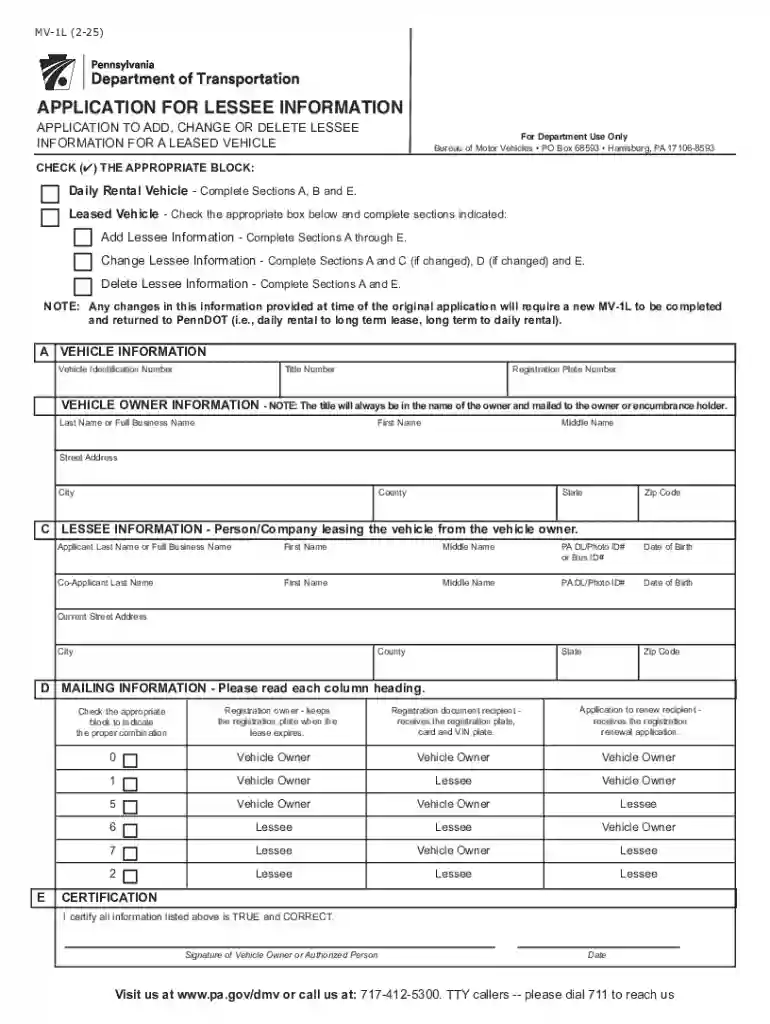
The MV-1L form, primarily utilized within the realm of vehicle leasing, serves as a critical documentation tool for recording lessee information. It is designed to facilitate processes such as adding, changing, or deleting lessee details associated with leased vehicles. This form features various sections dedicated to vehicle and owner information and outlines specific instructions based on lease types. Accurate completion of the MV-1L is essential, as it requires certification of the information's accuracy to ensure compliance and legitimacy.
Gather Required Information:
Fill Out Vehicle and Lessee Details:
Specify Changes Needed:
Certify the Information:
Submit the Completed Form:
The MV-1L form can be accessed through various channels, including online portals or the leasing company directly responsible for vehicle documentation. This accessibility ensures lessees can easily obtain and complete the form, whether they choose digital or paper formats.
The MV-1L must be used in compliance with state and federal laws governing vehicle leasing. Compliance involves proper documentation, accurately reflecting any changes in lessee information, and ensuring all parties involved adhere to the terms outlined within the lease agreement. Legal repercussions can occur if the form is misused or inaccurately completed.
In practice, the MV-1L is commonly used during events such as:
The primary users of the MV-1L include:


While the MV-1L form generally maintains a standard structure, specific requirements may vary across different states. These variations could include differing submission procedures or additional documentation requirements. It is crucial for users to verify their state’s specific instructions to ensure compliance.
Failure to properly complete or submit the MV-1L form can result in penalties. Such penalties might include fines or legal action from the leasing company or state authorities, depending on the severity of the oversight. To avoid these repercussions, individuals and businesses should ensure all entries on the form are precise and submitted within stipulated timelines.
When submitting the MV-1L form digitally, it is essential to ensure that the software used is compatible with commonly used applications, such as DocHub. This compatibility allows seamless editing, signing, and submission of the form, enhancing efficiency and accuracy in processing.
We've got more versions of the Mv-1l form. Select the right Mv-1l version from the list and start editing it straight away!
At DocHub, your data security is our priority. We follow HIPAA, SOC2, GDPR, and other standards, so you can work on your documents with confidence.
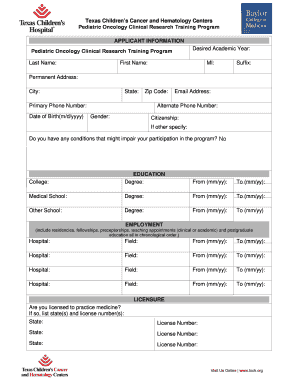
If the vehicle is a leased vehicle, Form MV-1L, Application for Lessee Information, must be completed and attached. (nOtE: Form MV-1L is available on our
MV-1L (2-25) APPLICATION FOR LESSEE INFORMATION APPLICATION TO ADD, CHANGE OR DELETE LESSEE INFORMATION FOR A LEASED VEHICLE For Department Use Only Bureau of
SH Series Precision Metal-Clad Shunts. Voltage Resistance Mass L1 L2 L3 Series (A) (mV) Range: -55C ~ +110C Insulation Resist.: 100M min. Dielectric


