01. Edit your form online
Type text, add images, blackout confidential details, add comments, highlights and more.

Type text, add images, blackout confidential details, add comments, highlights and more.

Draw your signature, type it, upload its image, or use your mobile device as a signature pad.

Send it via email, link, or fax. You can also download it, export it or print it out.
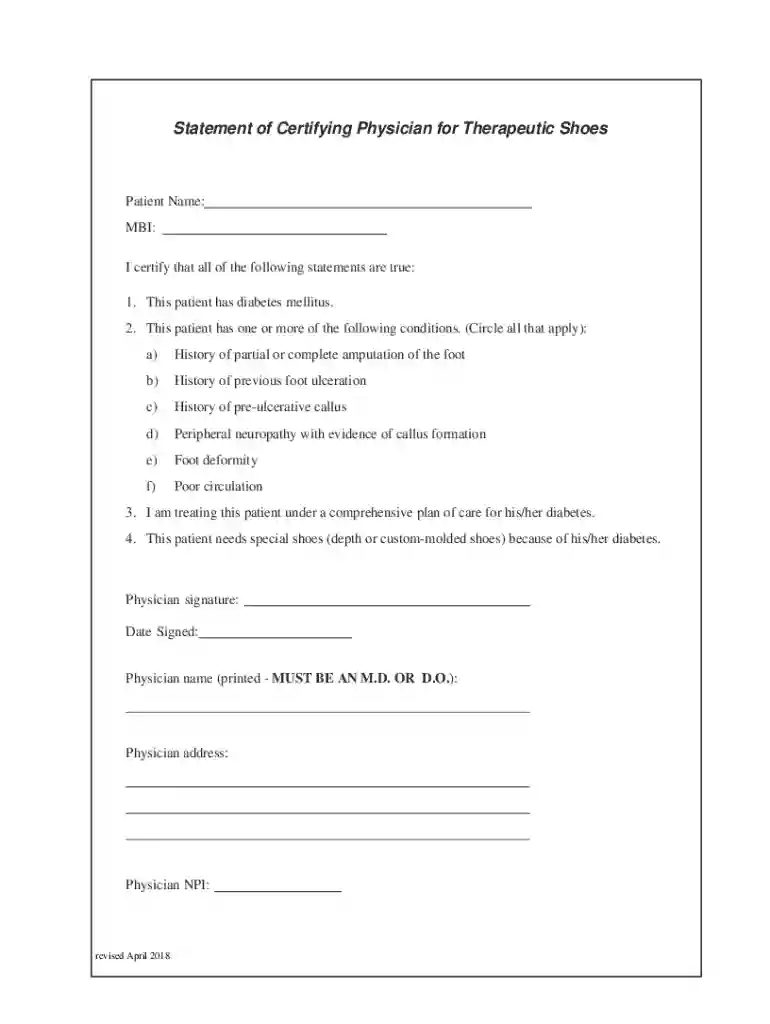
The "Statement of Certifying Physician for Therapeutic Shoes" is a crucial document that allows a physician to certify the medical necessity of therapeutic shoes for patients with diabetes mellitus. These shoes are specifically designed to prevent foot complications often associated with diabetes. This form includes sections where physicians document the patient's medical history and the specific foot conditions warranting the need for therapeutic shoes as part of their comprehensive diabetes care plan.
For physicians, completing this form is a standard procedure in ensuring patients receive appropriate medical equipment. Therapeutic shoes can significantly reduce the risk of foot ulcers and amputations in patients with diabetes, supporting their overall health management.
When intending to use the Statement of Certifying Physician for Therapeutic Shoes, medical professionals must follow a clear step-by-step process:
Patient Assessment: Begin with a thorough evaluation of the patient to determine the necessity of therapeutic footwear due to diabetes-related foot conditions.
Document Completion: Accurately fill out the form, ensuring each section is completed. This includes personal patient information and medical details justifying the need for therapeutic shoes.
Physician Certification: The physician must certify that the patient meets the medical criteria for therapeutic shoes, documenting specific foot conditions that validate this need.
Patient's Role: Inform the patient of how this document will assist in acquiring therapeutic shoes through insurance or Medicare coverage.
Submission to Vendors: After completion, the form should be sent to the footwear supplier to process the order for therapeutic shoes.
Completing the form involves a structured process to ensure its validity and utility:
Collect Patient Information: Accurately gather all personal details required, such as name, date of birth, and contact information. Ensure this section is error-free to avoid processing delays.
Medical History and Diagnosis: Document the medical history relating to the patient's diabetes and any associated foot problems, such as neuropathy or ulcers.
Specific Foot Conditions: Physicians must specify the patient's foot conditions that necessitate the use of therapeutic shoes. Include comprehensive details as evidence of medical necessity.
Therapeutic Shoe Justification: Clearly state why therapeutic shoes are prescribed, referencing the patient's foot health needs and overall diabetes management.
Review and Sign: Before submission, meticulously review the form for completeness and accuracy. Sign and date the form to authenticate the certification.
Several essential components make up the Statement of Certifying Physician for Therapeutic Shoes:
Patient's Personal and Medical Information: Ensures accurate identification and aligns the certification with the appropriate patient.
Description of Foot Conditions: Provides detailed insight into why therapeutic footwear is required, including specific conditions like calluses or pre-ulcerative formations.
Physician's Attestation: Confirms the medical necessity and appropriate prescription of therapeutic shoes for the patient, ensuring compliance with healthcare standards.
Signature and Date: Validates the document with the physician’s endorsement, giving it legal standing in medical and insurance communications.
Primarily, this form is used by healthcare professionals, such as podiatrists and primary care physicians, who are managing the care of patients with diabetes. Patients themselves rely on it to access much-needed medical footwear that directly contributes to their health management plans.
In addition, medical suppliers and insurance companies use this document to justify the provision and funding of therapeutic shoes, ensuring the patient receives the necessary equipment under their healthcare coverage.


Eligibility for therapeutic shoes requires documentation of diabetes mellitus paired with at least one qualifying foot condition. These conditions include:
Patients must be under an active diabetes management plan supervised by a healthcare professional to qualify for therapeutic footwear through insurance.

This document must comply with federal and state medical regulations. It represents a legal attestation by the physician that the patient meets the necessary criteria for in-need therapeutic shoes. Improper use or falsification of the form can lead to legal repercussions, including penalties for non-compliance and fraud investigations.
Healthcare providers should maintain strict adherence to regulations when completing and submitting this form, ensuring integrity and compliance in the certification process.
Failure to correctly complete and file the Statement of Certifying Physician for Therapeutic Shoes can lead to serious consequences:
Reimbursement Denials: Incomplete or inaccurate forms may result in denial of insurance reimbursement for therapeutic shoes.
Legal Penalties: If found fraudulent, physicians might face legal actions and sanctions from medical boards, including fines and loss of license to practice.
Patient Impact: Non-compliance can delay or prevent patients from receiving essential medical equipment, adversely affecting their health management.
Ensuring adherence to all form requirements and regulations safeguards both patients and healthcare providers within the therapeutic shoe certification process.
We've got more versions of the Statement of Certifying Physician for Therapeutic Shoes form. Select the right Statement of Certifying Physician for Therapeutic Shoes version from the list and start editing it straight away!
At DocHub, your data security is our priority. We follow HIPAA, SOC2, GDPR, and other standards, so you can work on your documents with confidence.