






Definition & Purpose of the New York State Homes and Community Renewal
The New York State Homes and Community Renewal (HCR) serves as a state-level agency responsible for offering resources and support related to housing finance, rent regulation enforcement, and community advancement initiatives. Its key focus is to ensure fair housing opportunities, improve living conditions, and foster neighborhood development. Through a combination of programs ranging from rental assistance to community development initiatives, the HCR plays a vital role in addressing housing challenges faced by New Yorkers. It provides pathways for affordable housing, rental stability, and assistance with property maintenance or redevelopment.
Steps to Complete the New York State Homes and Community Renewal Form
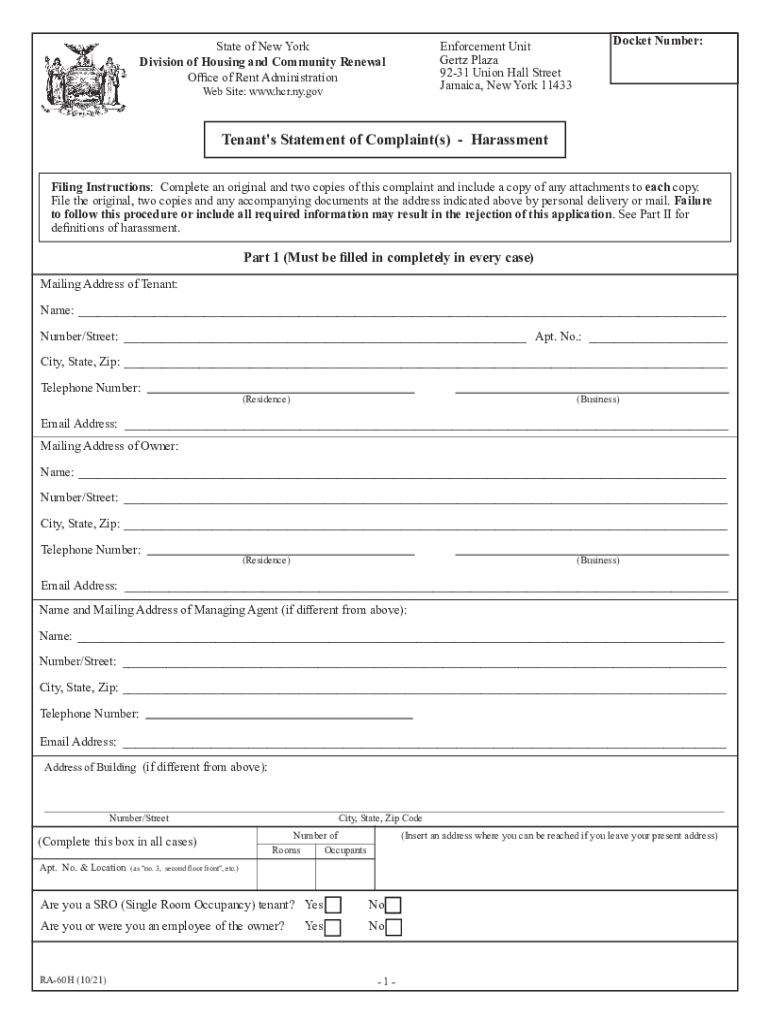
- Collect Necessary Information: Gather detailed information about tenants and landlords, including names, addresses, and contact details. Make sure to also document any incidents of harassment accurately.
- Identifying Details and Instances: Clearly outline the nature of harassment, supported by dates and descriptions of incidents. Include any legal actions taken, if applicable.
- Complete Personal and Property Sections: Fill in personal data fields as well as detailed information about the relevant property.
- Review Definitions and Guidelines: Pay close attention to the instructions regarding legal definitions of harassment and corresponding penalties for violations.
- Verify and Submit: Before submission, double-check all details for accuracy to avoid rejection. Submissions can typically be done online, through mail, or in-person, depending on the form capabilities.
Legal Terms and Conditions
Understanding legal terminologies is critical when handling forms from the HCR to ensure compliance with state housing laws. It is imperative to be aware of the definitions of harassment within the state to avoid inaccuracies. Harassment is considered illegal and carries severe penalties for landlords or property owners found guilty. Legal protections are established by state laws, and the form serves as a formal complaint to address violations.
Who Typically Utilizes the New York State Homes and Community Renewal Form
- Tenants: Primary users when reporting harassment complaints from landlords or property owners.
- Landlords and Property Managers: They may need to respond to complaints or utilize HCR forms for rent regulation or property management purposes.
- Legal Representatives: Often involved when legal action is taken against harassment, aiding clients throughout the documentation process.
Important Considerations and State-Specific Rules
New York State has specific rules governing tenant and landlord interactions, particularly regarding rent stabilization and housing discrimination. It is essential to understand these regulations to effectively utilize the HCR form. Not adhering to these rules could result in penalties and invalidations of complaints.
Information Required for Submission
- Tenant Information: Full name, current address, and additional necessary identification details.
- Landlord/Property Owner Details: Comprehensive contact information and identification.
- Incident Description: A clear and concise narrative of the harassment incidents, supported by evidence if available.
- Legal Documents: Attach any supporting legal documentation related to prior complaints or legal action.
Form Submission Methods
Forms can be submitted through various channels:
- Online: The state often facilitates a digital submission process for quicker handling.
- Mail: Traditional forms may be mailed to the appropriate state agency address provided within the form instructions.
- In-Person: In some cases, forms may be hand-delivered to designated offices to ensure proper documentation handling.
Consequences of Non-Compliance
Failing to comply with state regulations by filing incomplete or inaccurate forms may lead to dismissal of complaints. Additionally, landlords guilty of harassment face legal ramifications, including potential fines and penalties. It is critical to adhere strictly to submission guidelines to avoid these outcomes.
Key Elements
Focusing on the core elements of the form ensures completeness and accuracy in submission:
- Documented Harassment Incidents: Detailed descriptions and evidence.
- Complete Personal Information Sections: Avoid incorrect or omitted data fields.
- Adherence to State Guidelines and Definitions: Compliance with legal standards to validate complaints effectively.