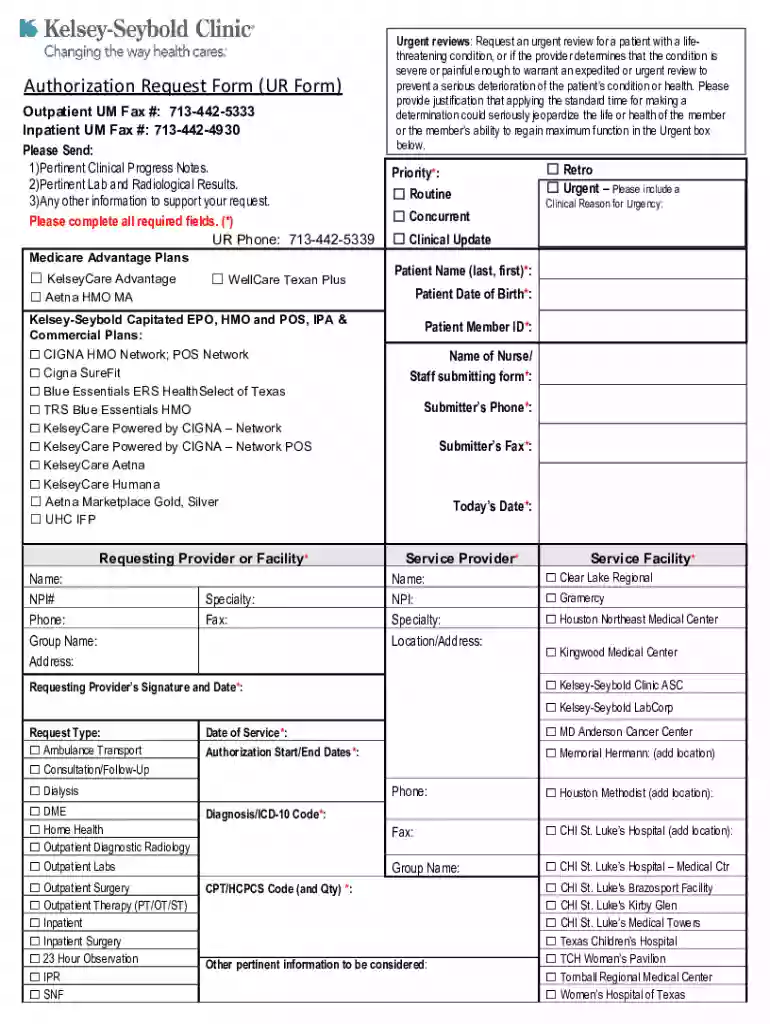
Authorization Request for Inpatient Psychiatric or 2026

Get Form
Authorization Request for Inpatient Psychiatric or Preview on Page 1

Here's how it works

01. Edit your form online
Type text, add images, blackout confidential details, add comments, highlights and more.

02. Sign it in a few clicks
Draw your signature, type it, upload its image, or use your mobile device as a signature pad.

03. Share your form with others
Send it via email, link, or fax. You can also download it, export it or print it out.

Definition & Meaning

The Authorization Request for Inpatient Psychiatric or is a formal document used within the healthcare system to request permission for inpatient psychiatric services. This form outlines specific details regarding patient care, ensuring that all necessary parties are informed and have reviewed the request. It serves as a crucial step in managing patient care for those requiring psychiatric treatment in a hospital setting. The authorization process helps verify the medical necessity and appropriateness of the requested services to remain compliant with healthcare regulations.

Key Elements of the Authorization Request Form

This request form contains several critical components necessary for processing:

  • Patient Information: Includes personal details such as name, date of birth, and insurance information.
  • Provider Details: Information about the healthcare provider making the request, including name, contact details, and a provider ID if applicable.
  • Service Type and Urgency: Identifies the type of psychiatric services being requested and the urgency classification, distinguishing between routine and expedited cases.
  • Diagnosis Codes: Specific medical codes indicating the patient's condition or diagnosis, which justify the need for inpatient care.
  • Authorization Dates: The period during which the requested services are authorized, including the start and end dates.

These elements ensure the request is complete and that all involved parties have access to vital information for processing.

How to Use the Authorization Request for Inpatient Psychiatric or

Utilizing the authorization request form involves several steps to ensure it is correctly completed and submitted:

  1. Gather Required Information: Collect all necessary patient and provider details, including health insurance information and diagnosis codes.
  2. Complete the Form: Fill out all sections accurately, ensuring all fields are addressed, especially those marked as mandatory.
  3. Attach Supporting Documents: If required, include any additional documentation that supports the request, such as previous medical history or treatment notes.
  4. Submit the Form: Send the completed form to the relevant healthcare authority or insurance provider using the designated submission method.

By following these steps, healthcare providers ensure that requests are processed efficiently, reducing delays in patient care.

Steps to Complete the Authorization Request

Completing the authorization request involves the following detailed steps:

  1. Personal Information Entry: Begin by filling in patient details, ensuring the patient's information matches medical records.
  2. Provider Verification: Add provider details and verify that the provider is authorized to request inpatient psychiatric services.
  3. Service Specification: Clearly indicate the type of psychiatric service requested and the urgency of the situation.
  4. Coding and Dates: Enter the correct diagnostic codes and specify the duration of the authorization required.
  5. Review and Sign: Carefully check the completed form for accuracy and sign where necessary to authenticate the request.

Proper completion and submission are crucial for timely approval.

Important Terms Related to the Authorization Request

Understanding key terms associated with the form is vital for accurate completion:

  • Inpatient Psychiatric Services: Hospital-based treatment interventions for mental health conditions requiring intensive care.
  • Diagnosis Codes: Standardized medical codes used to represent diagnoses for billing and treatment purposes.
  • Provider ID: Unique identifier for healthcare providers facilitating submission and tracking of requests.
  • Urgency Classification: Designation of how quickly services are required, which can affect processing speed.

Familiarity with these terms aids in proper form completion.

Legal Use of the Authorization Request Form

The form is legal documentation necessary for acquiring approval for inpatient psychiatric services. It ensures compliance with healthcare and insurance regulations, confirming that proposed treatments are medically necessary and align with patient benefits. Healthcare providers must adhere to legal guidelines when completing and submitting this form to avoid delays or rejection.

Who Typically Uses the Authorization Request Form

This form is predominantly used by:

  • Healthcare Providers: Psychiatrists, psychologists, and mental health professionals responsible for patient care.
  • Insurance Companies: To assess and authorize coverage and payment for inpatient psychiatric services.
  • Patient Advocates: Individuals or representatives ensuring that patients receive appropriate care and benefits.

Each party plays a role in navigating the authorization process effectively.

decoration image ratings of Dochub

Required Documents

Submitting the authorization request often necessitates accompanying documentation:

  • Previous Medical Records: To provide context and history of the patient's condition.
  • Existing Treatment Plans: Documentation of past and current mental health interventions.
  • Insurance Information: Details such as policy numbers and coverage terms.

Submitting comprehensive documentation ensures a complete request and facilitates quicker processing.

Submission Methods for the Authorization Request

There are multiple ways to submit this form:

  • Online Submission: Via healthcare portals or insurance websites for rapid and direct processing.
  • Mail: Traditional submission, which might be preferred in areas with limited internet access.
  • In-Person Drop-off: At healthcare facilities or insurance offices, ensuring immediate receipt confirmation.

Selection of the appropriate method depends on provider preferences and the urgency of the request.

be ready to get more

Complete this form in 5 minutes or less

Get form

Got questions?

We have answers to the most popular questions from our customers. If you can't find an answer to your question, please contact us.
Contact us
Common scenarios warranting inpatient care include: Persistent thoughts or behaviors indicating self-harm or suicide. Severe depression or mood instability. Withdrawal from substances when medically supervised detox is needed. Inability to function in daily activities due to overwhelming symptoms.
Admission Criteria (Severity of Illness): Threat to oneself requiring 24-hour professional observation: Threat to others requiring 24-hour professional observation: Command hallucinations directing harm to self or others where there is the risk of the patient taking action on them.
Admission Criteria Suicidal or homicidal thoughts, plans or actions. Chronic and continuing self-destructive behaviors that pose a docHub and/or immediate threat to life, limb or bodily function. Self-mutilation, actual or threatened. Assaultive, threatening behaviors or docHub verbal threat to safety of others.
9 Signs You Need to Go to a Hospital for Inpatient Mental Healthcare Youre Having Suicidal Thoughts. You Feel Trapped in Severe Depression. Youre Experiencing a Manic Episode. You Feel Overwhelmed by Agitation or Anger. Your Mood Swings Are Intense or Unpredictable. Youre Engaging in Self-Harm.

Security and compliance

At DocHub, your data security is our priority. We follow HIPAA, SOC2, GDPR, and other standards, so you can work on your documents with confidence.

Learn more
ccpa2
pci-dss
gdpr-compliance
hipaa
soc-compliance