01. Edit your form online
Type text, add images, blackout confidential details, add comments, highlights and more.

Type text, add images, blackout confidential details, add comments, highlights and more.

Draw your signature, type it, upload its image, or use your mobile device as a signature pad.

Send it via email, link, or fax. You can also download it, export it or print it out.
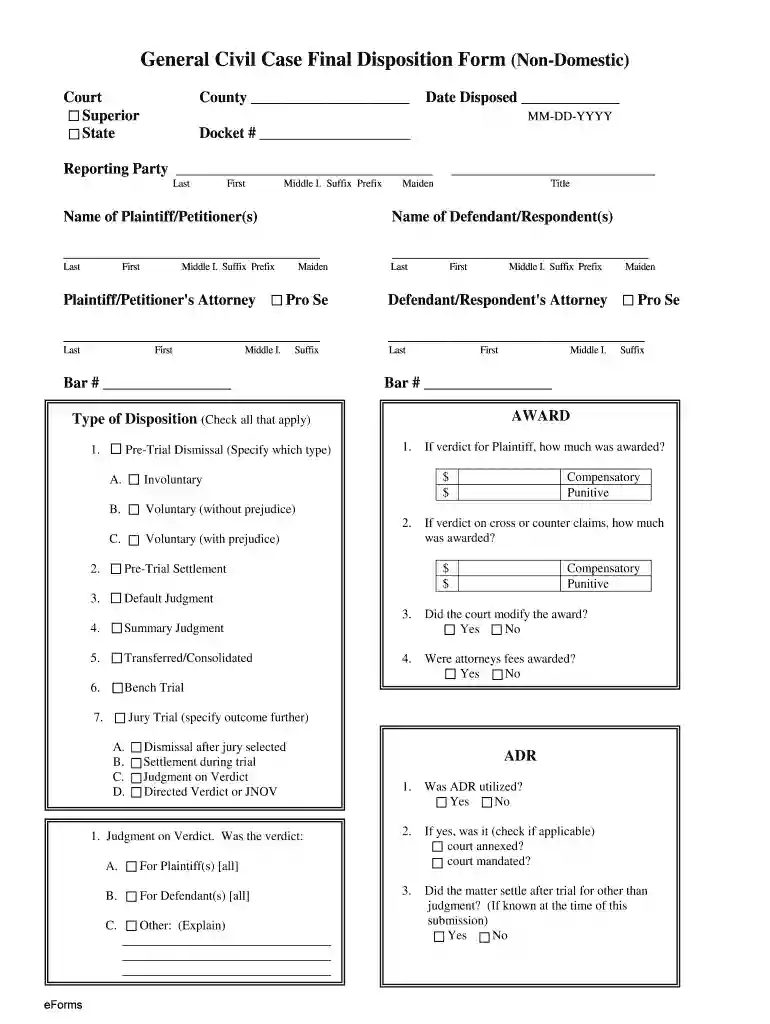
The Georgia Domestic Relations Case Filing Information Form (Non-Domestic) is a critical document used to report details regarding non-domestic cases within Georgia’s Superior Court system. It is primarily used for civil matters that do not involve domestic relations, such as divorces or custody battles. Understanding the exact parameters that define a non-domestic case is vital to ensuring accurate completion of the form. Specific cases include general civil disputes like contract disagreements or personal injury claims.
Filling out the Georgia Domestic Relations Case Filing Information Form (Non-Domestic) necessitates gathering detailed information about the case at hand. Key components typically include:
These elements ensure that the case is properly categorized and processed within the legal framework.
Completing this form involves a thorough, step-by-step process:
The Georgia Domestic Relations Case Filing Information Form (Non-Domestic) is typically utilized by attorneys, legal assistants, or individuals representing themselves in non-domestic civil matters. Its primary function is to formally document the particulars of a case at the initial filing stage:
Accessing the Georgia Domestic Relations Case Filing Information Form (Non-Domestic) can typically be achieved via:
Georgia law imposes specific requirements and rules for the completion and submission of the form:
Understanding and adhering to these rules ensures compliance and avoids potential delays or legal issues.
The form must be used within legal parameters and specific contexts, including:
The targeted user base for the form includes:


At DocHub, your data security is our priority. We follow HIPAA, SOC2, GDPR, and other standards, so you can work on your documents with confidence.