
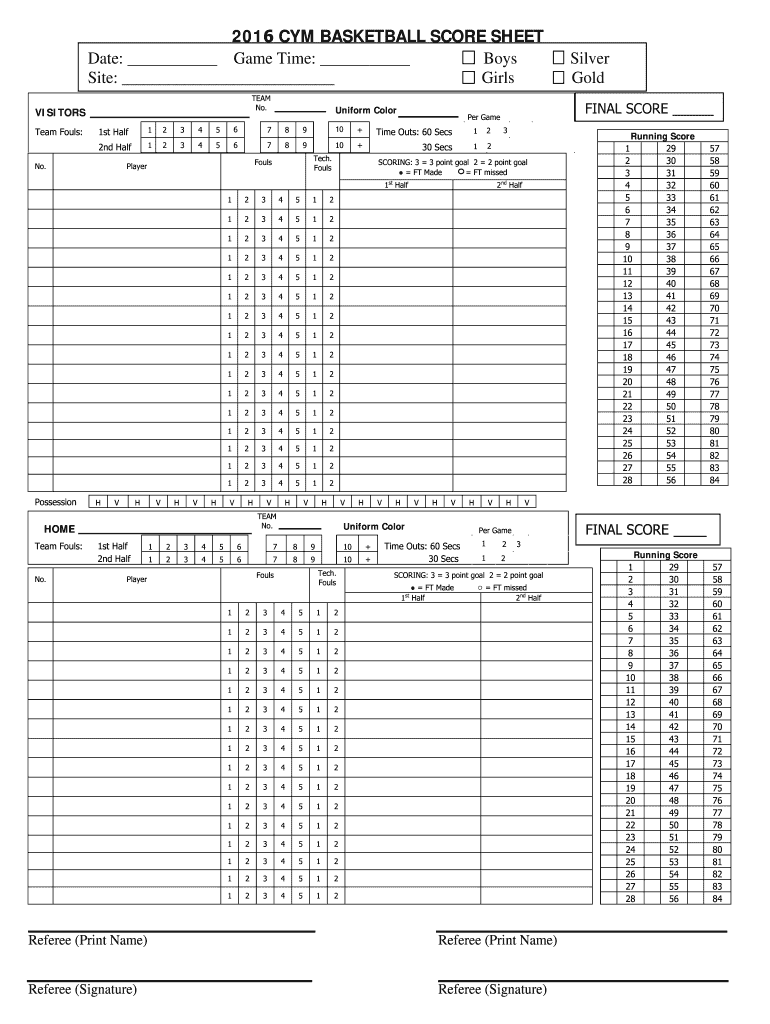







Definition and Importance of the Basketball Score Sheet
A basketball score sheet is a critical document used to track and record the key statistics and events during a basketball game. It serves as a comprehensive record that includes information such as team names, player statistics, fouls committed, timeouts, and scores. The importance of a basketball score sheet cannot be overstated, as it provides not only a record of the game's outcome but also detailed insights that can be analyzed for performance improvement.
Key Features of a Basketball Score Sheet
- Team Information: The score sheet typically includes spaces for both participating teams, facilitating easy access to team names and logos.
- Player Statistics: It captures individual player performance metrics such as points scored, assists, rebounds, steals, and personal fouls.
- Scoring Events: Each scoring event, whether it’s two-point field goals, three-point goals, or free throws, is documented, allowing for a transparent review of scoring efficiency.
- Fouls and Timeouts: The sheet tracks fouls committed by each player, which is essential for managing player participation and understanding game dynamics.
- Period Summaries: A breakdown of scores by quarter or half is provided, enabling teams and coaches to analyze performance over specific segments of the game.
The basketball score sheet serves as an essential tool for coaches, players, and statisticians to evaluate the team’s performance and develop strategic plans for future games.
How to Use the Basketball Score Sheet
Using a basketball score sheet effectively requires a clear understanding of its structure and the specific data points it tracks. Before the game commences, the following steps are recommended:
- Fill in Team and Player Names: Before the game starts, record the names of all players who will participate from both teams. This ensures that you have full accountability for all actions on the court.
- Record Game Events: As the game progresses, continuously document all important events. For scoring plays, note the player who scored, the type of points (field goal, free throw), and the time of the score.
- Track Fouls and Timeouts: Maintain an accurate count of personal fouls for each player and the timeouts taken by both teams. This data is crucial for managing player rotation and strategy.
- Summarize Periods: At the end of each quarter or half, summarize the scores for both teams. This provides an immediate snapshot of game status and performance trends.
Knowing how to use the score sheet properly encourages accurate tracking of game dynamics and player contributions, allowing for informed adjustments during the game.
Steps to Complete the Basketball Score Sheet
Completing a basketball score sheet involves systematic tracking of the game. Here’s a structured approach:
-
Pre-Game Preparation:
- Gather all necessary materials including pens, printed score sheets, and any software if using a digital format.
- Ensure that you have an adequate understanding of the game rules and the format of the score sheet.
-
Entering Game Information:
- Write down the date, location, and any specific details regarding the matchup, such as team rankings or special events.
- Record starting lineups for both teams and any notable substitutions as the game progresses.
-
Recording Game Progress:
- Use clear, consistent notation for scoring—mark "2" or "3" next to the player’s name depending on the points scored.
- Keep an eye on the clock and record time-sensitive information, noting the timing of fouls and critical plays.
-
Post-Game Summary:
- Once the game concludes, review all entries for accuracy and completeness.
- Total the points for each player and team, ensuring that the final scores reflect correctly in the summary sections.
Following these steps guarantees that your basketball score sheet is both accurate and complete, enabling better analysis and strategizing for future games.
Types of Basketball Score Sheets Available
Basketball score sheets come in various formats to accommodate different preferences and requirements. Common types include:
- Printable Basketball Score Sheets: These are pre-designed templates that can be printed out and filled by hand. They are useful for coaches who prefer traditional methods.
- Editable Basketball Score Sheets: These digital templates (e.g., Word or Excel) allow users to input data directly onscreen, facilitating quick edits and modifications as the game progresses.
- Online Basketball Scorebooks: Utilizing web-based platforms to track scores provides real-time updates and easier data sharing among team members and stakeholders.
- Mobile Scorekeeping Apps: These applications allow for score tracking directly from smartphones, making it convenient for on-the-go data entry during games or tournaments.
Each type of score sheet serves a unique purpose and provides users with flexibility based on their specific needs and preferences.
Who Uses the Basketball Score Sheet?
The basketball score sheet is a valuable tool for various stakeholders associated with the sport:
- Coaches: They use the score sheet to analyze player performance, strategize future practices, and make real-time decisions during games.
- Players: Individual players can review their statistics post-game to understand their contributions and areas for improvement.
- Statisticians: These professionals rely on score sheets to compile game statistics, producing analyses that can influence game perspectives and fan engagement.
- Scouts: Scouts use detailed collections of score sheets to evaluate player performance over time and to determine prospects for team recruitment.
Understanding the diverse applications of the basketball score sheet ensures that all stakeholders can leverage the valuable insights it provides.
Key Elements of the Basketball Score Sheet
A well-structured basketball score sheet comprises several important elements, each serving a specific purpose in documenting the game. Key elements include:
- Team and Player Names: Identification of the teams and individuals involved, vital for proper tracking of performance.
- Scoring Sections: Specific areas designated for documenting field goals, free throws, and other scoring types, enabling precise tracking of game events.
- Foul Counts: Sections to record fouls per player and the total count for each team, crucial for managing player limitations and substitutions.
- Timeout Tracking: A designated area for noting timeouts taken, allowing coaches to strategize resting players effectively.
- Final Score Overview: A section summarizing the final scores, pivotal for record-keeping and analysis.
Each of these elements plays a crucial role in ensuring an accurate and comprehensive portrayal of the game, making the basketball score sheet indispensable for proper game management.




