




Definition and Meaning
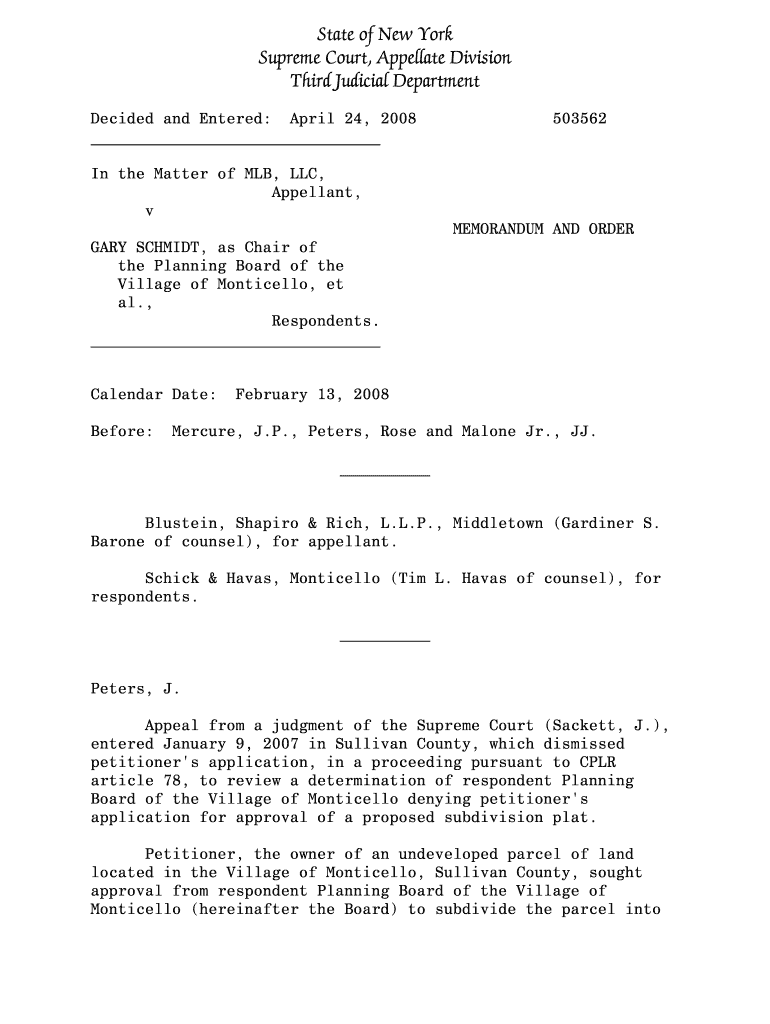
The term "In the Matter of MLB, LLC, - decisions courts state ny" refers to legal proceedings involving MLB, LLC in the New York state court system. These cases typically entail legal controversies where the court is asked to make a decision regarding certain disputed matters. In the referenced case, the New York Supreme Court, Appellate Division, was involved in reviewing an appeal concerning the Village of Monticello’s Planning Board decision. The case underscores the application of local laws and the court's role in administrative reviews, where engineering standards and local governance issues are contested.
Key Elements of the Court Decision
Several critical aspects define court decisions in these matters:
- Judicial Review: Decisions often involve a judicial review of administrative actions taken by local authorities, such as planning boards.
- Legal Standards: The court assesses whether the initial decision met the appropriate legal and engineering standards.
- Local Discretion: The authority of local boards in making decisions based on community concerns is a significant theme.
- Evidence Consideration: The decision reflects careful evaluation of the evidence supporting or opposing the administrative action.
How to Use the Court Decisions
Understanding these court decisions is essential for parties involved in similar legal disputes:
- Legal Precedent: Analyze how courts have previously interpreted and applied relevant laws.
- Strategic Insights: Gain insights into effective legal strategies, particularly in administrative law cases.
- Community Impact: Consider the broader impact of such decisions on local governance and community planning processes.
State-Specific Rules
In New York, unique rules and legal frameworks apply to court decisions involving municipal bodies:
- Home Rule Authority: New York law grants considerable power to local municipalities to govern within their jurisdiction, influencing court evaluations.
- Environmental Concerns: Court decisions often consider environmental impacts in planning cases, such as issues of drainage and land use.
- Procedural Requirements: Specific procedural rules govern how appeals are to be filed and reviewed, impacting case outcomes.
Practical Examples
Applying this court decision to hypothetical scenarios can clarify its implications:
- Subdivision Approvals: A developer facing subdivision approval denial might study this decision to better understand the possible outcomes of an appeal.
- Municipal Governance: Local governments can refer to this case to affirm their discretion in handling similar planning issues.
Important Terms
Key legal terms and phrases are critical to comprehending the court decisions:
- Appellate Review: The process by which higher courts reassess decisions made by lower tribunals.
- Discretionary Powers: Refers to the flexibility given to local entities in making judgment-based decisions.
- Engineering Standards: Technical criteria used to evaluate project proposals in planning matters.
Legal Use and Implications
Understanding the legal implications of this decision can guide various stakeholders:
- Developers: Helps in preparing for legal challenges related to project approvals.
- Municipalities: Assists in exercising discretion judiciously within the bounds of state laws to withstand judicial scrutiny.
Steps to Complete an Appeal
When seeking to challenge a similar decision, following structured steps is essential:
- Review Decision: Carefully analyze the lower court’s decision and the basis for its conclusions.
- Prepare Documentation: Compile evidence and documents supporting your position.
- File Notice of Appeal: Submit a formal notice to the appropriate appellate court.
- Legal Representation: Consider engaging a lawyer specializing in administrative law for guidance.
Penalties for Non-Compliance
Failure to comply with decisions or procedures can lead to significant repercussions:
- Legal Sanctions: Non-compliance with court directives can result in fines or legal action.
- Project Delays: Unresolved legal disputes can stall development projects, leading to financial losses.
Business Entity Types Involved
Different business structures may encounter varying challenges in court proceedings:
- LLCs: Often involved in land use and municipal cases due to their operational flexibility and limited liability.
- Partnerships: Might face additional scrutiny in land development activities due to shared liability.