






Definition and Meaning of the Child Care Manual Revisions
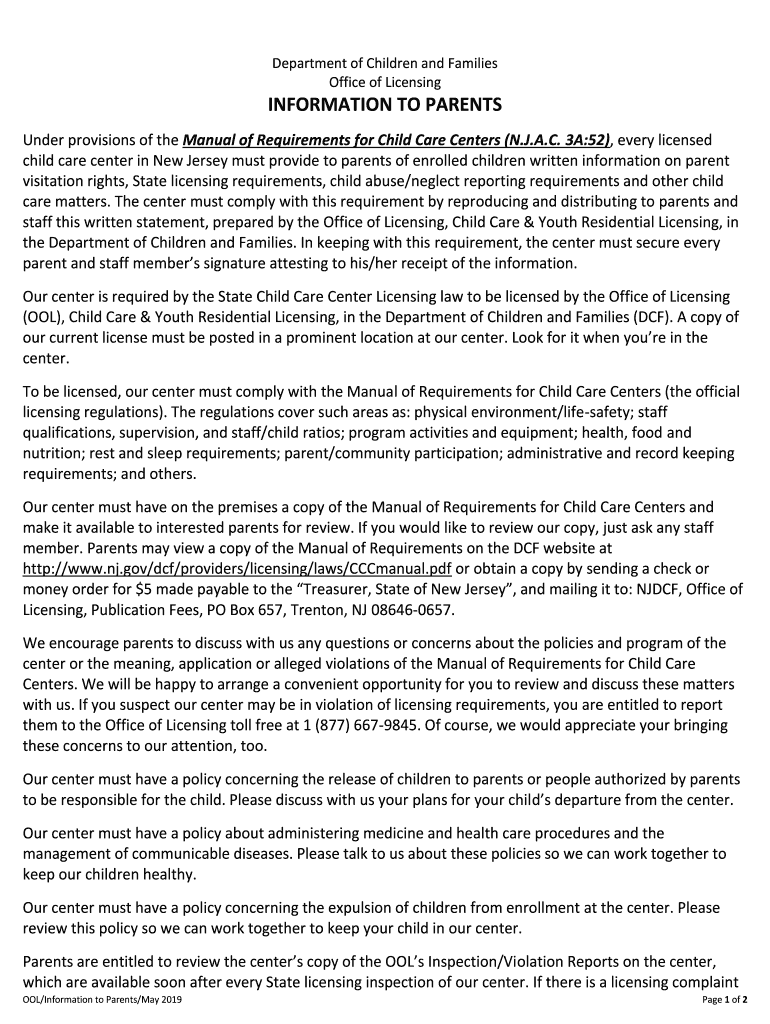
The "Child Care Manual Revisions Posted - Child Care Aware NJ" refers to updates made to the official guidelines and policies governing child care centers in New Jersey. These revisions ensure that the regulations stay current with state laws, industry standards, and best practices for child care providers. The manual serves as a comprehensive resource detailing the requirements child care centers must adhere to for compliance, including but not limited to health and safety measures, educational standards, and operational procedures. Understanding the implications of these revisions is essential for child care administrators and parents to safeguard children's welfare and legal compliance.
How to Use the Child Care Manual Revisions
To effectively utilize the Child Care Manual Revisions, stakeholders such as administrators, staff, and parents should regularly review the document to stay informed of any changes that could impact operations or child care standards. The manual can be used as a checklist to verify compliance with all specified requirements. For administrators, pinpointing areas that need adjustment is crucial for maintaining licenses and certifications. Staff members should reference these revisions during training sessions to align their practices with the latest guidelines. Additionally, parents and guardians can use the document to be aware of their rights and the standards their child's care center should meet.
Steps to Complete Compliance with the Manual
- Review the Latest Revisions: Start by thoroughly reading the most recent revisions to understand the new or updated requirements.
- Conduct an Internal Audit: Compare current practices against the updated guidelines to identify any areas of non-compliance.
- Develop an Action Plan: Create a list of steps needed to address any discrepancies found during the audit.
- Train Staff: Ensure that all childcare staff are trained on the new requirements and understand the implications of any changes.
- Monitor and Maintain Compliance: Regularly check practices against the manual to ensure ongoing compliance, adjusting as needed with future revisions.
Key Elements of the Child Care Manual Revisions
- Health and Safety Protocols: Updates may include new measures for illness prevention, emergency procedures, and facility maintenance standards that child care centers must adhere to.
- Educational Program Standards: Revisions often address curriculum guidelines, educator qualifications, and program assessment criteria.
- Operational Requirements: This includes administrative duties, such as record-keeping practices, staff-to-child ratios, and facility licensing standards.
- Parental Rights and Involvement: New sections may outline parents' rights to visit and communicate with staff, along with their role in policy feedback and engagement.
Who Typically Uses the Child Care Manual Revisions
The primary users include child care center administrators, educators, and regulatory personnel who rely on the manual to ensure facilities comply with state regulations and standards. Parents of children enrolled in programs are also users, utilizing the manual to understand their rights and ensure their children's welfare. Additionally, legal and professional consultants might reference these revisions to provide guidance on compliance and operational adjustments.


Legal Use and Compliance Implications
Adhering to the Child Care Manual Revisions is legally mandatory for licensed child care centers in New Jersey. Non-compliance can result in penalties such as fines, suspension of licenses, or even closure of facilities. The manual underscores legal responsibilities for ensuring child safety, staff qualifications, and program quality that meet or exceed state-specified benchmarks. It is crucial for centers to integrate these revisions into their operational protocols to not only fulfill their legal obligations but also to ensure a safe and supportive environment for children.
Important Terms Related to the Revisions
- Licensing Requirements: The criteria that centers must meet to obtain and maintain a valid operating license.
- Health Protocols: Guidelines related to hygiene, emergency plans, and necessary health precautions.
- Educational Standards: Benchmarks for instructional programs, staff training, and developmental assessments.
- Parental Rights: The entitlements of parents to access information and participate in their children's care and education.
State-Specific Rules and Considerations
New Jersey's child care regulations may differ from those in other states, notably in aspects such as staffing requirements, program standards, and parent involvement policies. These state-specific rules reflect localized priorities and legislative intents particular to New Jersey's child welfare and educational goals. Child care centers must pay particular attention to these unique state guidelines to avoid misunderstandings and ensure compliance with the state's regulatory framework.
Examples of Using the Child Care Manual Revisions
A licensed child care center may use the revisions to:
- Update emergency evacuation procedures in alignment with new state requirements.
- Adapt their intake procedures to reflect changes in health screening mandates.
- Modify their curriculum offerings based on revised educational guidelines.
- Inform staff training and workshops to prioritize compliance and quality improvement based on new revisions.