Definition & Meaning
Business Licensing from the Alaska Department of Commerce is a process by which businesses obtain the necessary permissions to legally operate within the state. This licensing serves as a regulatory measure to ensure that businesses meet specific standards and comply with state regulations, fostering a fair and secure market. The license provides a formal acknowledgment of the business's legal standing in Alaska and helps maintain public trust and safety by ensuring operations are transparent and above board.
Key Functions
- Legal Compliance: Ensures businesses meet state-mandated requirements.
- Public Trust: Enhances consumer confidence by verifying legitimacy.
- Regulatory Oversight: Allows the state to monitor and regulate business activities effectively.
How to Obtain the Business Licensing - Alaska Department of Commerce
To acquire a business license in Alaska, you need to follow a series of structured steps to ensure compliance with state regulations. This process is crucial for both new businesses and any currently operating entities that need to renew or update their existing licenses.
Step-by-Step Process
- Determine License Needs: Identify the type of business activities you will engage in and any additional permits required for specific operations.
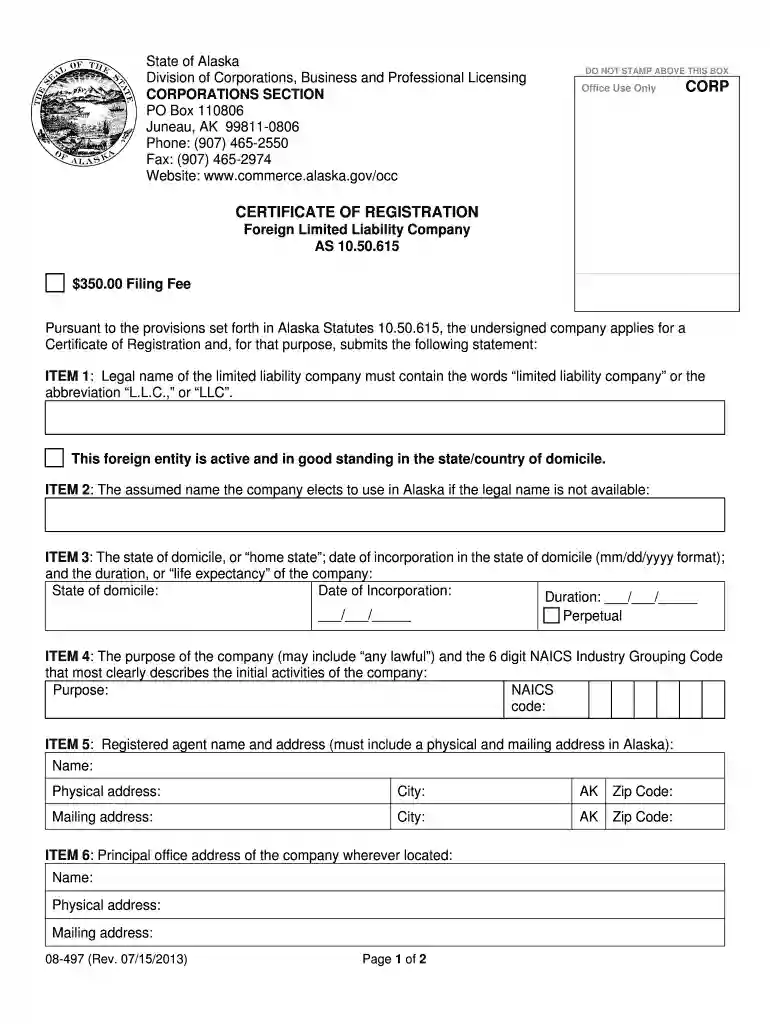
- Complete Application: Fill out the appropriate forms. These can typically be obtained from the Alaska Department of Commerce's website or physical office.
- Submit Required Documents: Provide necessary documents, such as proof of identity, business name registration, and any additional certifications specific to your business type.
- Pay Application Fees: Fees vary based on the business type and are required to process your license.
- Await Approval: Processing times can vary, but ensure you follow up with the department if necessary.
- Receive License: Upon approval, you will receive your business license, allowing you to operate legally within the state.
Steps to Complete the Business Licensing - Alaska Department of Commerce
Completing the business licensing process involves several detailed steps to ensure all legal and regulatory requirements are fulfilled.
Detailed Steps
- Research: Begin by researching specific state requirements for your business type and any industry-specific regulations.
- Gather Information: Collect all personal and business information required to complete the application. This includes EINs, addresses, and contact details.
- Application Form: Carefully fill out all sections of the form, ensuring accuracy to avoid processing delays.
- Document Submission: Submit any additional documents requested by the department, such as operating agreements or articles of incorporation.
- Fee Payment: Ensure all fees are paid. Retain proof of payment in case verification is needed later.
- Confirmation and Verification: Await confirmation from the department. Keep an eye on communication channels for any follow-up requests.
Required Documents
A successful application requires specific documents to verify the business's legitimacy and the owner's identity. Ensuring all documents are complete and correct is vital for a smooth licensing process.
Essential Documents
- Identification: Valid government-issued ID of the business owner.
- Business Name Registration: Proof of the registered business name.
- EIN: Employer Identification Number, if applicable.
- Supporting Certificates: Documents specific to the business's industry or legal structure such as partnership agreements or articles of incorporation.
- Resident Agent Information: If applicable, documentation related to your resident agent.
Legal Use of the Business Licensing - Alaska Department of Commerce
Once your business has obtained a license, it opens avenues for legally operating within Alaska. This license enables businesses to partake in economic activities, advance their presence in the market, and offers protection against potential legal issues.
Benefits
- Market Entry: Legally enter and compete in Alaska's market.
- Advertising: Use the license to verify business legitimacy in marketing materials.
- Compliance Assurance: Ensures that the business adheres to local, state, and federal regulations, potentially minimizing legal challenges.
State-Specific Rules for the Business Licensing - Alaska Department of Commerce
Alaska imposes unique requirements that businesses must comply with to maintain a valid license. Understanding these state-specific rules is essential for continuous compliance.
Specific Requirements
- Annual Renewals: Businesses must renew their licenses annually and update their information to reflect any changes.
- Local Permits: Some areas may require local permits in addition to the state license, particularly for specific industries like food services or construction.
- Tax Registration: Businesses are required to register for state taxes, and compliance with Alaska's tax codes is mandatory.
Examples of Using the Business Licensing - Alaska Department of Commerce
Understanding practical applications of the business license helps illustrate its significance in everyday operations. Businesses across various sectors use the licensing system for different purposes.
Real-World Scenarios
- Retail Businesses: Ensure compliance and enhance consumer trust by operating legally within state laws.
- Professional Services: Professionals in fields such as accounting or real estate use licenses to validate their practice and meet industry standards.
- Contractors: Construction companies leverage licenses to qualify for contracts requiring proof of legal operations within the state.
Penalties for Non-Compliance
Operating a business without the proper license can result in severe repercussions that can impact the business financially and reputationally.
Risks and Consequences
- Fines: Significant monetary penalties can be imposed for unlicensed operations.
- Legal Action: The state may take legal action against unlicensed businesses, leading to potential court cases.
- Business Closure: Continuing operations without a license can result in enforced business closure until compliance is achieved, affecting revenue and market position.
Ensuring comprehensive adherence to the licensing process not only safeguards your business but also aligns it with the state's economic guidelines, contributing to a thriving business environment in Alaska.