






Definition and Meaning
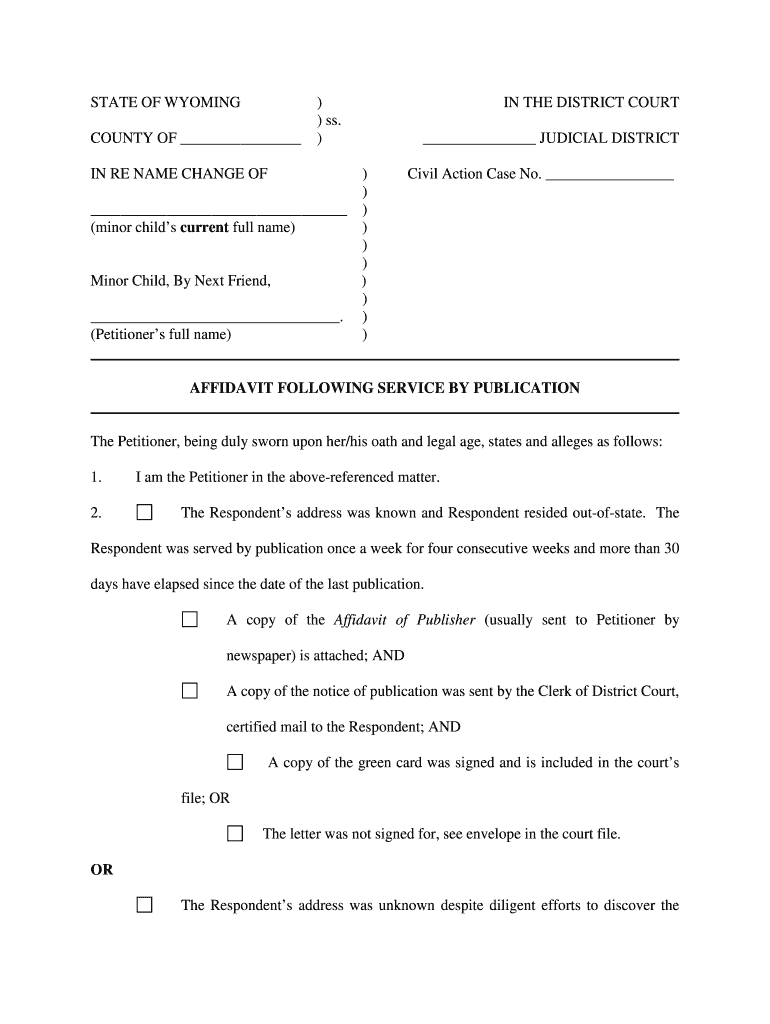
The "Affidavit to Allow Service by Publication - eforms" is a legal document used primarily in situations where traditional methods of legal notification, such as direct service, are not feasible. This affidavit allows for an alternative method known as "service by publication," where notice is given to a party by publishing the summons or notice in a newspaper. This process is often used in legal cases involving individuals who are difficult to locate. By utilizing this affidavit, courts ensure that adequate efforts to notify the opposing party have been made, thereby allowing proceedings to continue.
How to Use the Affidavit
To effectively use the affidavit, certain steps must be followed to ensure legal compliance:
- Verification of Attempts: Before opting for service by publication, demonstrate that all reasonable efforts to serve the defendant by traditional means have been exhausted.
- Prepare the Affidavit: Fill out the affidavit, detailing attempts made to locate the respondent and the necessity for publication. Include relevant information such as dates and methods of attempted contact.
- Publication Requirements: Choose a newspaper where the notice will be published. This is typically a newspaper in the area where the respondent was last known to reside.
- Time Frame: Ensure the notice runs for the required duration, often specified as a set number of consecutive weeks, to fulfill legal obligations.
How to Obtain the Affidavit
To obtain the "Affidavit to Allow Service by Publication - eforms," follow these steps:
- Court or Legal Websites: Access the form through your local court's website or through online legal service providers like DocHub, which offer standardized forms.
- Consult Legal Counsel: Engage with a lawyer to ensure the correct version of the form is used and that it aligns with state-specific requirements.
- Download and Print: Once accessed, download the document and print it for manual completion or use an online editor for digital modification.
Steps to Complete the Affidavit
Completing the affidavit accurately is crucial. Follow these detailed steps:
- Personal Information: Enter your details, including name, address, and contact information, as the person submitting the affidavit.
- Case Information: Fill in the case number and any other identifying case details.
- Detailed Attempts: Clearly describe all efforts made to contact the respondent, providing evidence where possible, such as receipts from certified mail or engagement with private investigators.
- Justification for Publication: Include reasons why service by publication is necessary, supported by detailed documentation.
- Notarization: Sign the affidavit in the presence of a notary to validate its authenticity legally.
Who Typically Uses the Affidavit
The affidavit is predominantly used by:
- Individuals in Family Law Cases: Commonly employed in divorces or child custody cases where a party cannot be personally served.
- Attorneys and Legal Practitioners: Professionals use this form to facilitate proceedings in hard-to-serve cases.
- Court Clerks: Administrative personnel may assist in preparing and processing forms for litigants.


Important Terms Related to the Form
Understanding key terms related to the affidavit enhances comprehension and proper usage:
- Affidavit: A written statement confirmed by oath for use as evidence in court.
- Service by Publication: The legal process of serving court papers by publishing the notice in a newspaper.
- Respondent: The party who is being addressed or notified by the affidavit.
Legal Use of the Affidavit
Service by publication via this affidavit is strictly regulated to ensure fairness in legal proceedings:
- Judicial Approval: Before proceeding, a judge must approve the use of service by publication, accepting that traditional service was impracticable.
- State Laws: Legal requirements and allowance for publication vary by state, necessitating consultation with legal statutes or professionals.
Key Elements of the Affidavit
The affidavit must include several essential components to be valid:
- Sworn Statement: Must be sworn under oath, acknowledging the truthfulness of the provided information.
- Detailed Account of Service Attempts: A comprehensive log of all attempted contact and reasoning for failure of direct service.
- Request for Publication: Explicit request to the court seeking permission to publish the notice, accompanied by a proposed publication schedule.