






Definition and Meaning
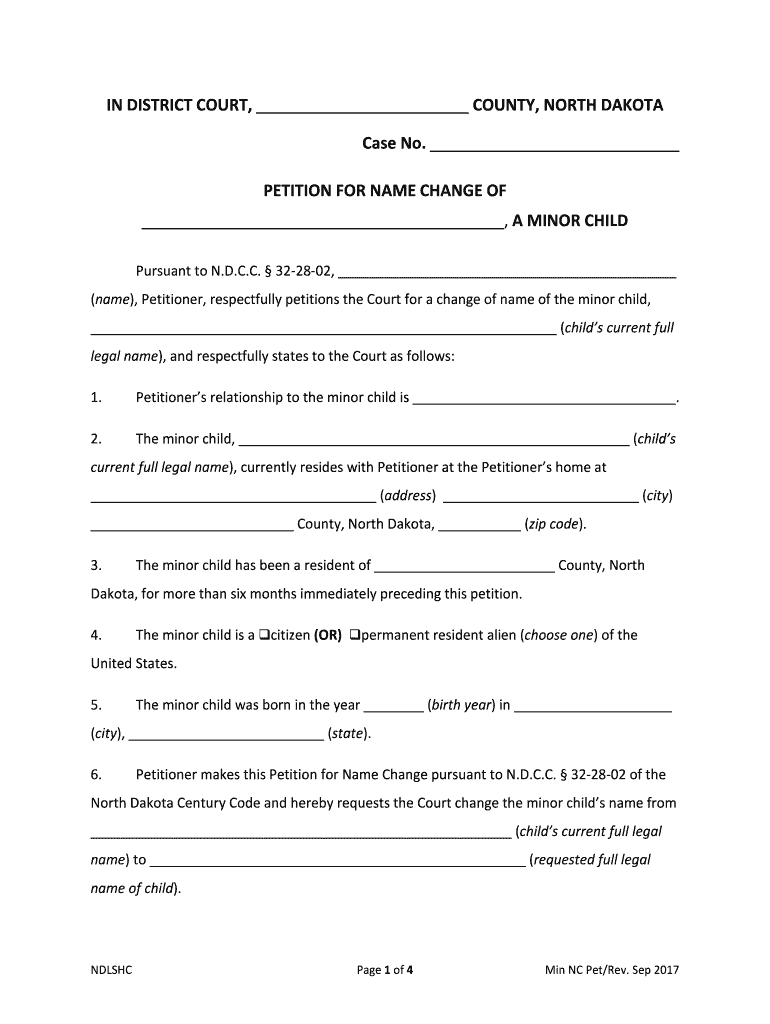
The "IN DISTRICT COURT, COUNTY OF , STATE OF NORTH DAKOTA IN THE" form is a standard legal document used to initiate court proceedings in North Dakota's district courts. This form is essential for officially documenting various legal actions, such as petitions, filings, or requests for judicial review. Each form serves as a foundational element in legal processes, ensuring proper legal procedures are followed and providing a clear record of the actions undertaken by involved parties.
Key Components:
- Court Information: Identifies the specific district and county in North Dakota where the case is filed.
- Parties Involved: Lists all individuals or entities participating in the proceeding.
- Case Details: Provides a concise summary of the legal matter to be addressed.
- Legal Basis: Outlines the statutes or legal principles applicable to the case.
Steps to Complete the Form
Completing the "IN DISTRICT COURT, COUNTY OF , STATE OF NORTH DAKOTA IN THE" form involves several critical steps to ensure accuracy and compliance with legal standards.
-
Identify the Correct District and County: Determine the appropriate jurisdiction based on the nature of your legal issue and residence.
-
Gather Required Information:
- Names and contact details of all parties
- Relevant legal statutes and case numbers, if applicable
-
Fill in the Form: Carefully enter all necessary details, ensuring no sections are left incomplete or incorrect.
-
Review and Verify: Double-check all information for accuracy, especially names, addresses, and legal references.
-
Submission: File the completed form with the district court either electronically or in-person, depending on court guidelines.
Additional Tips:
- Consult with a legal professional for complex cases.
- Ensure all supporting documents are attached as required.
Legal Use of the Form
This form is primarily used within the legal system for official court proceedings. Its purpose is to maintain a structured and lawful approach in handling legal matters within North Dakota, ensuring all parties have a clear understanding of the case details and legal standing.
Common Legal Processes:
- Name Changes: Used in petitions to alter legal names officially.
- Family Law: Essential in divorce filings, custody cases, or child support matters.
- Civil Cases: Utilized for contract disputes, personal injury claims, or property disputes.
Who Typically Uses the Form
The "IN DISTRICT COURT, COUNTY OF , STATE OF NORTH DAKOTA IN THE" form is predominantly used by individuals and legal entities involved in a legal action within the state.


Typical Users Include:
- Attorneys: Represent clients in court proceedings.
- Plaintiffs and Defendants: Individuals or parties filing or responding to a legal case.
- Legal Clerks: Facilitate the filing and management of court documents.
Important Terms Related to the Form
Understanding the terminology associated with this form helps clarify its purpose and the process involved.
- Petitioner: The individual or entity filing the legal action.
- Respondent: The party responding to or contesting the action.
- Jurisdiction: The court's authority to hear and decide a case.
State-Specific Rules
In North Dakota, specific rules and procedures govern the use of the "IN DISTRICT COURT, COUNTY OF , STATE OF NORTH DAKOTA IN THE" form. It is vital to adhere to these regulations to ensure legal validity.
Key State-Specific Aspects:
- Filing Fees: Vary depending on the type of case and court.
- Submission Deadlines: Strict timelines for filing and responding must be observed.
- Notification Requirements: Certain cases require notifying other parties or publishing notices in recognized channels.
Examples of Using the Form
Real-world scenarios provide insight into how this form is employed in legal contexts.
Case Studies:
- Name Change for a Minor: Parents petition the court for a child's name change, citing necessities like adoption alignment or personal preference.
- Civil Litigation: A party files to resolve a breach of contract under North Dakota law.
Required Documents
Submitting this form often necessitates accompanying documentation to validate claims or substantiate legal actions.
Commonly Needed Documents:
- Identification: Copies of ID for parties involved.
- Supporting Evidence: Contracts, photographs, or medical records pertinent to the case.
- Previous Court Orders: If the case involves modifications or extensions.
Meticulously following these guidelines ensures compliance with North Dakota’s legal framework while facilitating smooth, efficient legal proceedings.