







Understanding Indiana Form 49969 Care
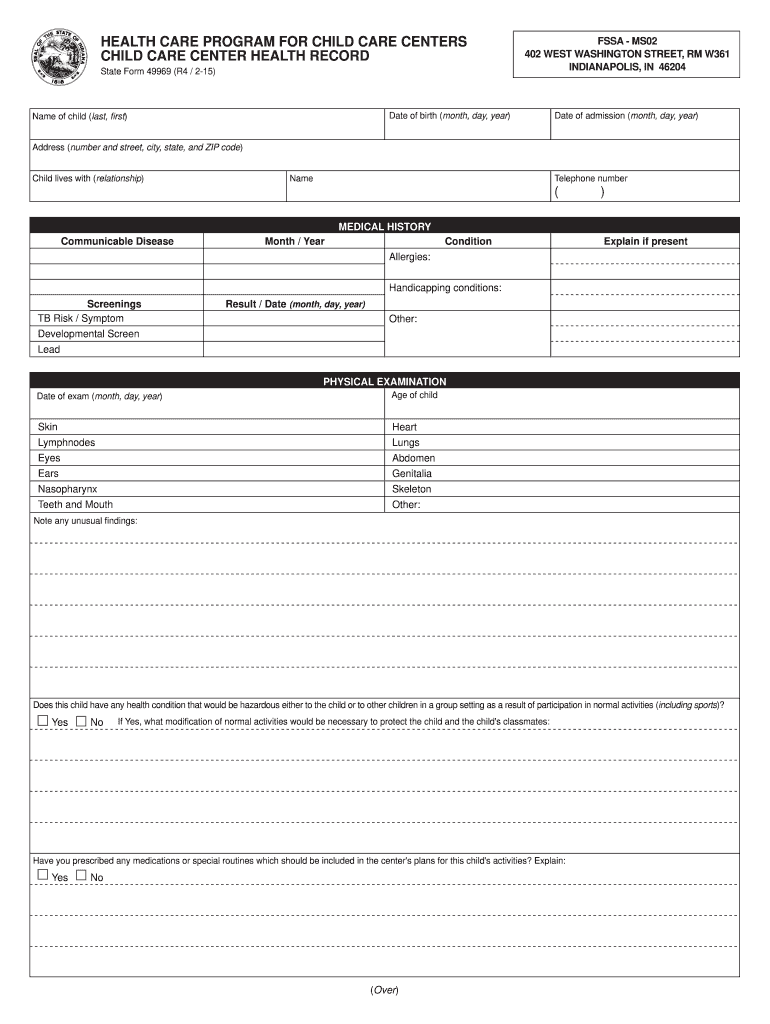
Indiana Form 49969, commonly referred to as the Child Care Center Health Record, is essential for maintaining children's health information within child care facilities. This form is specifically designed for health care providers to detail a child's medical history, immunizations, physical examinations, and any health issues that may affect their ability to participate in childcare activities.
Purpose of Indiana Form 49969
The primary objective of this form is to ensure that child care centers have accurate and complete health records of each child. This comprehensive health documentation is vital for:
- Ensuring Safety: Having a clear picture of each child's health allows child care providers to make informed decisions about their care.
- Promoting Health Awareness: Regular updates to the form encourage parents and guardians to keep their children’s vaccinations and health evaluations current.
- Legal Compliance: Many states, including Indiana, require documentation of health records for children enrolled in childcare facilities, helping centers meet legal standards.
Key Components of the Form
Indiana Form 49969 consists of several critical sections that capture essential health information:
- Child's Medical History: This section includes past illnesses, allergies, and chronic conditions, allowing providers to tailor care to individual needs.
- Physical Examination Results: Details from the child's latest physical examination, including height, weight, and overall health status.
- Immunization Records: An up-to-date account of vaccinations, ensuring compliance with public health guidelines.
- Health Conditions: Documentation of any health issues affecting participation in group activities, providing necessary context for child care staff.
Completing Indiana Form 49969
Proper completion of Indiana Form 49969 is essential for its effective use. Parents or guardians are typically responsible for:
- Gathering Required Information: Collect and organize the child’s medical history and vaccination records, often requiring input from health care providers.
- Working with Health Care Providers: Schedule a physical examination with the child's pediatrician to ensure accurate and comprehensive assessments are included.
- Submitting the Form: Ensure the completed form is submitted to the child care facility, as many facilities require this documentation before enrollment.
Signatures and Updates
This form is not just a one-time requirement; it must be updated annually or whenever there are significant health changes. Key considerations include:
- Health Care Provider Signatures: A signature from a licensed health care provider is necessary to validate the information captured on the form.
- Annual Updates: Each year, health details should be re-evaluated and documented to maintain the accuracy of the child's health record, necessitating new signatures as required.
Importance of Confidentiality and Security
Given the sensitive nature of health information, confidentiality must be prioritized:
- Data Protection: Facilities must implement protocols to protect the integrity and confidentiality of the health records maintained under Indiana Form 49969.
- Compliance with Regulations: Child care providers must comply with federal and state regulations regarding health information privacy to ensure the safety and trust of families.
Regular Checks and Reporting
Child care providers should incorporate regular health checks and reporting procedures in their practices:
- Regular Health Assessments: Conducting frequent health evaluations helps in identifying any potential concerns early, ensuring prompt responses.
- Communication with Parents: Regularly update parents about their child's health performance, including reminders of annual check-ups and immunization schedules.
Conclusion
The Indiana Form 49969 care serves as a foundational document in ensuring the health and safety of children in childcare environments. By understanding its purpose, components, and compliance requirements, child care providers can foster a healthy and secure environment for children while adhering to state mandates.




