
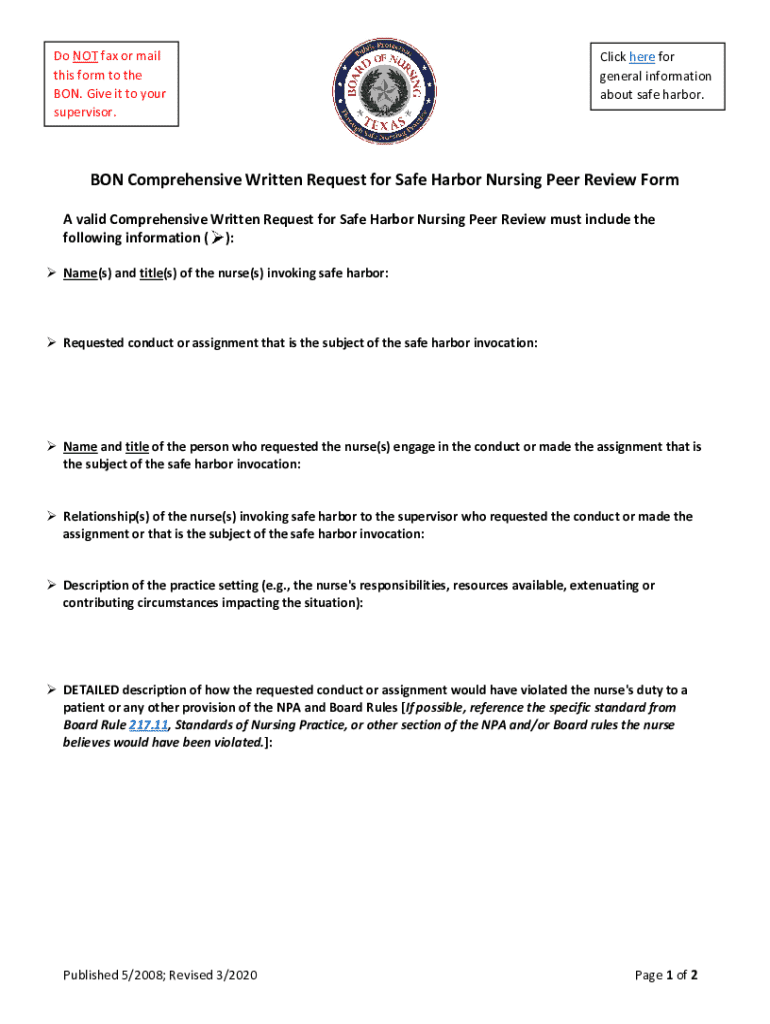







Definition & Meaning
The "BON Comprehensive Written Request for Safe Harbor Nursing Peer" form is a critical document within the nursing profession in the United States. It is designed to safeguard nurses by providing them with a means to request a peer review if they believe a nursing assignment could potentially violate safe practice standards or jeopardize patient safety. The form facilitates a formal request to invoke safe harbor, ensuring that nursing professionals have an avenue to express concerns and seek guidance from peers without fear of retribution.
Importance in Nursing Practice
- Protection: Ensures that nurses can voice concerns about unsafe assignments.
- Ethical Practice: Upholds ethical standards by allowing nurses to question and review potentially harmful directives.
- Professional Accountability: Encourages accountability and transparency within health care settings.
How to Use the BON Comprehensive Written Request for Safe Harbor Nursing Peer
Using the form involves a specific process that nurses must follow to ensure their concerns are documented and reviewed properly. This begins with recognizing an assignment that may be problematic and then formally taking steps to seek a peer review.
Step-by-Step Process
- Identify a Concern: The nurse must first recognize an issue with the assignment or order that raises safety or ethical questions.
- Complete the Form: Accurately fill out the details of the assignment, including names, dates, and specific concerns related to nursing standards.
- Submit: The completed form must be submitted to the immediate supervisor who issued the assignment or order.
Considerations
- Confidentiality: Information provided is kept confidential to protect the nurse's privacy.
- Timeliness: Submit as soon as the concern arises to ensure prompt review and resolution.
Steps to Complete the BON Comprehensive Written Request for Safe Harbor Nursing Peer
Filling out the form requires careful attention to detail and understanding of the elements that need to be included.
Required Information
- Nurse’s Identification: Full name, license number, and contact information.
- Assignment Details: Description of the assignment in question, including date and time.
- Nature of Concern: Specific nursing standards or ethical guidelines potentially breached.
Procedure
- Documentation: Provide any supporting documents that elucidate the concern, including any prior relevant communications.
- Review: Before submission, verify all information for accuracy to prevent delays.
Key Elements of the BON Comprehensive Written Request for Safe Harbor Nursing Peer
The form includes several key components that inform the peer review process.
Major Components
- Personal Details: Essential for identifying the nurse and ensuring proper communication.
- Assignment Context: Completes the picture of the working environment and specific task issues.
- Confidential Commentary: Includes the nurse’s detailed concerns, maintaining confidentiality.
Supporting Documents
- Evidence of Concern: Any relevant materials (e.g., emails, memos) that provide context.
- Legal Frameworks: Cites applicable nursing practice laws or ethical guidelines which support the concern.
Who Typically Uses the BON Comprehensive Written Request for Safe Harbor Nursing Peer
This form is utilized by registered and licensed practical nurses working in various health care environments. It is an integral part of maintaining high standards of patient care and professional integrity.


Users
- Registered Nurses (RNs)
- Licensed Practical Nurses (LPNs)
- Nursing Administrators: May use the form to document and address the issues raised by staff nurses.
Legal Use of the BON Comprehensive Written Request for Safe Harbor Nursing Peer
Understanding the legal context of this form is critical for its proper use and implementation.
Legal Framework
- State Laws: Nursing boards in each state set specific regulations for the implementation of safe harbor peer review.
- Confidentiality Protections: Legal statutes ensure that nurses are protected from retaliatory actions when invoking safe harbor.
Compliance
- Mandatory Reporting: In some states, certain safety issues must be reported to the nursing board.
State-Specific Rules for the BON Comprehensive Written Request for Safe Harbor Nursing Peer
Rules governing the form can vary by state, and nurses must be aware of regional regulations that affect how and when the form can be applied.
Variability
- Texas: Known for strict guidelines on the use of safe harbor in practice.
- California: May have different requirements for peer review processes.
Implications
- Nurses should familiarize themselves with their specific state's laws regarding safe harbor to ensure proper lawful conduct.
Examples of Using the BON Comprehensive Written Request for Safe Harbor Nursing Peer
Practical examples illustrate the necessity and function of the form in diverse scenarios.
Case Examples
- Work Overload: A nurse fills out the form when assigned an unreasonable number of patients, fearing compromised care standards.
- Equipment Issues: A request is made due to malfunctioning equipment which could endanger patient safety.
Real-world Relevance
- Demonstrates how the form can underscore nurses' commitment to patient care and professional responsibility through peer review.




