Definition & Significance of the Vol et perte de documents à l'étranger - Ministre de l'Europe
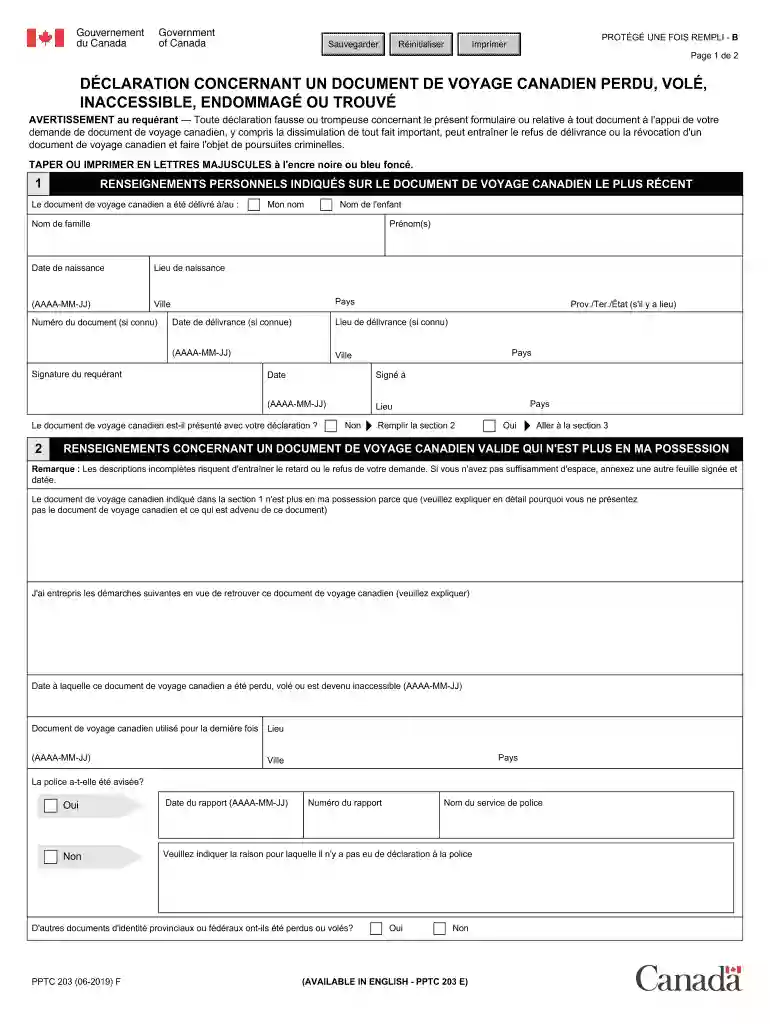
The "Vol et perte de documents à l'étranger - Ministre de l'Europe" is a specialized declaration form intended for individuals who have lost, had stolen, or require a report for a damaged travel document while abroad. Managed by the Ministry of Europe, this form captures essential information pertaining to the circumstances of the document's loss, theft, or damage. The importance of this form lies in its role in formally documenting these incidents, which is crucial for obtaining replacement documents, securing records with local authorities, and protecting against identity theft.
- Purpose of the Form: This form serves as an official record that can be used when applying for replacement documents or engaging with law enforcement and consular services.
- Essential Information: Applicants are required to provide detailed personal information, including contact details and specifics about the lost or stolen document.
- Privacy Measures: The form includes notices about the handling and privacy of the provided information, ensuring compliance with relevant data protection laws.
How to Use the Vol et perte de documents à l'étranger - Ministre de l'Europe
Understanding how to correctly use the "Vol et perte de documents à l'étranger - Ministre de l'Europe" form is crucial for ensuring that the process of reporting a lost or stolen document is smooth and efficient.
- Identify the Incident: Determine the exact situation regarding the document—whether it was lost, stolen, or damaged. This step will guide how you fill out specific sections of the form.
- Gather Required Information: Collect all necessary personal details and document-specific information such as passport or ID number, date of issue, and place of issuance.
- Complete the Form: Accurately fill in each section with the information gathered, ensuring no fields are left incomplete unless specified as optional.
- Consult Local Authorities: Depending on your location, seek guidance from local authorities, such as the police, to cross-verify any additional documentation you may need.
- Verify and Submit: Double-check all entries for accuracy before submitting the form as instructions dictate (online, by mail, or in person).
Steps to Complete the Form
Filling out this form requires meticulous attention to detail, especially to prevent any delay or refusal.
Step-by-Step Instructions:
- Personal Information Section: Include your full legal name, date of birth, nationality, and current contact information.
- Document Details: Note specifics about the lost or stolen document—document type, number, and any other identification details.
- Incident Description: Provide a concise and clear account of how, when, and where the document was lost, stolen, or damaged.
- Signatures and Declarations: Read the declarations section carefully, sign the document truthfully, and acknowledge the warnings against providing false information.
- Supporting Documentation: Attach any additional reports or documents required as evidence, such as police reports or consular communications.
Legal Use of the Form
The "Vol et perte de documents à l'étranger - Ministre de l'Europe" form must be used in compliance with legal standards, ensuring the information provided is truthful and complete.
- Compliance Obligations: The form must be submitted in line with foreign and local regulations, often required for legal processing or insurance claims.
- Identity Protection: Legal protection against identity fraud through documented proof of loss, aiding recovery and replacement processes.
Key Elements of the Form
Understanding the key elements of the form helps in accurate completion and submission, ensuring compliance and efficiency.
- Personal Details and Identification: Sections capturing the applicant’s identity and details.
- Details of Loss or Theft: Comprehensive field requiring description and context of the incident.
- Legal Declarations and Consent: Includes critical acknowledgments regarding the accuracy of information provided.
Required Documents
Gathering all necessary documents is pivotal for making an accurate and defensible report.
- Proof of Identity: Copies of any remaining identification that verifies your identity.
- Incident Evidence: Police reports or witness testimonies supporting the circumstances of loss or theft.
- Applicant's Photograph: A recent photo required to further authenticate the application, especially for subsequent processing.
Form Submission Methods
There are various ways to submit the form, which usually depend on your situation and available access to consular services.
Online Submission:
- Web Portal: If available, submit the form electronically via the Ministry of Europe’s designated portal.
- Email Options: Some authorities accept submissions through secure email, ensuring immediate delivery.
In-Person Submission:
- Consular Visit: Deliver the form physically to a consulate or embassy near your location, ensuring direct processing with an official present.
- Mail Option: Certain regions allow for a postal submission, catering to those in remote locations without immediate access to digital services.
Emphasizing correct completion and submission ensures that you can rapidly proceed to obtain new documentation and continue traveling with minimal disruption.