01. Edit your form online
Type text, add images, blackout confidential details, add comments, highlights and more.

Type text, add images, blackout confidential details, add comments, highlights and more.

Draw your signature, type it, upload its image, or use your mobile device as a signature pad.

Send it via email, link, or fax. You can also download it, export it or print it out.
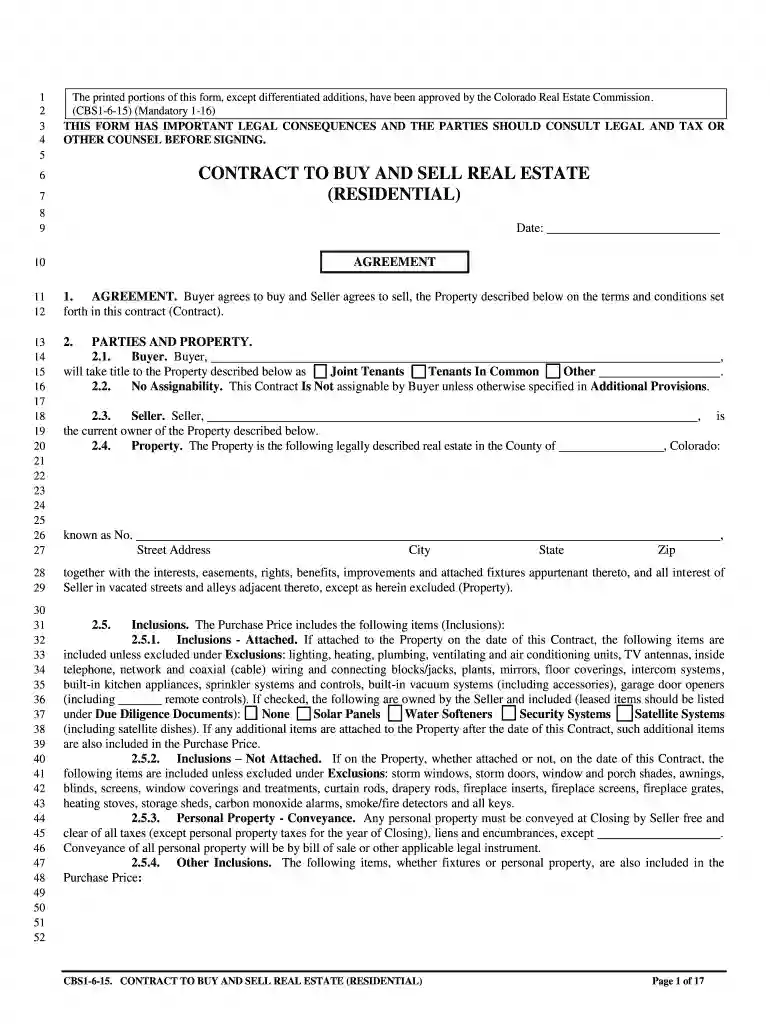
The Colorado Residential Purchase Agreement, formally known as the "Contract to Buy and Sell Real Estate (Residential)," is a legal document sanctioned by the Colorado Real Estate Commission. This contract serves to delineate the mutual agreement between a buyer and a seller engaged in the sale and purchase of a residential property. It specifies the terms and conditions relevant to the transaction, ensuring both parties have a clear understanding of their respective rights and responsibilities. By documenting these details, the agreement minimizes the risk of disputes and ensures compliance with state real estate laws.
The Colorado Residential Purchase Agreement is composed of several key elements that ensure a structured and comprehensive real estate transaction:
Property Description: Includes the legal description of the property, address, and any distinguishing features to uniquely identify the property being sold.
Purchase Price: Clearly states the amount the buyer agrees to pay the seller for the property, outlining any deposits or adjustments.
Financing Terms: Details the financing conditions, such as loan types, contingencies, and deadlines for securing funding.
Inclusions and Exclusions: Enumerates any items or fixtures included or excluded in the sale, such as appliances or furniture.
Obligations of Parties: Outlines the duties of both buyer and seller, including disclosures, inspections, and obligations to perform specific actions by a set timeline.
Filling out the Colorado Residential Purchase Agreement involves a step-by-step process to ensure accuracy and completeness:
Identify the Parties: Enter the full legal names of the buyer and seller involved in the transaction.
Describe the Property: Provide the complete legal description and address of the property to be purchased.
Specify Purchase Price and Terms: Indicate the agreed-upon purchase price, including any earnest money deposits and financing arrangements.
Outline Deadlines: Set specific deadlines for contingencies, inspections, financing, and closing, ensuring all dates are mutually agreed upon.
Detail Inclusions and Exclusions: List all personal property and fixtures included or excluded in the transaction.
Signatures: Obtain signatures from both parties to execute the contract legally, indicating mutual consent to the terms outlined.
Several important legal and real estate terms commonly appear in the Colorado Residential Purchase Agreement, each crucial for understanding the document:
Earnest Money: A deposit made by the buyer to demonstrate their serious intent to purchase the property.
Contingency: A condition or action either party must meet for the contract to be binding.
Title Insurance: A policy ensuring the buyer's ownership rights against any title defects.
Settlement Date: The date on which the transaction is finalized and ownership is transferred from the seller to the buyer.
The Colorado Residential Purchase Agreement adheres to state-specific rules and regulations, ensuring compliance with local real estate laws:
Home Warranty Obligations: Colorado may require certain sellers to disclose whether they are providing a home warranty.
Property Disclosures: Sellers must provide the buyer with a comprehensive property disclosure statement, detailing existing conditions and the history of the property.
Real Estate Agent Regulations: Licensed agents in Colorado are required by law to include specific disclosures in the purchase agreement as directed by the Colorado Real Estate Commission.
In real-world scenarios, the Colorado Residential Purchase Agreement is utilized in various transactions involving:
First-time Home Buyers: Often use the agreement with additional contingencies to protect their interests during the purchase process, such as financing and inspection contingencies.
Investment Purchases: Investors buying properties for rental income often include clauses for property condition assessments and appraisal evaluations.
Contingency Sales: In cases where the buyer's purchase is contingent on the sale of their existing property, specific clauses are added to reflect these dependencies.
The agreement is a legal instrument binding both the buyer and seller to the outlined terms and conditions. It's critical for the protection of both parties and should be executed with consideration of the following legal aspects:
Legal Counsel: Parties are advised to consult with a real estate attorney to fully understand the legal ramifications before signing.
Amendments: Any changes or modifications to the agreement post-signing should be documented in writing and signed by both parties to be legally effective.
Dispute Resolution: The agreement often includes a clause for resolving disputes through arbitration or mediation before pursuing legal action.
The primary users of the Colorado Residential Purchase Agreement include:
Home Buyers and Sellers: Individuals directly engaging in the transaction of buying or selling residential property.
Real Estate Agents: Facilitators of the transaction who ensure the agreement is correctly completed and legally compliant.
Attorneys: Legal professionals advising their clients on the implications and obligations of the contract, ensuring their rights are upheld.
By thoroughly understanding the content and context of the Colorado Residential Purchase Agreement, all involved parties can engage in real estate transactions confident in their legal and procedural standing.


At DocHub, your data security is our priority. We follow HIPAA, SOC2, GDPR, and other standards, so you can work on your documents with confidence.