






Definition and Meaning
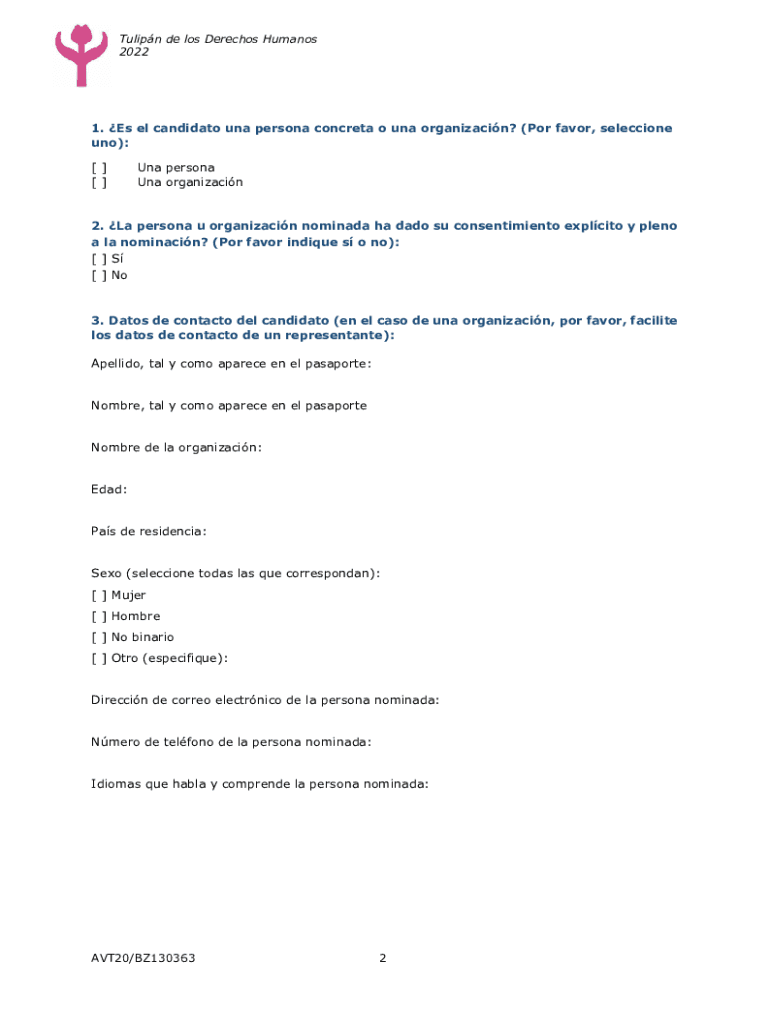
The Human Rights Tulip nomination form ES PDF is a document used for nominating individuals or organizations for the Human Rights Tulip award. This prestigious honor, given by the Dutch government, recognizes and supports those who promote human rights innovatively. The form includes essential sections for nominator information, nominee details, and the innovative human rights activities undertaken by the candidate.
Steps to Complete the Human Rights Tulip Nomination Form
- Nominator Information: Begin by filling out your details as the nominator, including your full name, contact information, and organization (if applicable).
- Nominee Details: Include accurate information about the nominee, such as their full name, contact details, and any affiliated organization.
- Description of Work: Clearly outline the nominee's contributions to human rights, focusing on innovative practices that have made a significant impact.
- Supporting Documentation: Attach any relevant documents that support the nomination, such as reports, articles, or testimonials.
- Review and Submission: Double-check all entries for accuracy, ensuring that each section is complete before submitting the form by the designated deadline.
Key Elements of the Human Rights Tulip Nomination Form
- Nominator and Nominee Sections: Collects contact and organizational affiliation information.
- Innovative Human Rights Practices: Details the nominee’s specific contributions that qualify them for the award.
- Supporting Documentation: Provides additional evidence of the nominee's achievements.
- Security Considerations: Encourages nominators to be aware of potential risks to the nominee.
Eligibility Criteria
To be eligible for the Human Rights Tulip award, nominees must demonstrate:
- Significant contributions to the field of human rights.
- Innovative methodologies or practices that positively impact communities.
- Compliance with the award's ethical standards and guidelines.


Legal Use of the Human Rights Tulip Nomination Form
The form is used legally to nominate candidates for the Human Rights Tulip award, in accordance with guidelines set by the Dutch government. Personal data provided must be accurate and handled per international privacy standards.
How to Obtain the Human Rights Tulip Nomination Form
The nomination form can typically be accessed and downloaded from recognized websites associated with the Human Rights Tulip award or through government resources. Ensure you obtain the latest version of the form to comply with current submission guidelines.
Important Terms Related to the Human Rights Tulip Nomination Form
- Nomination: The process of proposing a candidate for the award.
- Innovative Practices: Unique methods or approaches to advancing human rights.
- Eligibility Criteria: Specific conditions that nominees must meet to qualify.
Examples of Using the Human Rights Tulip Nomination Form
- Scenario 1: An NGO uses the form to nominate a human rights lawyer who has implemented groundbreaking legal reforms.
- Scenario 2: A grassroots organization nominates a community leader for their innovative outreach programs promoting human rights awareness.
Application Process and Approval Time
- Nomination Submission: Complete and submit the form by the specified deadline.
- Review Process: A panel evaluates nominations based on set criteria.
- Approval Notification: Selected nominees are informed within a few months post-submission, with further instructions on award proceedings.
Form Submission Methods: Online, Mail, In-Person
- Online Submission: Fill out and submit the form through the award's official online platform.
- Mail Submission: Print and send the completed form to the designated mailing address.
- In-Person Submission: Deliver the form directly to the relevant office, if permitted.
Required Documents
- Nominee Curriculum Vitae (CV): Provides detailed background on the nominee’s work.
- Letters of Recommendation: Support the nominee’s candidacy.
- Proof of Achievements: Includes publications, awards, or recognitions related to human rights work.
Selecting these 13 blocks ensures comprehensive coverage of every critical aspect of the Human Rights Tulip nomination form, from definition to submission methods, catering to users seeking to thoroughly understand and effectively use the form.