01. Edit your form online
Type text, add images, blackout confidential details, add comments, highlights and more.

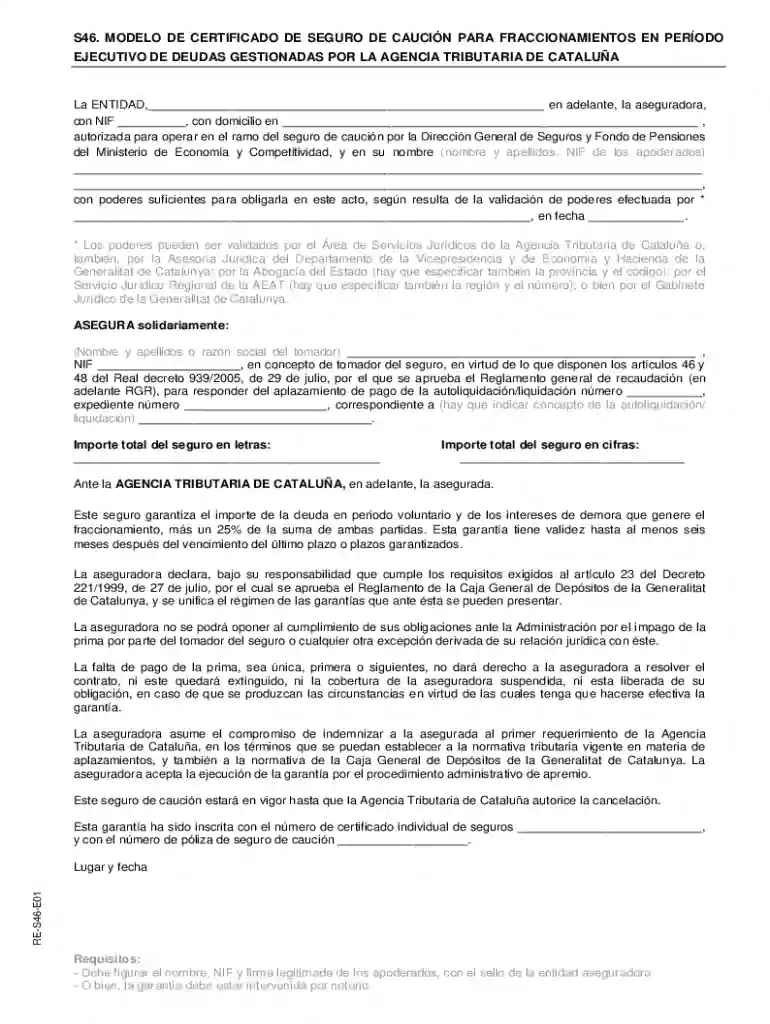
Type text, add images, blackout confidential details, add comments, highlights and more.

Draw your signature, type it, upload its image, or use your mobile device as a signature pad.

Send it via email, link, or fax. You can also download it, export it or print it out.
Form S46 is a specific document designed for certain legal or administrative purposes, often related to compliance and reporting obligations within a given jurisdiction. In many contexts, this form is used to collect and organize detailed information from individuals or businesses, which can then be used to verify compliance with regulatory requirements or to process transactions. The form's structure typically includes sections for recording personal or entity information, along with specific financial or operational data relevant to its purpose. Understanding the precise meaning and function of Form S46 is crucial for those who may need to file it as part of their interactions with government agencies or regulatory bodies.
Form S46 is commonly associated with surety insurance, where it serves to outline the conditions and responsibilities related to debt installments managed by agencies, such as the Tax Agency of Catalonia. This association indicates its importance in ensuring that obligations, such as debt payments, are met and that indemnities are provided under specified conditions. The form helps prevent the insurer from refusing obligations due to non-payment and maintains validity until a formal cancellation is authorized.
Form S46 is utilized primarily to ensure compliance with financial or legal obligations. To use this form effectively, individuals or entities must first understand its intended purpose. Typically, this involves:
Identifying the Purpose: Determine whether the form pertains to surety insurance, tax compliance, or another legal obligation. Knowing the specific goal of the form will guide the details required for completion.
Gathering Information: Collect all necessary details, such as personal identification data, financial information, or specific contractual terms. This may include details about insurance policies, payment schedules, or guaranteed sums.
Completing the Form: Fill out each section accurately, following any provided instructions to ensure compliance with legal or administrative standards. Pay special attention to mandatory fields to avoid submission issues.
Review and Submission: Double-check the completed form for accuracy before submission. The method of submission—whether online, via mail, or in-person—may depend on the specific guidelines provided by the issuing authority.
By carefully following these steps, users can ensure that they meet the necessary requirements for the form's intended purpose.
Completing Form S46 requires attention to detail and a clear understanding of each section's purpose. Follow these steps to ensure accurate and complete submission:
Read the Instructions: Before starting, thoroughly review any instructions provided with the form. Understanding the context and requirements will help prevent errors.
Enter Personal or Entity Information: Fill in details accurately, including full names, addresses, contact numbers, and relevant identification numbers (such as tax IDs).
Provide Financial or Contractual Details: Depending on the form’s use, this section could include insurance details, payment terms, or other financial data. Ensure all figures are accurate and match reported amounts elsewhere.
Sign and Date the Form: Affix signatures where required, following any specific instructions about who should sign the document (e.g., company executives, legal representatives).
Attach Supporting Documents: Gather and attach any required supplementary documents, like proof of insurance or previous agreements, to provide the necessary context for the information provided.
Submit the Form: Once complete, submit the form according to the instructions, ensuring you keep a copy for your records. Verify submission methods, as these can vary widely based on the issuing authority's requirements.
By following these structured steps, users can efficiently manage the submission of Form S46 and ensure compliance with relevant requirements.
Form S46 users typically include individuals or entities involved in transactions requiring surety or guarantee agreements, such as:
These users rely on Form S46 to facilitate proper documentation and compliance, ensuring that all parties fulfill their contractual and regulatory duties.


The effectiveness of Form S46 lies in its key elements, which may include:
These sections ensure comprehensive coverage and enable clear communication of responsibilities and terms, facilitating smooth operations and compliance.
Compliance with legal standards is crucial when using Form S46. The form’s legal use includes:
Understanding and adhering to these legal aspects helps prevent legal disputes and ensures the form's integrity as part of official transactions.
Understanding critical terminology is vital when dealing with Form S46. Key terms may include:
Familiarity with these terms ensures accurate communication and effective use of Form S46, supporting proper administration and compliance efforts.
Form S46 may be subject to state-specific regulations, requiring users to:
By focusing on state-specific rules, users can effectively manage their compliance obligations and avoid potential legal issues.
At DocHub, your data security is our priority. We follow HIPAA, SOC2, GDPR, and other standards, so you can work on your documents with confidence.