






Definition and Meaning of "Este documento del Comité Español de Representantes de Personas con Discapacidad"
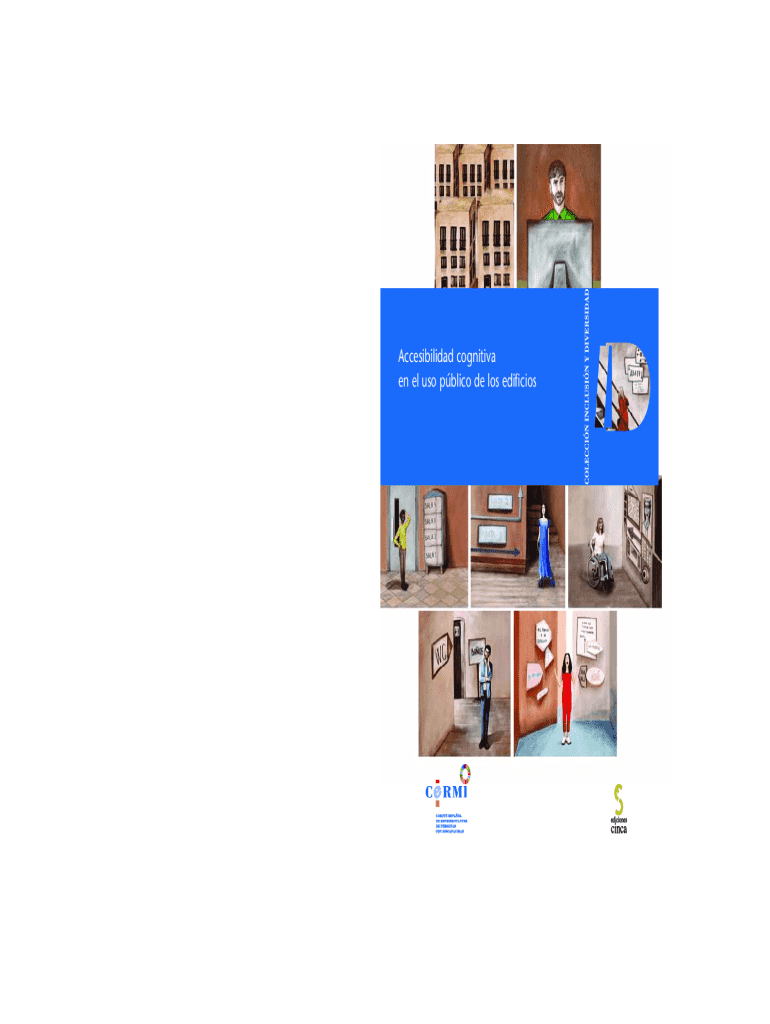
This document, formally referred to as "Este documento del Comité Español de Representantes de Personas con Discapacidad," revolves around cognitive accessibility principles aimed at enhancing public space comprehension. It serves as a critical manual stemmed from the demand for cognitive accessibility guidance by various organizations. It acts as a vital resource, bridging the existing gap in guides, especially concerning public building designs.
How to Use "Este documento del Comité Español de Representantes de Personas con Discapacidad"
The document is intended to be utilized by accessibility consultants, architects, and urban planners to ensure public spaces are navigable and comprehensible for all individuals, including those with cognitive disabilities. Users should follow the provided guidelines and apply the designated criteria when developing or assessing public infrastructures.
- Review each section to understand cognitive accessibility aspects.
- Implement the suggested standards in project designs.
- Utilize the document as a reference in accessibility audits.
Steps to Complete the Form
To utilize "Este documento del Comité Español de Representantes de Personas con Discapacidad," users should familiarize themselves with its structure and the procedural steps involved. Although it is a reference document and not a form in the traditional sense, engaging with it involves:
- Thorough Reading: Begin by reading through each section to gain a detailed understanding of the content.
- Highlight Key Areas: Mark sections that are most relevant to your current project or area of interest.
- Application of Guidelines: Apply the principles to real-world scenarios in public building design.
Key Elements of the Document
Key elements within "Este documento del Comité Español de Representantes de Personas con Discapacidad" include:
- Guidelines for Cognitive Accessibility: Contains standard practices for making environments accessible to individuals with cognitive disabilities.
- Participation and Consensus: Emphasizes the involvement of accessibility experts and stakeholder agreements.
- Tools and Resources: Provides practical measures and checklists to assist in implementing the recommendations.
Why Use the Document
"Using Este documento del Comité Español de Representantes de Personas con Discapacidad" enhances the usability of public spaces for everyone, including people with cognitive challenges. The document:
- Ensures compliance with contemporary accessibility standards.
- Serves as a key resource in fostering inclusive public environments.
- Facilitates the design of user-friendly spaces, meeting societal needs for accessibility.
Legal Use and Compliance
The document acts as a guideline, underpinning legal compliance in terms of cognitive accessibility. It aligns with various national and international accessibility laws and standards, providing a lawful foundation for planning and renovating public spaces to meet specified cognitive accessibility requirements.
Who Typically Uses This Document
Various professionals in the field of design and accessibility utilize this document, including:
- Accessibility Consultants: Use it to assess public space compliance.
- Urban Planners and Architects: Refer to it when designing new projects.
- Government Officials: Employ it to ensure policy adherence in public domains.
Important Terms Related to the Document
Understanding the terminology used within the document is crucial for its application:
- Cognitive Accessibility: Refers to aspects enabling individuals with cognitive impairments to effectively engage with an environment.
- Public Space: Areas accessible to all individuals, including buildings, parks, and plazas.
- Stakeholder Consensus: Agreement among those involved in planning and execution, such as city planners, disability advocates, and architects.
The outlined sections provide comprehensive coverage of the document, ensuring it is used correctly to promote inclusive design and accessibility in public spaces, while meeting regulatory standards.