




01. Edit your basketball player profile template online
Type text, add images, blackout confidential details, add comments, highlights and more.

Type text, add images, blackout confidential details, add comments, highlights and more.

Draw your signature, type it, upload its image, or use your mobile device as a signature pad.

Send player information sheet via email, link, or fax. You can also download it, export it or print it out.
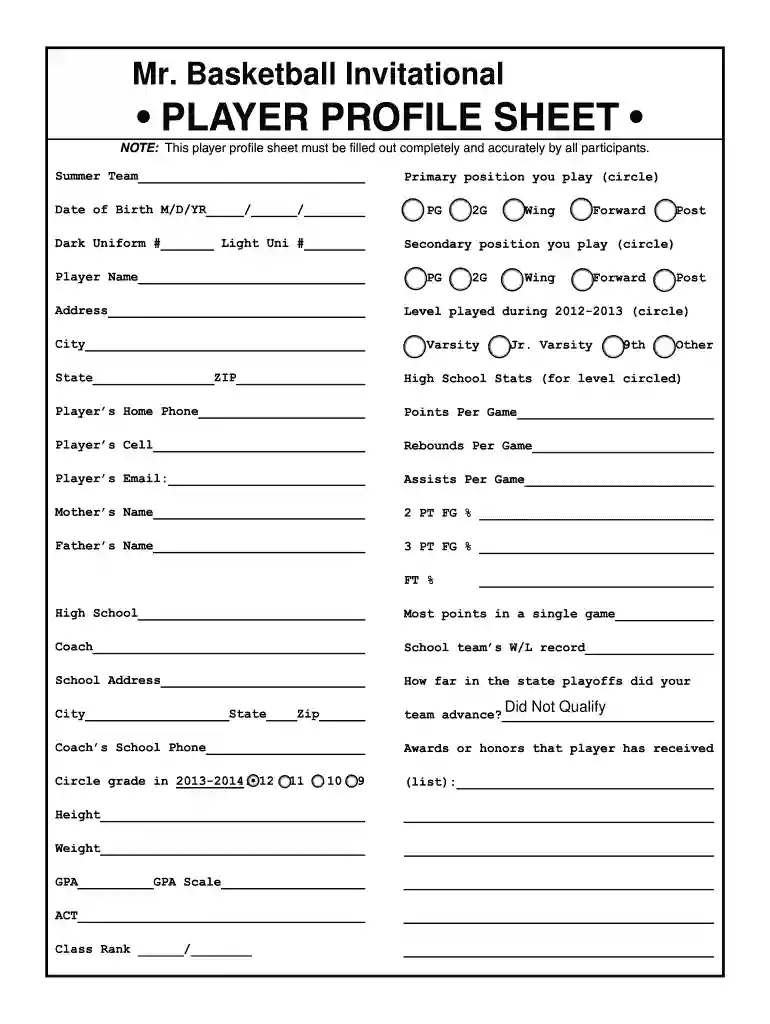
The basketball player information sheet is a crucial document utilized in events such as showcases and tournaments, and it serves multiple purposes. This form captures essential details about the player, helping coaches, scouts, and organizers assess talent and facilitate participation.
Player identification information is vital for establishing clear records and communication. This section typically includes:
For example, including a player’s age helps determine eligibility for specific categories or divisions during competitions.
Capturing academic information highlights the player's commitment outside the court, which can be essential for scholarships and recruitment. This block should include:
An example of relevance could be that a high GPA, combined with outstanding athletic performance, may attract college scouts.
This section details the player's athletic history, skills, and performance metrics. Essential components include:
For instance, a player who consistently scores high points or assists per game may demonstrate significant talent and potential for future play.
This section outlines a player’s history in basketball, which can be significant for coaches and teams to understand their background. Consider the following:
A scenario could involve a player with championship experience being more attractive to college programs seeking seasoned athletes.
This aspect ensures that stakeholders can effectively handle emergencies during events. It should include:
An example might involve a player getting injured during a game, necessitating quick decisions regarding medical care, where this contact information is paramount.
This section is important for legal compliance, especially regarding minors. Components include:
This block helps protect organizers and ensures that participants are aware of their responsibilities and rights.
Including a brief player profile can enrich the information sheet experience. This section should cover:
Detailed insights like this allow coaches to tailor training and development programs specific to each player’s needs.
This modern addition to a basketball player information sheet can enhance visibility, especially for scouting. Consider:
For example, a well-curated highlight reel can significantly elevate a player's profile and attract interest from scouts.
A well-structured basketball player information sheet offers a comprehensive insight into an athlete's profile, facilitating informed decisions in recruitment and development. Each section contributes to understanding the player's background, skills, aspirations, and potential contributions to a team or event.
We've got more versions of the basketball player profile template form. Select the right basketball player profile template version from the list and start editing it straight away!
| Versions | Form popularity | Fillable & printable |
|---|---|---|
| 2013 | 4.6 Satisfied (63 Votes) |
At DocHub, your data security is our priority. We follow HIPAA, SOC2, GDPR, and other standards, so you can work on your documents with confidence.
Each player is required to attend ONLY ONE of the evaluation options for their age group. Player Evaluation Day Information: Date: Tuesday, May 19. Location
Basketball has three types of stats. These are points, rebounds, and assists. These sheets can be printed for use in tracking game statistics, and. SimpleRead more


