






Definition and Meaning of the JG-4: Georgia Child Protective Services Mandated Reporter Form
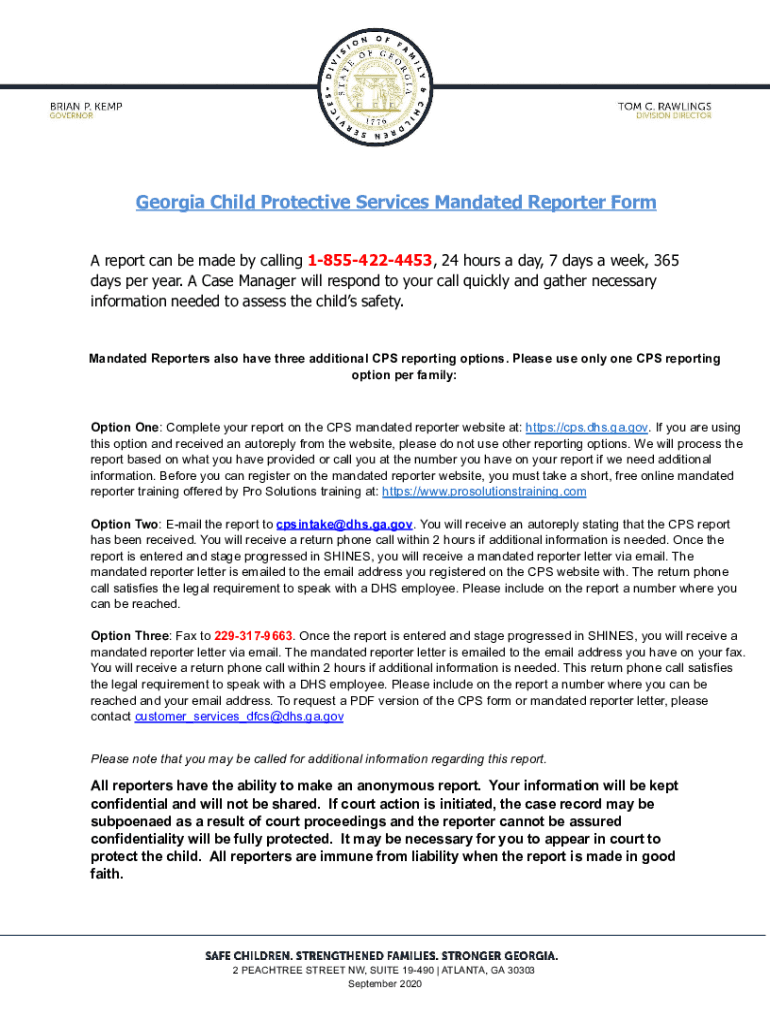
The JG-4 form, used in Georgia, is a critical tool for reporting instances of suspected child abuse or neglect. It serves as a standardized document within the Child Protective Services (CPS) framework, ensuring that all relevant information is captured accurately and efficiently. This form is essential for mandated reporters—individuals required by law to report any suspicions of child maltreatment. These mandated reporters often include professionals such as teachers, healthcare workers, and social service employees. The form provides clear sections to document the identity of the suspected victim and perpetrator, the nature of the suspected abuse, and any additional relevant details.
Importance of Accurate Reporting
Accuracy in filling out the JG-4 form is crucial, as the information provided can significantly impact the investigative process and the protection measures for the child. The form’s structured format helps reporters ensure that they do not omit any critical details, such as the child's location or the incidents' timing. Accurate reporting facilitates a timely response by CPS and ensures that the necessary intervention is provided to protect the child's welfare.
Key Elements of the JG-4 Form
The JG-4 form comprises several essential components designed to guide reporters through the documentation process:
- Child Information: Includes fields for the child's name, age, address, and contact details.
- Suspected Perpetrator Information: Requires the reporter to record the known or suspected perpetrator's details, such as their relationship to the child.
- Incident Description: A section dedicated to describing the suspected abuse or neglect, including when and where it occurred.
- Reporter Details: Mandatory for professionals, optional anonymity available for non-professionals, ensuring confidentiality while maintaining accountability.
- Additional Notes and Comments: Space for any other observations or relevant information that could assist in the investigation.
Importance of Each Section
Each section of the form plays a vital role in building a comprehensive view of the situation. For instance, detailed entries in the Incident Description and Additional Notes sections can provide investigators with insights into patterns or recurring issues that may not be immediately obvious from the basic details alone.
Steps to Complete the JG-4 Form
Filling out the JG-4 form involves several key steps that ensure thorough and accurate reporting:
- Gather Relevant Information: Before beginning the form, collect all necessary details about the child and the suspected situation. This includes verifying names, dates, and locations.
- Fill in Child and Suspect Details: Start by completing the child's and alleged perpetrator’s information to the best of your knowledge.
- Document the Incident: Be as specific as possible when describing the events. Include dates, times, locations, and any observable signs of abuse or neglect.
- Provide Your Information: If you are a mandated reporter, include your credentials and contact details to facilitate follow-up inquiries.
- Review and Submit: Double-check the information before submitting the form through your chosen method to ensure completeness and accuracy.
Submission Methods
There are several options for submitting the JG-4 form, accommodating different preferences and technological access levels:
- Online Submission: The most efficient method, often preferred for its direct and timely delivery to CPS.
- Email: Allows digital sending of a scanned copy, helpful when online platforms are inaccessible.
- Fax: A viable option for those who prefer non-digital methods.
- Mail or In-Person: Traditional options, although not recommended when immediate action is necessary.
Legal Use of the JG-4 Form
The JG-4 form is legally sanctioned for use in reporting child abuse and plays a critical role in fulfilling mandatory reporting laws in Georgia. It ensures that all necessary legal protocols are followed during the reporting process.
Legal Protections for Reporters
Mandated reporters using the JG-4 form are typically granted legal protection, provided they report in good faith. This immunity from civil or criminal liability encourages reporting without fear of repercussion, fostering a safer and more proactive environment for child protection.
Examples and Scenarios Involving the JG-4 Form
Understanding how the JG-4 form is used in real-world contexts can provide deeper insight into its significance:
- Example Scenario 1: A teacher notices unexplained bruises on a student and changes in behavior. After consulting with colleagues, they decide to fill out and submit a JG-4 form, detailing their observations and any previous incidents.
- Example Scenario 2: A hospital staff member treats a child for injuries inconsistent with the provided story. They complete the JG-4 form, noting medical findings and their professional assessment.
- Edge Case: A neighbor suspects abuse but is hesitant to report due to anonymity concerns. They are reassured of confidentiality and choose to document their observations, ultimately leading to an investigation.
State-Specific Rules for the JG-4 Form
Georgia's mandated reporting laws determine who must use the JG-4 form and in what circumstances. These legal frameworks define the obligations and procedures for identifying and reporting child maltreatment.
Nuances in Georgia's Approach
While the JG-4 form provides a standardized format, the criteria for mandating a report can vary based on profession and circumstance. Understanding these nuances helps potential reporters navigate their responsibilities effectively, ensuring they meet all state requirements.
Obtaining the JG-4 Form
The JG-4 form can be accessed through multiple channels to facilitate ease of reporting:
- Online Access: Official government websites provide downloadable versions of the JG-4 form.
- Agency Distribution: Many agencies and organizations involved in child welfare have copies available for their staff and associates.
- Training Sessions: Workshops and training programs for mandated reporters often include copies of the JG-4 form as part of their materials.
Each of these channels ensures the form is readily available to fulfill reporting duties as needed.
Software Compatibility and Digital Utilization
While the JG-4 form is traditionally a paper document, digital versions can be utilized through platforms like DocHub. These platforms offer tools for filling, storing, and submitting forms electronically, enhancing accessibility and convenience.
Benefits of Digital Formats
Digital forms are easily shareable and can be completed on various devices, reducing the time between recognizing a situation and taking action. This capability is particularly useful in emergencies, where rapid response is critical.
By addressing each block with comprehensive detail and context, this structured content offers a robust guide to understanding and utilizing the JG-4 form in Georgia.