Consent for injection for dystonia spasticity 2026

Get Form
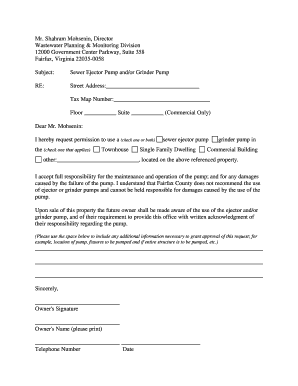
Consent for injection for dystonia spasticity Preview on Page 1

Here's how it works

01. Edit your form online
Type text, add images, blackout confidential details, add comments, highlights and more.
02. Sign it in a few clicks
Draw your signature, type it, upload its image, or use your mobile device as a signature pad.
03. Share your form with others
Send it via email, link, or fax. You can also download it, export it or print it out.

The best way to change Consent for injection for dystonia spasticity online

Form edit decoration
9.5
Ease of Setup
DocHub User Ratings on G2
9.0
Ease of Use
DocHub User Ratings on G2

With DocHub, making adjustments to your paperwork takes only a few simple clicks. Follow these quick steps to change the PDF Consent for injection for dystonia spasticity online for free:

  1. Sign up and log in to your account. Log in to the editor using your credentials or click Create free account to test the tool’s capabilities.
  2. Add the Consent for injection for dystonia spasticity for editing. Click on the New Document option above, then drag and drop the document to the upload area, import it from the cloud, or via a link.
  3. Change your template. Make any adjustments required: add text and pictures to your Consent for injection for dystonia spasticity, highlight information that matters, remove sections of content and substitute them with new ones, and insert symbols, checkmarks, and areas for filling out.
  4. Finish redacting the form. Save the modified document on your device, export it to the cloud, print it right from the editor, or share it with all the parties involved.

Our editor is very easy to use and efficient. Try it out now!

be ready to get more

Complete this form in 5 minutes or less

Get form

Got questions?

We have answers to the most popular questions from our customers. If you can't find an answer to your question, please contact us.
Contact us
Local intramuscular injection of (BoNT) is an established, well-tolerated treatment in the pharmacological management of focal spasticity.
Common medications for spasticity include: (Lioresal). Tizanidine (Zanaflex). sodium ().
What kinds of medical conditions may be helped by ? cerebral palsy. The Food and Drug Administration (FDA) has approved , , and Xeomin for the treatment of upper limb spasticity in adults, specifically spasticity at the elbow, wrist and fingers.
Injections of (, , others) into specific muscles might reduce or stop your muscle spasms. Injections usually are repeated every 3 to 4 months. Side effects are generally mild and temporary. They can include weakness, dry mouth or voice changes.
A is a protein injected directly into muscles as a medication. Phenol is a chemical injection that works similarly to . injections are often more effective in smaller muscles and phenol might be more effective in larger musclessometimes they are used together.

Security and compliance

At DocHub, your data security is our priority. We follow HIPAA, SOC2, GDPR, and other standards, so you can work on your documents with confidence.

Learn more
ccpa2
pci-dss
gdpr-compliance
hipaa
soc-compliance

People also ask

While therapy is generally considered a safe option for people living with spasticity, there may be some side effects. Patients may experience some pain and bleeding at the time of injection and soreness or bruising for a few days following the injections, cautions Dr. Bethoux.

Related links