






Definition and Meaning of the Authorization Form for Release of Confidential Information
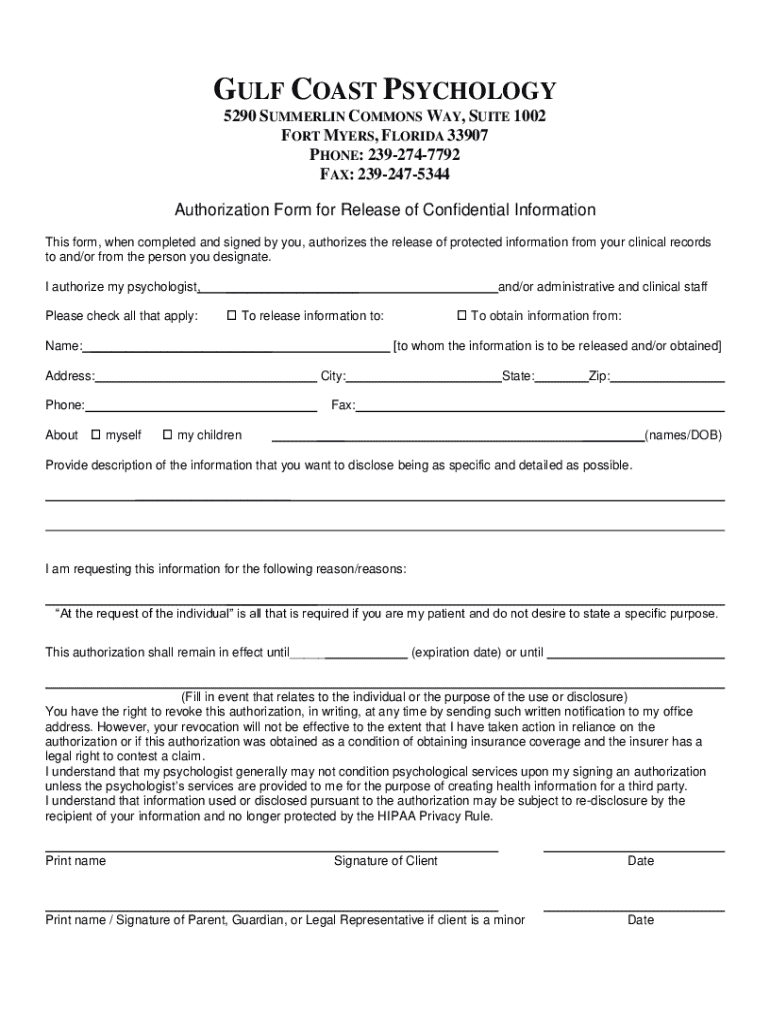
The Authorization Form for Release of Confidential Information is a legal document that allows an individual or entity to disclose personal health or other protected information. Commonly used in healthcare settings, this form allows the release of sensitive details from clinical records following strict legal guidelines, such as those set forth by HIPAA in the United States. The form ensures that any conveyed information is shared only with the consent and knowledge of the individual concerned, safeguarding confidentiality while facilitating necessary data exchanges.
Key Features of the Form
- Consent-Based Release: The form is designed to obtain explicit consent from the information owner before any data is released.
- Specification of Information: Users must detail the specific information requiring disclosure, maintaining transparency and control.
- Designated Recipients: Identifies authorized individuals or organizations who can access the information.
How to Use the Authorization Form for Release of Confidential Information
Using this form effectively involves understanding the detailed processes it entails. The form should be meticulously filled out to ensure no section is left incomplete, which could invalidate the release.
Step-by-Step Process
- Obtain the Form: Secure the form from the institution requiring it, such as a healthcare provider or financial service.
- Complete Personal Details: Enter your full name, address, and contact information.
- Specify Information to be Released: Clearly outline which records or information are to be shared.
- Identify Recipients: Name the persons or organizations authorized to receive the information.
- Sign and Date: Legalizing the consent by signing and dating the document in the appropriate sections.
Why You Should Use the Authorization Form for Release of Confidential Information
Utilizing this form is essential for several reasons related to legal compliance, personal data security, and operational efficiency in scenarios where confidential information transfer is necessary.
Benefits
- Compliance with Legal Standards: Ensures alignment with regulations like HIPAA, offering a legally sound method to manage data sharing.
- Protection of Privacy: Shields personal data from unauthorized access, maintaining the confidentiality of sensitive information.
- Facilitation of Healthcare Operations: Enables healthcare providers to smoothly share patient information for treatment coordination.
Important Terms Related to the Authorization Form for Release of Confidential Information
Navigating this form requires familiarity with specific terms that define its purpose and execution.
Key Terms
- HIPAA: Health Insurance Portability and Accountability Act, a US law designed to provide privacy standards to protect patients’ medical records and other health information.
- Confidential Information: Any sensitive data that is protected from general disclosure, such as medical records, financial data, or personal identifiers.
Legal Use of the Authorization Form for Release of Confidential Information
The form's legal validity plays a pivotal role in its execution. It must be compliant with relevant laws to ensure that any disclosed information is shared lawfully.
Compliance Considerations
- HIPAA Regulations: Ensure the form complies with these guidelines to prevent legal issues.
- Revocation Rights: Individuals have the right to revoke consent at any time, which must be acknowledged in the form.
Steps to Complete the Authorization Form for Release of Confidential Information
Completing the form correctly ensures a valid authorization for information release.
Detailed Instructions
- Fill Out Identifying Information: Include the name, date of birth, and contact details of the person whose information is to be released.
- Purpose of Disclosure: State the reason for releasing the information, whether it’s for treatment, payment, or another legitimate purpose.
- Describe Information: Detail specifically which data sets should be shared.
- Identify Entities Receiving Information: Clearly specify who will receive the information.
- Review and Confirm Details: Check every section for accuracy to avoid miscommunication.
- Sign and Authenticate: The form must be signed by the authorizing individual and, when necessary, witnessed or notarized.
Key Elements of the Authorization Form for Release of Confidential Information
Understanding the main components of the form is essential for ensuring all necessary details are accurately captured.
Core Sections
- Authorization Duration: Specifies valid time frames for the release.
- Specific Information: Enumerates the exact data categories to be disclosed.
- Consent and Signature: Formalizes the authorization with dated signatures from the consenting party.
Examples of Using the Authorization Form for Release of Confidential Information
Practical scenarios where the form has been put into action illustrate its utility in everyday business and medical processes.
Common Use Cases
- Medical Information Sharing: Used by hospitals to share patient records with specialists.
- Insurance Claims: Insurers may use the form to access medical records necessary for claim processing.
- Legal Proceedings: Lawyers might require clients to authorize the release of certain information for cases involving personal injury or medical malpractice.
By following structured guidelines and considering the various aspects outlined regarding this form, users can not only ensure compliance with legal requirements but also efficient execution of necessary data transfers.