






Definition and Purpose of the Record Book Chair Handbook
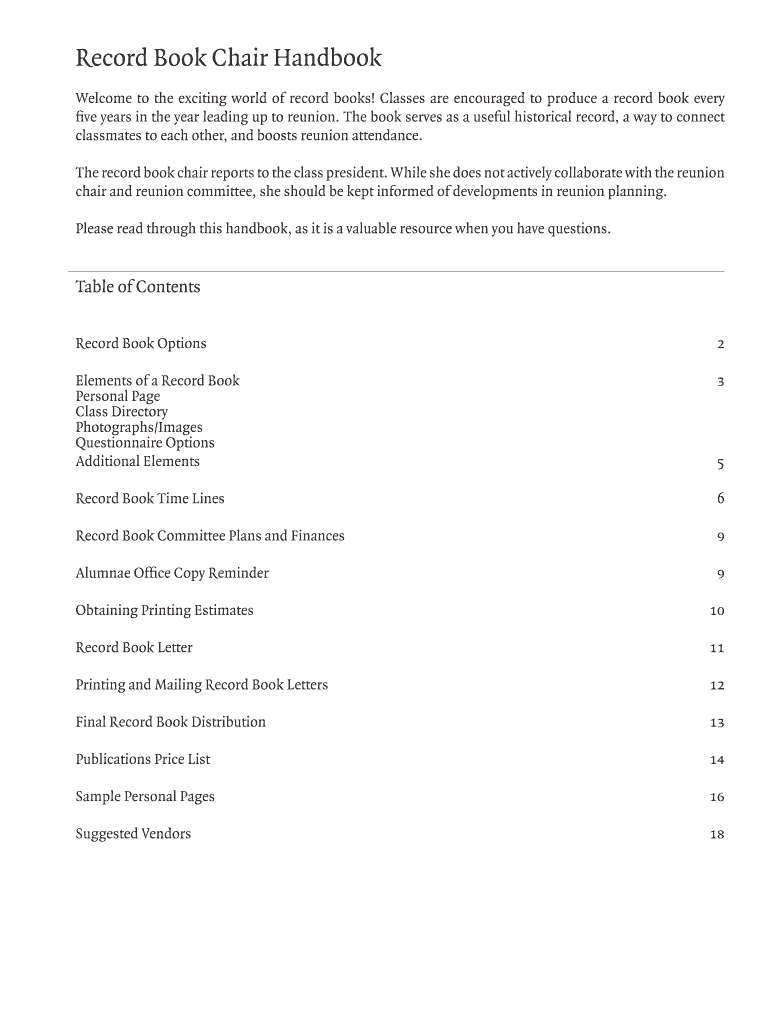
The 'Record Book Chair Handbook' is a comprehensive guide designed to assist individuals in compiling and distributing a class record book every five years. Its main goal is to preserve class history and improve reunion attendance. The handbook outlines the responsibilities of the record book chair, who is tasked with overseeing the creation and management of the record book. It covers the entire process from conception to distribution, ensuring that all necessary elements are included and properly organized. The handbook is essential for anyone looking to maintain historical records and facilitate successful class reunions.
Key Elements of the Record Book Chair Handbook
The handbook provides a detailed outline of the essential elements to include in the record book. These elements ensure that the book is both informative and serves its intended purpose effectively. Key components include:
- Personal Pages: Individual profiles of classmates, capturing personal achievements, family updates, and current contact information.
- Class Directories: Comprehensive lists of classmates with their contact details, ensuring easy communication and engagement.
- Photographs: Visual documentation of class events, reunions, and personal milestones. These images help preserve memories and enliven the written content.
- Timeline for Completion: Clear deadlines for each stage of the record book process, ensuring timely completion and distribution.
- Budget Considerations: Guidance on managing financial aspects, including production costs and distribution expenses.
- Resources for Printing and Distribution: Information on available services and tools to facilitate the final production and dissemination of the record book.
Steps to Complete the Record Book Chair Handbook
Creating a class record book involves several strategic steps, all of which are detailed in the handbook:
- Appointment of the Record Book Chair: Selection of a chairperson responsible for managing the project.
- Gathering Information: Collecting personal pages, directories, and photographs from classmates.
- Draft Creation: Compiling all collected information into an initial draft for review and feedback.
- Revisions and Updates: Making necessary adjustments based on feedback and ensuring accuracy and completeness.
- Finalization: Preparing the final version for printing or digital distribution.
- Production: Selecting the appropriate format (print or digital) and handling the logistics of production.
- Distribution: Distributing the final record book to classmates and relevant stakeholders.
Who Typically Uses the Record Book Chair Handbook
The primary users of the Record Book Chair Handbook are Alumni Association members, particularly those involved in event planning and reunion organization. The handbook provides invaluable guidance for class secretaries, reunion organizers, and volunteers who are responsible for creating a comprehensive class record book. It also serves as a resource for educational institutions aiming to preserve their historical records and foster a sense of community among alumni.


Different Options for Book Production
The handbook explores various options for book production, allowing chairs to choose formats that best suit their needs and budgets. Options include:
- Traditional Print: Hard-copy versions ideal for those who prefer tangible keepsakes.
- Copied Versions: Photocopies or printed copies of the original book, offering a cost-effective alternative.
- Online Formats: Digital versions hosted on class or institutional websites, providing easy accessibility and sharing capabilities.
Each option includes detailed guidance on the production process, from selecting paper quality for printed books to choosing platforms for online hosting.
Digital vs. Paper Versions of the Record Book
The handbook addresses the pros and cons of digital versus paper versions, helping chairs make informed decisions.
- Digital Versions: Offer easy distribution, environmental benefits, and convenience, particularly for out-of-state members. They can be updated frequently and shared instantly.
- Paper Versions: Provide a traditional feel, often preferred by older alumni who cherish physical books. They involve more logistics in terms of printing and shipping but serve as lasting mementos.
Important Terms Related to the Record Book Chair Handbook
The handbook introduces several key terms essential for understanding the process and responsibilities involved in creating a class record book:
- Record Book Chair: The individual responsible for overseeing the entire process of creating and managing the record book.
- Personal Pages: Individual entries for each class member that provide personal history and updates.
- Class Directory: A comprehensive listing of alumni contact information.
- Production Options: Various methods available for producing the record book, whether printed or online.
- Distribution: The step of delivering the final product to alumni.
Software Compatibility and Tools
The process requires various tools and software for efficient management and production. Compatibility with standard document and graphic design software such as Microsoft Office, Adobe InDesign, and online platforms like Google Workspace is discussed. These tools assist in creating professional layouts, managing text and images, and facilitating collaborative input from class members.
Legal Use and Compliance of the Record Book Chair Handbook
The handbook adheres to legal requirements regarding privacy and consent for sharing personal information. It provides guidelines on obtaining consent from individuals before including their details in the record book. Ensuring compliance with data protection laws, like the GDPR, is crucial when creating and distributing the handbook, particularly for digital versions accessible to a global audience.