Definition and Meaning of the Flooring Contractor Invoice Template
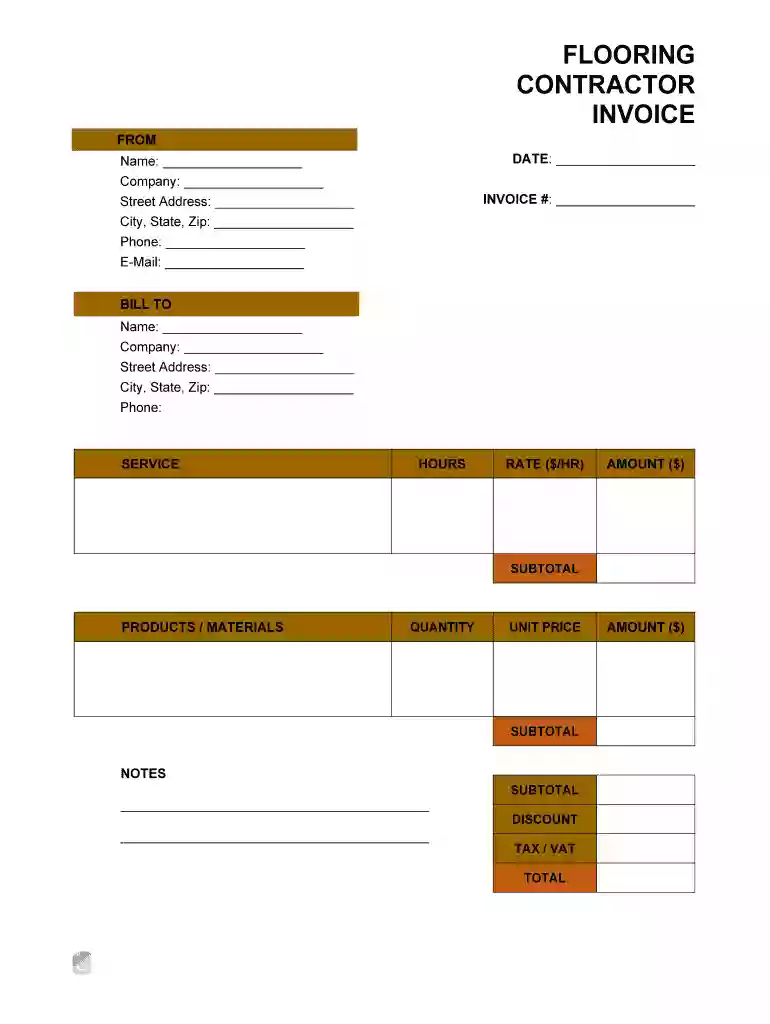
A flooring contractor invoice template is a structured document used by flooring contractors to bill clients for services rendered. It typically includes sections for contractor details, client information, service hours, product costs, taxes, and the total sum due. This template ensures that all necessary financial transactions between contractors and clients are clearly documented and agreed upon. By using a standardized invoice template, contractors can maintain professionalism and accuracy in their billing processes, which aids in avoiding disputes and maintaining transparent financial records.
Key Elements of the Flooring Contractor Invoice Template
The flooring contractor invoice template comprises several essential elements that ensure its functionality and comprehensiveness:
- Contractor and Client Information: Includes names, addresses, phone numbers, and email addresses. This information clearly specifies the parties involved in the transaction.
- Service Details: Outlines the hours dedicated to the flooring project, along with the hourly rate charged. This section ensures clients understand the labor costs associated with the job.
- Materials and Products: Details the type and quantity of materials used, their costs, and any applicable discounts. This transparency helps prevent misunderstandings regarding material expenses.
- Notes Section: Allows contractors to include additional information, such as specific agreements or instructions provided by the client during the project.
- Taxes and Discounts: Clearly marked sections where applicable taxes are calculated and discounts applied, ensuring clients can view any deductions or added taxes directly on the invoice.
- Total Amount Due: Provides a clear summation of all charges, including services, materials, taxes, and discounts, showing clients the final amount payable.
How to Use the Flooring Contractor Invoice Template
To effectively use the flooring contractor invoice template, contractors should follow a consistent process when filling and issuing the template:
- Gather Required Information: Consolidate all pertinent details such as client data, work hours, and materials used.
- Complete Each Section: Enter contractor and client details first, followed by a breakdown of service hours and material costs.
- Calculate Taxes and Discounts: Apply any applicable taxes and subtract discounts as per agreements or promotions.
- Review for Accuracy: Double-check all entries to ensure errors are avoided, especially in calculations and contact information.
- Save and Send: Save the completed invoice in the chosen format (e.g., PDF, DOC) and send it to the client, ensuring timely delivery and professionalism.
Steps to Complete the Flooring Contractor Invoice Template
Completing the flooring contractor invoice template involves several key steps to ensure accuracy and completeness:
- Input Contractor Information: Include the contractor's business name, contact details, and any registration numbers or licenses.
- Add Client Information: Enter the client's personal or business details to confirm the service recipient.
- List Services Provided: Break down the tasks performed, hours spent, and the rates applied.
- Detail Material Costs: Specify all materials used, quantities, and per-item pricing.
- Include Additional Charges and Deductions: Account for taxes, discounts, or other charges such as transportation or delivery fees.
- Calculate Totals: Sum all sections to provide a total amount due, ensuring correctness.
- Finalize the Document: Review everything, ensure all data is complete and accurate, then save and send the invoice to the client.
Legal Use of the Flooring Contractor Invoice Template
The flooring contractor invoice template constitutes a legal document that records the financial agreement between contractors and clients. Its legal validity depends on accurate and honest documentation of services and products rendered. Key legal considerations include:
- Providing Clear Terms: Ensure all terms and payment conditions are transparent and agreed upon by both parties.
- Accurate Representation: All listed services and costs must reflect actual work performed and materials used.
- Compliance with Tax Regulations: All tax entries should comply with local and federal tax laws, where applicable.
- Authorized Signatures: The invoice should include spaces for appropriate signatures, affirming the accuracy of the information provided.
Real-World Examples of Using the Flooring Contractor Invoice Template
Using the flooring contractor invoice template can significantly streamline billing processes in various real-world scenarios:
- Residential Projects: In residential flooring installations, detailing labor and material costs clearly can help assure clients of fairness and provide a clear record for future reference.
- Commercial Contracts: For large-scale commercial flooring projects, using templates ensures consistency across multiple invoices, easing large client management.
- Renovation Jobs: During renovation projects, clear invoices help align client expectations with services delivered, especially when unforeseen changes occur.
- Subcontracting Work: When subcontracting parts of the job to third parties, using standardized invoices ensures transparency among all parties involved.
State-Specific Rules for the Flooring Contractor Invoice Template
Understanding state-specific regulations is crucial for flooring contractors issuing invoices across different states:
- Tax Variations: Different states have varying tax rates and regulations, requiring contractors to adjust tax entries accordingly.
- Licensing Requirements: Some states mandate the inclusion of contractor license numbers on all official documents, including invoices.
- Consumer Protection Laws: In states with stringent consumer protection laws, invoices may need to include a clearer breakdown of services and costs.
- Payment Terms and Late Fees: States may have legal stipulations regarding acceptable payment terms and penalties for late payments, impacting how these are reflected on invoices.