01. Edit your form online
Type text, add images, blackout confidential details, add comments, highlights and more.

Type text, add images, blackout confidential details, add comments, highlights and more.

Draw your signature, type it, upload its image, or use your mobile device as a signature pad.

Send it via email, link, or fax. You can also download it, export it or print it out.
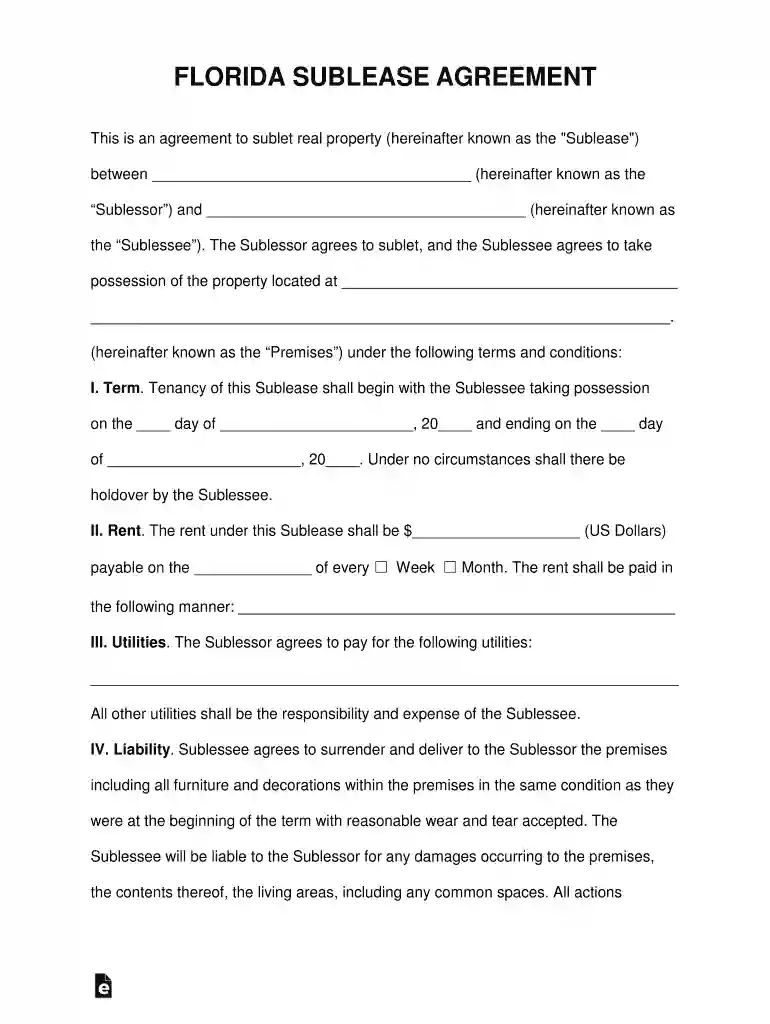
A Florida Sublease Agreement is a legal document that outlines the contractual relationship between a Sublessor and Sublessee. This agreement allows a tenant who holds an existing lease to rent out a part or the entirety of their leased property to another tenant. The document includes critical information such as the lease term, rent amount, and responsibilities of each party. Understanding the nuances of this legal form is essential for both parties to ensure they comply with their obligations and rights under Florida law.
Using the Florida Sublease Agreement involves several steps to ensure comprehensive completion and legal compliance. Initially, both the Sublessor and Sublessee must agree on the terms such as rent, duration, and utility responsibilities. The document should be filled out meticulously, with particular attention to details about the subleased space, duration of sublease, rent payment schedule, and any specific rules or conditions the Sublessee must follow. Both parties should sign the agreement, and it’s advisable to have a witness or notary to strengthen its legal standing.
Obtaining a Florida Sublease Agreement can be done through various channels. You can download a template online, purchase a hardcopy form from office supply stores, or consult a local attorney to create a customized agreement. When opting for online sources, ensure they provide legal documents specific to Florida to ensure compliance with state laws. It’s essential to review the document thoroughly before use.
The legal use of a Florida Sublease Agreement involves both parties adhering to the terms set forth in the document while ensuring it aligns with state laws. The original lease must permit subleasing, and the Sublessor typically needs the landlord’s written consent. The agreement serves as protection for both the Sublessor and Sublessee by clearly delineating responsibilities, providing a structure for conflict resolution, and legally binding both parties to their obligations.
In Florida, specific rules govern the creation and execution of sublease agreements. It’s crucial to comply with these regulations to ensure the contract is legally binding. Unlike many states, Florida law does not require landlords to allow subleasing unless the original lease permits it. Therefore, examining the original lease for any clauses about subleasing is paramount. Additionally, both parties should understand Florida’s landlord-tenant laws, especially regarding notice periods, eviction processes, and security deposit regulations.
A Florida Sublease Agreement includes several key terms that define the contractual relationship:
A thorough sublease agreement should include several essential components ensuring clarity and legality:
Consider a scenario where a university student leases an apartment but plans to study abroad for six months. Instead of terminating the lease and facing financial penalties, the student (Sublessor) opts to sublease the apartment to a fellow student (Sublessee) for the duration. The sublease agreement outlines the temporary arrangement, ensuring both parties understand the expectations, rent amount, and terms. Another instance could involve a professional relocating for work temporarily and seeking to sublease their residence to cover lease obligations while away.
The Florida Sublease Agreement can be executed in either digital or paper format. A digital version offers convenience and efficiency, allowing parties to edit, share, and sign the document electronically. This method reduces paperwork and speeds up the process of obtaining necessary consents and signatures. Alternatively, a paper version may be preferred for its tangibility and ease of reference during face-to-face interactions or when parties are uncomfortable with digital transactions. Both formats should provide identical content to comply with legal standards.
We've got more versions of the SUBLEASE AGREEMENT NO : form. Select the right SUBLEASE AGREEMENT NO : version from the list and start editing it straight away!
| Versions | Form popularity | Fillable & printable |
|---|---|---|
| 2015 | 4.8 Satisfied (79 Votes) |
At DocHub, your data security is our priority. We follow HIPAA, SOC2, GDPR, and other standards, so you can work on your documents with confidence.