
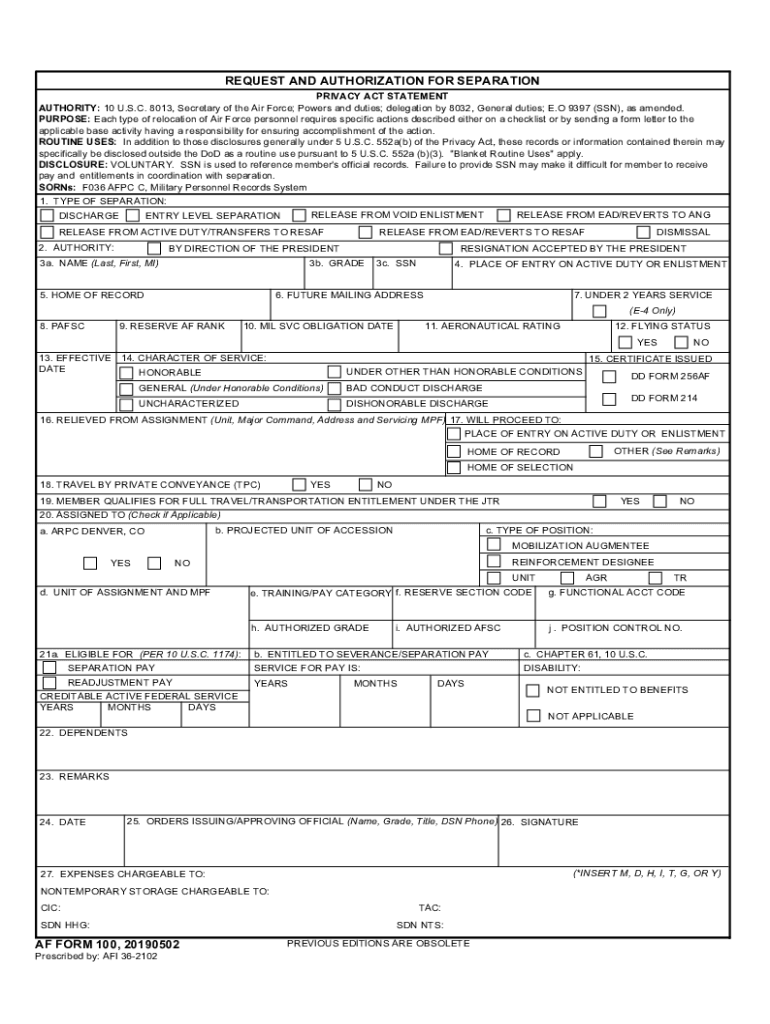







Definition and Purpose of AF Form 100
The AF Form 100, also known as the Request and Authorization for Separation, is an official document utilized by the United States Air Force. Its primary purpose is to outline the procedures and requirements concerning various types of personnel separations, whether voluntary or involuntary. The form encompasses critical elements, such as privacy statements, the nature of the separation, and instructions for submitting the necessary personal information required.
When completing this form, personnel must provide significant details, including their full name, Social Security Number (SSN), rank, and service details. Understanding the implications of each entry is vital, as accurate information is crucial for the timely processing of pay and entitlements, and it ensures adherence to regulatory protocols outlined by the Air Force.
The AF Form 100 is essential for personnel transitioning out of active duty status, whether retiring, separating, or taking part in voluntary programs. This form serves as a standardized method to document and request separation, helping both service members and the military streamline this critical transition.
Key Elements of AF Form 100
AF Form 100 encompasses several key elements that are crucial for proper completion:
- Privacy Act Statement: This section informs the individual submitting the document about how their personal information will be handled and protects their privacy rights.
- Types of Separation: The form details various separation methods, including honorable and general separations, which are essential for determining eligibility for post-service benefits.
- Personal Information Fields: Mandatory fields require users to provide essential data such as name, SSN, and service-related information.
- Authorization Signatures: The document requires signatures from the individual requesting separation, as well as from their commanding officer, to validate the request and initiate the separation process.
These elements collectively define the essential framework of the AF Form 100, ensuring compliance with military procedures while safeguarding the rights and privacy of Air Force members.
Steps to Complete the AF Form 100
Completing the AF Form 100 requires a systematic approach to ensure accuracy and compliance. Follow these steps:
- Gather Information: Collect necessary personal data, including your full name, SSN, rank, and relevant service details.
- Select Type of Separation: Identify the appropriate type of separation that applies to your situation (e.g., voluntary, involuntary).
- Complete the Form: Fill out all required fields, making sure to adhere to any guidelines provided by your personnel office or commanding officer regarding specific details.
- Review for Accuracy: Double-check all entries to ensure there are no mistakes. This step is crucial to avoid delays in processing your request.
- Obtain Necessary Signatures: Secure signatures from both you and your commanding officer; this provides authorization for the separation request to proceed.
- Submit the Form: Once completed and signed, submit the form to the appropriate personnel office as per the established protocol.
Following these steps will facilitate a smoother transition process and ensure adherence to military regulations.
Typical Users of AF Form 100
The AF Form 100 is typically used by:
- Active Duty Air Force Personnel: Members seeking voluntary separation, retirement, or transition to civilian life often utilize this form.
- Reserve Members: Service members in the Air Force Reserve may also complete this form for separation requests.
- Administrative Personnel: Those tasked with processing personnel requests in military installations and bases utilize the AF Form 100 to manage separations effectively.
- Human Resource Specialists: HR personnel within military organizations use the form to ensure compliance with Air Force regulations regarding personnel separations.
Each of these user categories plays a significant role in the successful processing of the separation requests, ensuring that the procedures align with military guidelines and the needs of the service members.
Legal Use and Compliance of AF Form 100
The legal use of the AF Form 100 is governed by regulations outlined in the Air Force Manual and relevant legal statutes. Compliance with these guidelines is mandatory for all personnel engaged in the separation process. Here are some critical aspects of legal compliance related to the AF Form 100:
- Adherence to Privacy Laws: The submission of personal data must conform to the Privacy Act requirements, ensuring that sensitive information is protected.
- Proper Authorization: The signatures required on the document signify that the request complies with military orders and regulations, preventing unauthorized separations.
- Record Keeping: Establishing an official record of the request is crucial for future reference and accountability regarding the service member's military career and benefits.
- Timeliness: Submitting the AF Form 100 within established timelines is essential to avoid delays or potential penalties regarding separation and post-service benefits.
Following these legal guidelines ensures that the separation process is conducted fairly and respects the rights of service members within the military framework.
Important Terms Related to AF Form 100
Understanding the terminology associated with AF Form 100 enhances clarity and comprehension throughout the separation process. Key terms include:
- Separation Codes: These codes categorize the type of separation and determine eligibility for benefits, affecting the service member's transition.
- Entitlements: This refers to the benefits that a service member is eligible for post-separation, influenced by the type of separation and service duration.
- Privacy Act: This federal law safeguards the privacy of individuals by regulating the collection and management of personal information by government agencies, including military institutions.
- DD Form 214: Often referred to as the Certificate of Release or Discharge from Active Duty, this form documents a service member's military service and is vital for applying for Post-9/11 GI Bill benefits or veteran services.
Familiarity with these terms helps ensure that service members navigate the AF Form 100 process with an informed understanding of their rights and responsibilities.




