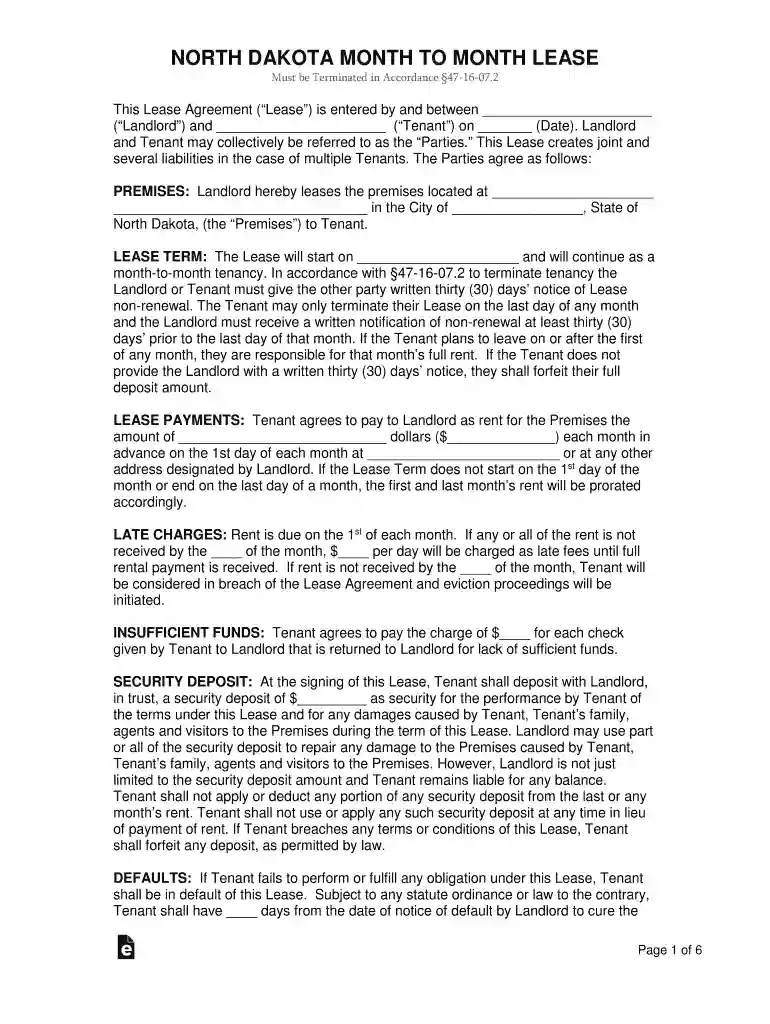
Month to Month Lease Easy To Use High quality forms 2026

Get Form
Month to Month Lease Easy To Use High quality forms Preview on Page 1

Here's how it works

01. Edit your form online
Type text, add images, blackout confidential details, add comments, highlights and more.

02. Sign it in a few clicks
Draw your signature, type it, upload its image, or use your mobile device as a signature pad.

03. Share your form with others
Send it via email, link, or fax. You can also download it, export it or print it out.

Definition & Meaning

A month-to-month lease agreement is a legally binding contract between a landlord and a tenant for a rental property. Unlike traditional long-term leases, this agreement provides flexibility by allowing either party to terminate the lease with proper notice. It is particularly popular in dynamic rental markets where tenants and landlords seek short-term commitments.

  • Flexible Duration: The lease automatically renews each month unless either the landlord or tenant gives notice of non-renewal.
  • Ease of Use: These leases are straightforward, focusing on the essential terms and rights of both parties.

This type of agreement is practical for individuals who anticipate needing to move without a long-term commitment, such as those with temporary job placements or relocating frequently.

Key Elements of the Month-to-Month Lease

A comprehensive month-to-month lease agreement includes several critical components to protect the interests of both parties:

  • Lease Duration: Although monthly, it specifies the start date and the requirement for advance notice for termination.
  • Payment Obligations: Detailed monthly rent amounts, due dates, and penalties for late payments.
  • Security Deposit: Amount and conditions for return, ensuring tenant obligations are met.
  • Maintenance Responsibilities: Clearly defined duties for property upkeep and repair.
  • Use of Premises: Rules concerning how the property can be used, including any restrictions.

These elements ensure both landlord and tenant understand their obligations and rights, minimizing disputes and ensuring a smooth rental experience.

How to Use the Month-to-Month Lease Forms

Utilizing month-to-month lease forms is streamlined with platforms like DocHub, which provide easy-to-use templates:

  1. Access: Import the lease template into your DocHub account, either from your device or integrated cloud storage.
  2. Customization: Fill in specific details, such as rent amount, property address, and party names, using the platform's form tools.
  3. Save & Share: Finalize the document and securely share it with the other party via email or download it for print.

This process eliminates unnecessary complexity, facilitating efficient lease management without extensive legal knowledge.

Important Terms Related to Month-to-Month Lease Forms

Understanding specific terminologies in month-to-month leases is crucial for crafting and negotiating clear agreements:

  • Notice Period: Defined time frame required to inform either party of non-renewal intentions.
  • Default Clauses: Conditions that constitute breaches, such as unpaid rent, triggering potential eviction.
  • Utilities Agreement: Specifies responsibility for utility payments, potentially separating them from rent.

These terms are vital for preventing misunderstandings and ensuring all parties comprehend their contractually defined roles.

State-Specific Rules for Lease Agreements

While month-to-month leases are generally similar across the U.S., state-specific regulations can influence key terms:

  • Notice Requirements: States vary in the minimum notice period for termination.
  • Security Deposit Limits: Some jurisdictions cap deposit amounts or mandate specific timelines for returns.
  • Rent Control Laws: Certain areas may have regulations impacting permissible rent increases.

Understanding these variations ensures that lease agreements comply with local laws, protecting both landlords and tenants from legal disputes.

Steps to Complete the Lease Forms

Efficiently completing a month-to-month lease form involves key steps to ensure accuracy and legal compliance:

  1. Gather Information: Collect necessary details, including property description, tenant information, and agreed-upon rent terms.
  2. Customize the Form: Use the editor to add specific terms and conditions relevant to your rental situation.
  3. Review: Carefully examine all filled sections for errors or omissions, ensuring adherence to applicable rental laws.
  4. Sign: Electronically sign the document and enable signatures from other parties as necessary.
  5. Finalize: Save a copy of the completed agreement and distribute it to all involved parties.

These steps ensure the lease captures all necessary elements and adheres to legal standards.

Legal Use of the Month-to-Month Lease Forms

Month-to-month lease forms serve as legally binding documents that protect the interest of all involved parties:

  • Compliance: Ensures alignment with federal, state, and local housing laws.
  • Enforceability: Clearly outlines the rights and responsibilities, enforceable in court should disputes arise.
  • Amendments: Simplifies making modifications to lease terms with mutual consent.

Using appropriate legal forms ensures a professional, compliant rental process that minimizes legal risks for landlords and tenants.

Examples of Using Month-to-Month Leases

Month-to-month leases are well-suited for various real-world scenarios:

  • Corporate Housing: Companies often use these leases for employees needing temporary housing.
  • Transitional Housing: Ideal for individuals planning to purchase a home soon and need short-term accommodation.
  • Test Location: Landlords may use this flexibility for testing market demand in a new location before committing to long-term tenants.

These examples highlight the adaptability of month-to-month agreements, catering to diverse rental needs.

be ready to get more

Complete this form in 5 minutes or less

Get form

Got questions?

We have answers to the most popular questions from our customers. If you can't find an answer to your question, please contact us.
Contact us
A month-to-month tenancy is when the renter is granted possession of the property with no definite expiration date and pays the owner on a monthly basis. This tenancy is most commonly found in residential leases. In situations where there is no written agreement, tenancy is considered to be on a month-to-month basis.
Month-to-month lease agreements can be more expensive rent-wise because they are more temporary and can end at any time.
A Minnesota month-to-month rental agreement is for tenancy-at-will arrangements where the landlord and tenant can terminate at any time with one months notice. The agreement will renew each month until the landlord or tenant sends notice.
In most situations, a tenant without a signed Lease Agreement will be considered a month-to-month tenant. This means that either you or the tenant can end the tenancy in any given month as long as you give proper notice.
One of the biggest drawbacks of a month-to-month lease is the lack of long-term security. Since the lease automatically renews every month, tenants have the option to leave with only 30 days notice. This makes it harder to predict your rental income over time.

Security and compliance

At DocHub, your data security is our priority. We follow HIPAA, SOC2, GDPR, and other standards, so you can work on your documents with confidence.
Learn more
ccpa2
pci-dss
gdpr-compliance
hipaa
soc-compliance

People also ask

Do I Have to Sign a Month-to-Month Lease? Every lease should be in writing and signed by both the landlord and tenant to make sure your rental lease is legally binding. However, if you have a lease with a Holding Over clause, then this would be one exception where you would not need to sign a new lease.
0:50 2:42 If you find yourself in this situation. Its best to communicate with your landlord to get the leaseMoreIf you find yourself in this situation. Its best to communicate with your landlord to get the lease signed as soon as.
How to write a month-to-month lease Property address and unit number if part of a multifamily dwelling. Name and contact information for landlord (or property manager) and tenant. Monthly lease amount and due date. Additional rent payment for pets or roommates, if applicable.

Related links