Background Brief onLandlord- - Oregon State Legislature 2026

Get Form
Background Brief onLandlord- - Oregon State Legislature Preview on Page 1

Here's how it works

01. Edit your form online
Type text, add images, blackout confidential details, add comments, highlights and more.

02. Sign it in a few clicks
Draw your signature, type it, upload its image, or use your mobile device as a signature pad.

03. Share your form with others
Send it via email, link, or fax. You can also download it, export it or print it out.

Definition and Meaning

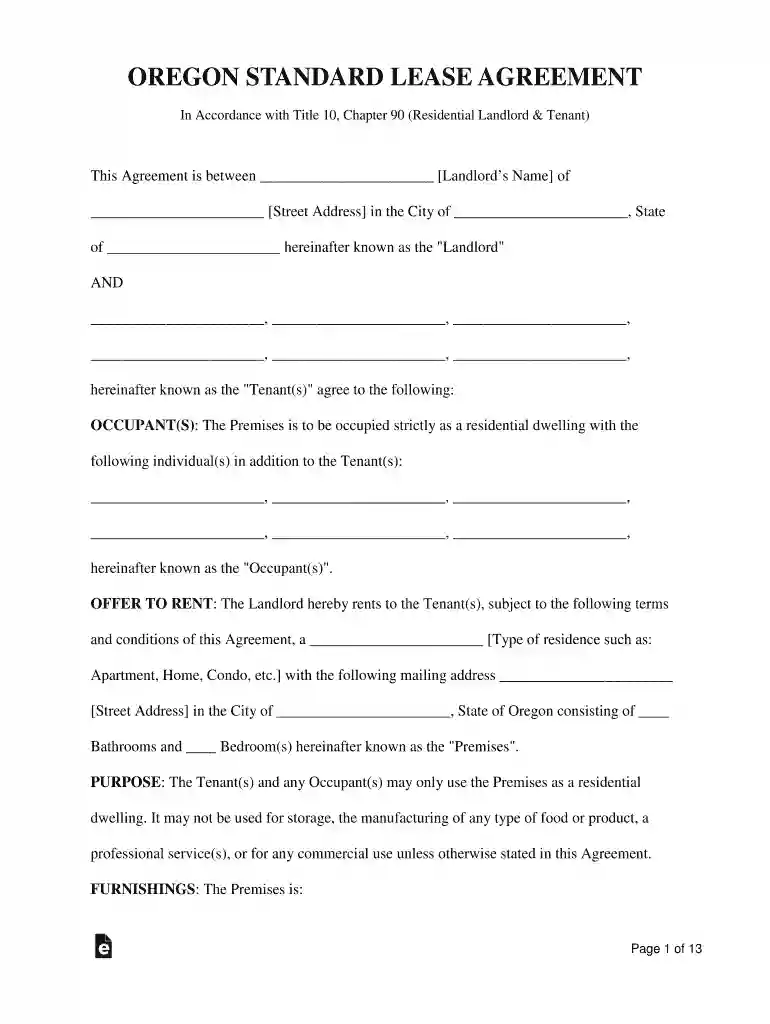
The "Background Brief on Landlord - Oregon State Legislature" refers to a comprehensive document designed specifically for understanding the roles and regulations impacting landlords within the Oregon legislative framework. This document serves as a foundational resource, providing detailed insights into the legal responsibilities and rights of landlords operating in Oregon. It acts as an essential guide for navigating the complexities of landlord-tenant law in the state, ensuring compliance with local statutes.

How to Use the Background Brief

To utilize the "Background Brief on Landlord - Oregon State Legislature," landlords and related stakeholders should first familiarize themselves with its structure and content. It is advisable to start with a thorough read-through of the document to grasp the key legal concepts and terms. After gaining an understanding, users can refer back to specific sections as needed when questions or situations arise that require clarification or additional information. This document can be used as a point of reference for ensuring ongoing compliance with landlord responsibilities under Oregon law.

Step-by-Step Guide

  1. Initial Review: Read the document in its entirety to understand its scope and content.
  2. Highlight Key Sections: Identify sections that are most relevant to your specific landlord context.
  3. Regular Reference: Use the brief as a reference tool when drafting rental agreements or dealing with tenant issues.
  4. Consult for Compliance: Ensure that procedures and operations align with state regulations as outlined in the brief.

How to Obtain the Background Brief

Acquiring the "Background Brief on Landlord - Oregon State Legislature" involves accessing it through the official website of the Oregon State Legislature or visiting local government offices that handle landlord-tenant relations. It may also be available through professional associations related to property management or as part of educational material in landlord training programs.

Acquisition Steps

  • Online Access: Visit the Oregon State Legislature’s official site to download a copy.
  • In-Person Request: Go to local housing authorities or legislative offices.
  • Professional Networks: Check with property management associations.

Key Elements of the Brief

The "Background Brief on Landlord - Oregon State Legislature" includes several critical components necessary for comprehensive understanding and application.

Important Sections

  • Landlord Obligations: Outlines the duties landlords must perform, such as property maintenance.
  • Tenant Rights: Details the rights tenants have under Oregon law and how landlords should respect these.
  • Lease Agreements: Provides guidance on crafting legally compliant rental agreements.
  • Eviction Procedures: Discusses the legal steps required for eviction.

Legal Use of the Background Brief

The background brief acts as a legal support document that assists landlords in maintaining compliant operations under the law.

Legal Support Functions

  • Regulatory Compliance: Assists in adhering to tenant law regulations.
  • Risk Management: Helps mitigate legal disputes from non-compliance.
  • Policy Formation: Aids in creating landlord policies that align with legal mandates.

State-Specific Rules

Oregon's landlord laws can vary significantly from other states, making it vital for landlords to be aware of the state-specific requirements contained within the brief. The guide provides detailed state-specific instructions and adaptations necessary for compliance with distinct Oregon regulations.

Examples of Usage

Practical examples included in the brief demonstrate common landlord scenarios where this information is applied, such as handling tenant complaints about maintenance or addressing lease violations legally and properly.

Scenario Applications

  • Maintenance Dispute Resolution: Steps for addressing and documenting tenant maintenance requests.
  • Lease Agreement Formulation: How to integrate state laws into contract terms effectively.

Who Typically Uses the Background Brief

The primary users of the "Background Brief on Landlord - Oregon State Legislature" are landlords, property managers, real estate professionals, and legal experts specializing in landlord-tenant law. Additionally, educational institutes may incorporate the guide into curricula for courses on property management and real estate law.


decoration image ratings of Dochub

User Demographics

  • Individual Landlords: Seeking compliance knowledge.
  • Property Managers: Managing multiple rental units.
  • Legal Advisors: Providing guidance to landlord clients.
  • Educational Bodies: Training the next generation of real estate professionals.
be ready to get more

Complete this form in 5 minutes or less

Get form

Got questions?

We have answers to the most popular questions from our customers. If you can't find an answer to your question, please contact us.
Contact us
Section 90.320 - Landlord to maintain premises in habitable condition; agreement with tenant to maintain premises.
Oregon Lawmakers have passed legislation allowing property owners or landlords to evict squatters, but the law will not go into effect until Jan. 1, 2026.
During any 12-month rolling period, most landlords may not increase the existing rent by more than 7 percent plus the Consumer Price Index (CPI). The Oregon Department of Administrative Services will publish the maximum annual rent increase allowed. The maximum rent increase for 2023 is 14.6 %.
(See Oregon law ORS 90.320.) That means the landlord must have your rental unit clean and in good working order when you move in. The landlord must also provide: Protection from water and weather (full insulation is not required);
Rent increases are regulated by Oregon state law. During the first year of renting, landlords cannot raise the rent. After the first year, landlords can only raise rent once per year. Annual rent increases are capped at 7% plus inflation or 10%, whichever is lower.

Security and compliance

At DocHub, your data security is our priority. We follow HIPAA, SOC2, GDPR, and other standards, so you can work on your documents with confidence.

Learn more
ccpa2
pci-dss
gdpr-compliance
hipaa
soc-compliance

People also ask

5 Things You Should Never Say When Renting an Apartment I hate my current landlord Every potential landlord is going to ask why youre moving. Let me ask you one more question I cant wait to get a puppy My partner works right up the street I move all the time
1:54 3:39 Its crucial to review your lease agreement. And understand Oregons landlord tenant laws these lawsMoreIts crucial to review your lease agreement. And understand Oregons landlord tenant laws these laws outline the procedures for requesting repairs.

Related links