
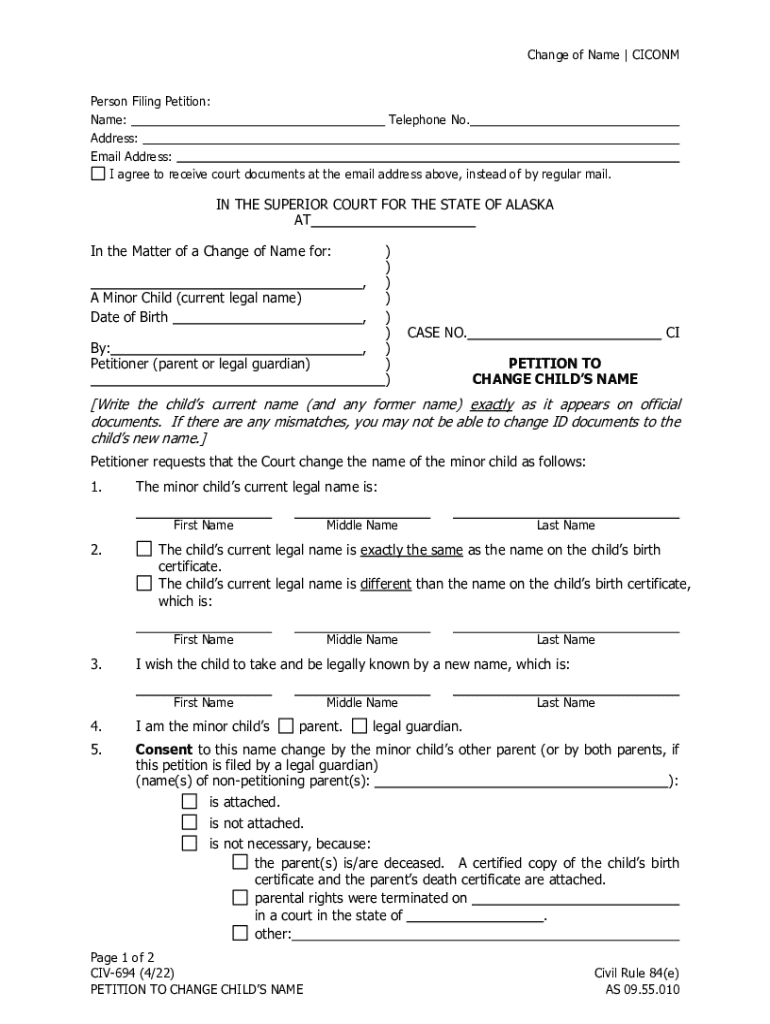







Definition & Purpose of CIV-694 Petition to Change Child's Name
The CIV-694 Petition to Change Child's Name is a legal document used in the Superior Court of Alaska. It facilitates the process of changing a minor's legal name. This form is essential for parents or legal guardians who wish to officially alter a child's name on legal documents. The petition requires the petitioner to provide details such as the child's current and desired names and reasons for the name change. It ensures that the process is transparent and that it does not intend to evade legal obligations.
Eligibility Criteria for Filing
To file the CIV-694 Petition, certain criteria must be met. Primarily, the petitioner should be a parent or legal guardian of the child. Additionally, the child’s consent may be required if they are of a certain age, ensuring that the child's wishes are also considered. It is important for the petitioner to have a legitimate reason for the name change, which could range from correcting a misspelling to adapting to cultural or family changes.


Key Considerations:
- Both legal parents' consent may be needed.
- The child’s age could influence their level of input in the decision.
- Name change requests that seem intended to evade legal responsibilities, like escaping debts or criminal liabilities, are unlikely to be approved.
Steps to Complete the CIV-694 Petition to Change Child's Name
-
Gather Required Information: Collect all necessary personal information, including legal documents that verify identities, the child’s birth certificate, and any legal custody documents.
-
Complete the Form: Fill out each section of the form accurately, including personal details of the child and petitioner, the current and proposed new name, and reasons for the change.
-
Obtain Necessary Consents: Secure consent from the other parent or legal guardians if applicable. Attach signed consent forms to the petition.
-
Notarization and Affidavits: Some sections may require notarization or additional affidavits. Ensure these are complete before submission.
-
File the Petition: Submit the completed form to the Superior Court of Alaska either in person or through mail.
Required Documents and Their Importance
When submitting the CIV-694, attach several key documents to ensure a smooth process:
- Birth Certificate: Establishes the child's existing legal name and parentage.
- Proof of Identity: Identifications such as driver's licenses or passports for the petitioner.
- Legal Custody Documents: Provides proof of legal custody in the case of guardians or for separated parents.
- Consent Forms: Signed agreements from other parents or guardians.
These documents ensure that the court has all relevant information to make a fair decision and that the request is legitimate.
Legal Use and Implications
The CIV-694 Petition serves a legal purpose by ensuring that the child's new name is reflected on all official documents such as school records, medical files, and passports. It can impact future legal processes like inheritance, travel, and identification verification, making accuracy paramount.
Types of Legal Outcomes:
- A successful name change results in official recognition of the new name.
- A denied petition might stem from lack of consent or failure to meet eligibility requirements.
Important Terms Related to CIV-694
Understanding specific terms in the CIV-694 can aid in correct form completion:
- Petitioner: The individual applying for the child’s name change.
- Respondent: Another parent or legal guardian who might need to provide consent.
- Affidavit: A written statement confirmed by oath, used as evidence.
- Notarization: Official verification of the signatures on legal documents.
Clarifying these terms can prevent errors and misunderstandings during form completion.
State-Specific Rules for Name Changes in Alaska
Alaska has specific rules governing the use of the CIV-694. These may differ slightly from other states in the U.S., such as the requirements for parental consent or judicial oversight. Understanding these nuances helps ensure compliance with Alaska's legal standards.
Form Submission Methods and Considerations
The CIV-694 can be submitted through multiple channels:
- In-Person: Direct submission at the Superior Court ensures immediate processing and feedback.
- Mail: Allows for remote submission but might involve longer processing times.
Understanding the differences in submission methods allows petitioners to choose the best option based on their needs.
Examples of Using the CIV-694
Practical scenarios highlight the form's utility:
- Cultural Transition: A family may choose to change their child's name to reflect cultural heritage better.
- Correcting Errors: Adjusting a misspelled name on official records after birth registration errors.
- Adoption or Divorce: Reflecting familial changes post-adoption or divorce to avoid confusion in legal documents.
Examples provide relatable references, illustrating common motivations and benefits of completing a name change petition.




