






Definition and Purpose of the SILLC Supplemental Travel Authorization Form
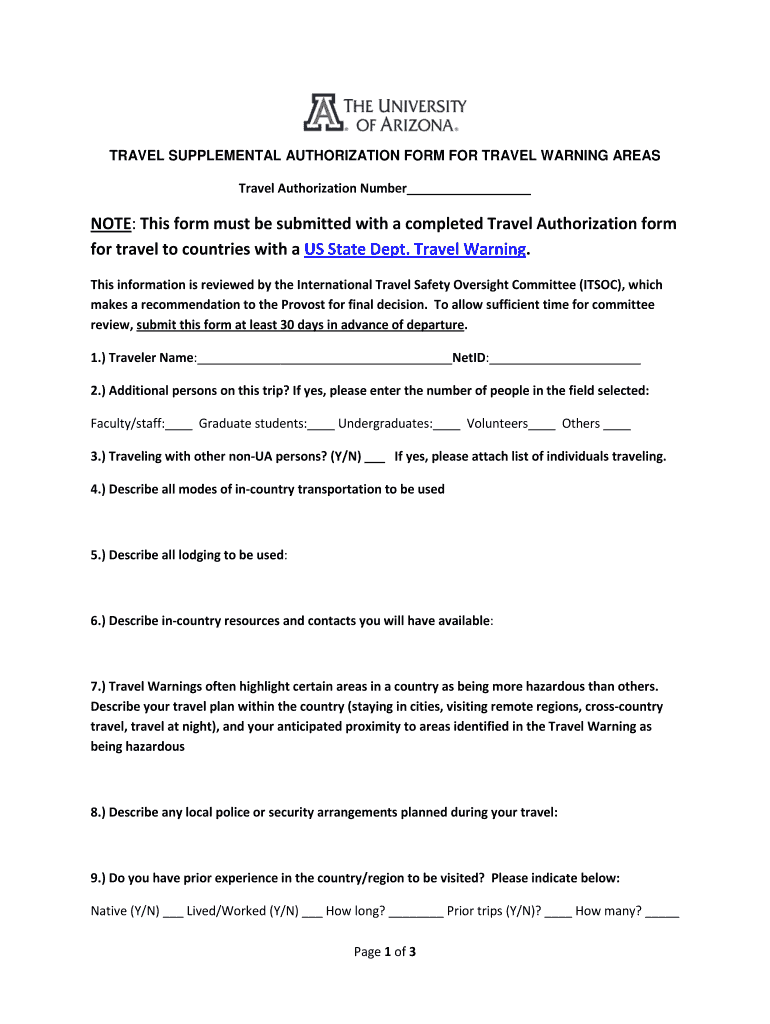
The SILLC Supplemental Travel Authorization Form for Travel Warning is a specialized document required for individuals planning to travel to regions flagged by the U.S. State Department as areas with travel warnings. Its primary purpose is to ensure travelers have received the necessary approvals before embarking on trips to potentially hazardous destinations. The form details essential travel information, including the itinerary, an acknowledgment of potential risks, and compliance with safety measures. It serves as both a protective measure for travelers and a regulatory tool for institutions ensuring employee or student safety.
Key Elements of the Form
- Traveler Information: Full name, contact details, and affiliation, whether a student, faculty member, or staff.
- Travel Details: Destination, duration, and purpose of the travel.
- Risk Acknowledgment: Confirmation that the traveler understands the risks involved in the trip.
- Safety Precautions: List of measures to be taken to minimize risk while traveling.
- Signatures: Required approvals from departmental authorities and the traveler.
How to Use the SILLC Supplemental Travel Authorization Form
Filling out the SILLC Supplemental Travel Authorization Form involves a series of steps designed to capture comprehensive travel information. The process typically begins with gathering all necessary details about the trip and understanding the associated risks. Here's a step-by-step guide on using the form:
- Gather Required Information: Collect details about your travel plans, including your itinerary, purpose of travel, and any safety measures you plan to implement.
- Obtain Necessary Approvals: Seek endorsements from departmental or institutional authorities, ensuring all required parties have reviewed your travel plans.
- Complete and Sign: Fill out all sections of the form, ensuring accuracy, and sign the document to confirm your acknowledgment of the risks and compliance with procedures.
- Submit the Form: Submit the completed form at least 30 days before your departure date to the designated department or office.
Step-by-Step Completion Guide
- Step 1: Locate and download the SILLC form from your institution's document repository or request it from the administrative department.
- Step 2: Fill in personal information and trip details. Be accurate and provide supporting documents if needed.
- Step 3: Review the risk acknowledgment section with any advisories from the U.S. State Department.
- Step 4: Obtain required signatures from the department head or a designated authority.
- Step 5: Make a copy for your records and submit the original to your institution's travel office.
Why the SILLC Supplemental Travel Authorization Form is Important
The SILLC Supplemental Travel Authorization Form serves several critical functions. It provides a structured way to evaluate the safety of international travel for those venturing into high-risk areas. By requiring travelers to formally acknowledge possible dangers and safety measures, the form helps institutions mitigate liability and ensures that travelers are well prepared. Moreover, it facilitates informed decision-making by institutional officials who authorize permissions for travel, balancing the necessity and benefits of the trip against potential dangers.
Who Typically Uses the SILLC Supplemental Travel Authorization Form
This form is primarily used by institutions such as universities and companies that send representatives to international regions with identified travel warnings. The typical users include:
- Students: Engaging in study abroad programs or educational trips to various countries.
- Faculty and Researchers: Involved in international research or attending global conferences.
- Corporate Employees: Traveling for business needs or attending international seminars and workshops.

Institutional Context
Universities and educational bodies often implement these forms as part of their travel policies to ensure student and staff safety. In a corporate setting, the form aligns with risk management protocols for employee welfare during international assignments.
Legal Use and Compliance
The SILLC Supplemental Travel Authorization Form aligns with U.S. travel advisories and institutional policies for international travel safety. Legal compliance involves:
- Adhering to U.S. State Department Guidelines: Understanding travel warnings and ensuring trips are authorized only when considered safe by institutional standards.
- Institution-Specific Travel Policies: Following campus-specific rules that dictate additional safety measures or restrictions on traveling to certain countries.
Penalties for Non-Compliance
Non-compliance with the form requirements may lead to the following implications:
- Travel Restrictions: Individuals may be barred from traveling if the form isn't completed and approved.
- Institutional Disciplinary Actions: Failure to comply could result in disciplinary measures, including revoking travel privileges.
- Insurance Consequences: Lack of formal authorization might affect travel insurance coverage, leaving the traveler financially vulnerable.
How to Obtain the SILLC Supplemental Travel Authorization Form
To access the SILLC Supplemental Travel Authorization Form, travelers can typically:
- Visit the Institutional Website: Many universities and organizations provide downloadable forms on their official sites.
- Contact the Administration Office: Request the form from relevant departments, like international offices or HR departments, depending on context.
Digital Alternatives
Some institutions may offer digital platforms to complete and submit the form online, integrating with systems like DocHub for seamless processing. Electronic submissions often facilitate quicker approvals and ensure better record-keeping.
Required Documents and Submission Methods
Completing the SILLC form requires additional supporting documents to be submitted alongside. These typically include:
- Travel Itinerary: Detailed schedule and plans, including flight and accommodation information.
- Safety Protocols: Plans for risk mitigation and relevant emergency contacts.
- Insurance Proof: Valid travel insurance covering high-risk areas.
Submission Methods
- Online Submission: Upload scanned copies of documents and the completed form through the institution's portal.
- In-Person Submission: Deliver paper copies to the designated administrative office.
- Mail Submission: Some institutions may allow submissions via postal mail for processing.
By adhering to these structured steps, travelers and institutions can ensure compliance with travel safety protocols while facilitating necessary international engagements.