






Definition & Meaning
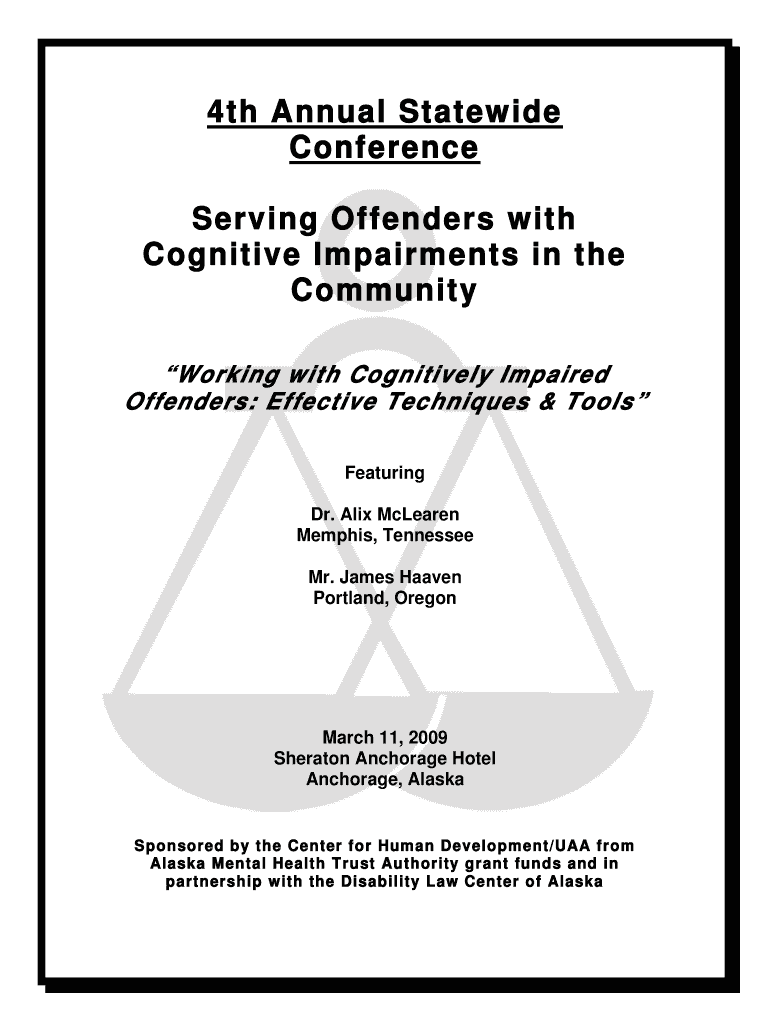
The "2009 Conference Participant Manual (PDF 2 8MB) - University of - UAA Alaska" is a comprehensive guide produced by the University of Alaska Anchorage (UAA) for attendees of the 4th Annual Statewide Conference. This manual is designed to serve participants with critical information about the conference's focus on offenders with cognitive impairments. Included within its content are detailed agendas, objectives, and information on key presentations, making it an essential resource for understanding the scope and expectations of the sessions.
How to Use the Manual
Using the participant manual effectively involves understanding its layout and sections. Participants can familiarize themselves with the conference's objectives and schedule by:
-
Reviewing the Agenda: Locate the agenda section to identify session times, topics, and presenters.
-
Understanding Key Objectives: Each session will have specific goals, usually outlined in the beginning. Knowing these will help participants focus on desired outcomes.
-
Preparing Questions: Use the information about presenters to prepare any questions or discussion points, enhancing engagement during the conference.
-
Utilizing Resources: The manual may include supplementary materials or references to external resources, which attendees can use as preparatory or follow-up materials.
Steps to Access the Manual
Accessing the manual can be achieved through several methods:
-
University Website: Search for the manual on UAA's official site or the specific conference page.
-
Email Request: Contact the conference coordinators or the UAA department in charge of the conference to request a PDF copy.
-
Conference Registration: Typically, once registered for the conference, participants may receive the manual via email or through a registration portal.
-
Cloud Storage: Check if the manual is available on shared platforms like Google Drive if provided in prior communications.
Key Elements of the Manual
The participant manual contains several key elements critical for attendees:
- Agenda Overview: Lists session dates, times, and locations.
- Presenter Bios: Information about experts like Dr. Alix McLearen and Mr. James Haaven.
- Session Objectives: Elaborates on goals, such as reducing recidivism and understanding cognitive impairments.
- Additional Resources: Links to further reading, research papers, or related materials.
Important Terms Related to the Manual
Understanding specific terminology is crucial for comprehending the manual:
- Cognitive Impairments: Refers to various mental health disorders or disabilities affecting cognitive function.
- Recidivism: The tendency of previously convicted persons to reoffend.
- Reentry Preparation: Programs aimed at helping offenders reintegrate into society post-incarceration.
Who Typically Uses the Manual
The manual is primarily used by:
- Conference Attendees: Participants looking to gain insights into cognitive impairments and related topics.
- Professionals in the Justice System: Including probation officers and social workers focusing on outreach to offenders.
- Academics and Researchers: Investigating criminal behavior tied to cognitive issues.


Practical Examples and Scenarios
Attendees can relate to the content through various examples:
- Case Studies: Real-life scenarios discussed to illustrate effective offender management strategies.
- Workshop Sessions: Interactive parts of the conference, allowing practical engagement with theories presented.
Legal Use of the Manual
The manual also provides guidance on:
- Compliance with Legal Standards: Ensuring practices discussed adhere to U.S. justice system requirements.
- Confidentiality Protocols: Handling of sensitive information related to offenders.
Versions or Alternatives to the Manual
While focused on the 2009 version, users might find:
- Updated Editions: Subsequent years' manuals offering revised insights and current data.
- Alternative Formats: Accessibility options like audio versions for the visually impaired.
These components deliver a comprehensive understanding of the conference proceedings, enabling attendees to maximize their learning experience.