






Definition & Importance of SFAS No 123 Disclosures
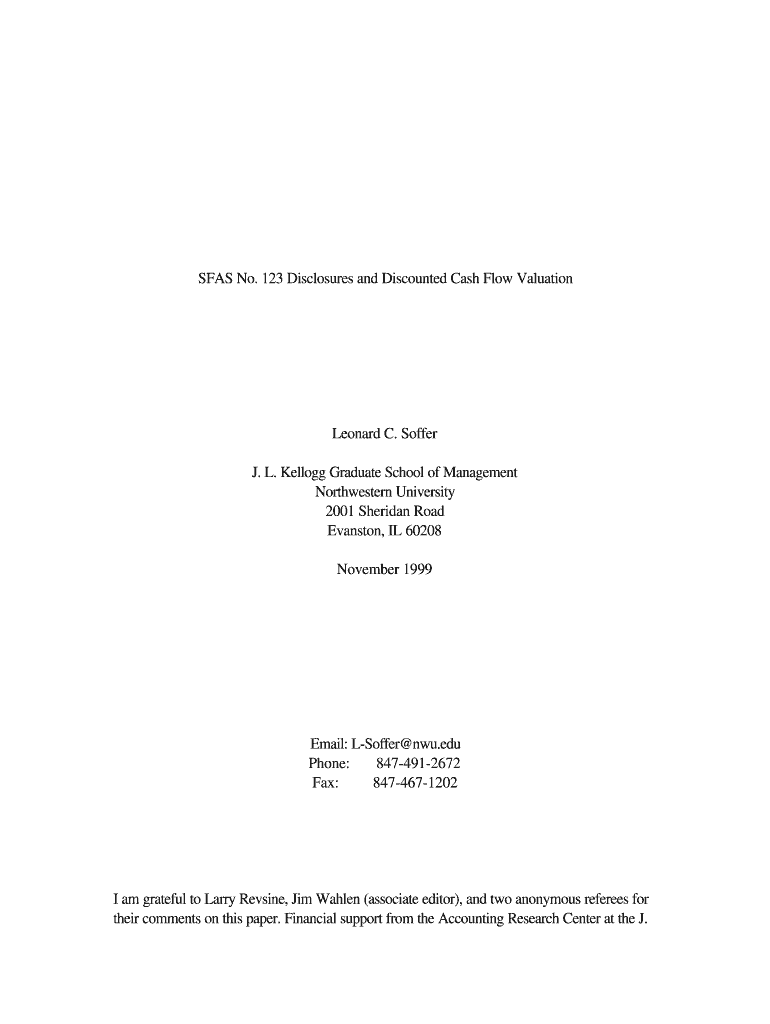
SFAS No 123, or Statement of Financial Accounting Standards No 123, plays a crucial role in financial accounting by requiring companies to disclose the fair value of employee stock options (ESOs) and other share-based compensation. Such disclosures are essential in offering transparency into a company's compensation costs and informing investors about non-cash expenses that impact net income. SFAS No 123 enhances the reliability of financial statements by encouraging companies to recognize the cost of these compensations in their financial reports.
Core Objectives
- Improve transparency in financial disclosures regarding stock-based compensation.
- Ensure that investor and stakeholder decisions are based on comprehensive financial data.
- Encourage the use of a fair value approach in the valuation of employee stock options.
How to Use the SFAS No 123 Disclosures in Valuations
Integrating SFAS No 123 disclosures into discounted cash flow (DCF) valuations enhances the accuracy of financial analysis. The process involves considering the disclosed fair value of ESOs as part of operating expenses, which impacts the projected cash flow and, consequently, the company’s valuation.
Steps to Integrate Disclosures
- Identify ESO-related Expenses: Review the company's financial statements to identify expenses related to employee stock options as reported under SFAS No 123.
- Adjust Cash Flows: Incorporate these expenses into the DCF analysis, ensuring they are adequately integrated into projected cash flows.
- Recalculate Value: Adjust the company’s valuation models to reflect these additional expenses, offering a more precise financial outlook.
Key Elements of SFAS No 123 Disclosures
The disclosures required under SFAS No 123 provide detailed insights into the cost and value of stock-based compensation. These disclosures powerfully affect financial analysis and corporate valuation.
Critical Components
- Fair Value Measurement: Necessary methods and assumptions used for estimating the ESO’s fair value.
- Expense Recognition: Conditions under which stock-based compensation expenses are recognized on financial statements.
- Applicability to Public vs. Private Companies: Different standards or guidelines that may apply depending on company type.
Legal Use and Compliance
Adhering to SFAS No 123 is not just beneficial but necessary under legal standards for financial disclosure in the United States. Compliance ensures that companies meet the regulatory requirements outlined by US accounting standards and secures the credibility of their financial reports.
Compliance Strategies
- Regularly update accounting practices to align with the latest legal guidelines.
- Engage professional audit services to ensure compliance with SFAS No 123 and related regulations.
- Provide ongoing training for financial teams on updates and best practices in stock-based compensation accounting.
Steps to Complete the SFAS No 123 Disclosure Process
Implementing SFAS No 123 disclosures requires a structured approach to ensure all requirements are met accurately.
Disclosure Implementation Steps
- Gather Data: Collect all relevant information on stock-based compensation, including the number of granted stock options and their terms.
- Calculate Fair Value: Use appropriate valuation models to determine the fair value of the stock options.
- Record in Financial Statements: Accurately reflect these values in the company’s financial documents, ensuring compliance with SFAS No 123 requirements.
Important Terms Related to SFAS No 123
Understanding the terminology used in SFAS No 123 is vital for interpreting financial documents accurately.
Key Terms
- Fair Value: The estimated price at which an employee stock option would change hands between willing participants.
- Expense Recognition: The process of documenting expenses related to ESOs in financial records.
- Stock-based Compensation: Refers to various compensation methods that involve granting company shares or options.
Business Types that Benefit Most
Certain business entities find SFAS No 123 particularly advantageous for transparent and fair financial representation.
Beneficial Business Types
- Public Companies: Must comply with SFAS No 123 in their financial reporting, benefiting from enhanced transparency.
- Tech Firms & Startups: Often rely heavily on ESOs as part of employee compensation packages.
- Corporations with High ESO Usage: Companies that frequently use stock options in employee compensation find these disclosures crucial.
State-Specific Rules for SFAS No 123
While SFAS No 123 applies broadly across the United States, some state-specific nuances may affect its application.
Considerations By State
- Unique state tax implications on stock-based compensation.
- Variations in filing deadlines or reporting requirements depending on state legislation.
- Additional state-mandated disclosures for publicly traded companies.
Disclosure Requirements and Compliance
Ensuring compliance with SFAS No 123 involves fulfilling specific disclosure requirements, which aim to present a transparent financial picture.
Mandatory Disclosure Components
- ESO Expense Reporting: Clearly document stock-based compensation expenses calculated at fair value.
- Valuation Methodology: Detail the method used for fair value calculation, including models and significant assumptions.
- Financial Statement Impact: Explain how ESO costs influence the overall financial health and statements of the company.
Selecting these blocks provides a comprehensive view of SFAS No 123 disclosures. They combine the crucial elements of legal requirements, practical steps, and strategic benefits integral to understanding and implementing these standards effectively within corporate financial frameworks.