




01. Edit your form online
Type text, add images, blackout confidential details, add comments, highlights and more.

Type text, add images, blackout confidential details, add comments, highlights and more.

Draw your signature, type it, upload its image, or use your mobile device as a signature pad.

Send it via email, link, or fax. You can also download it, export it or print it out.
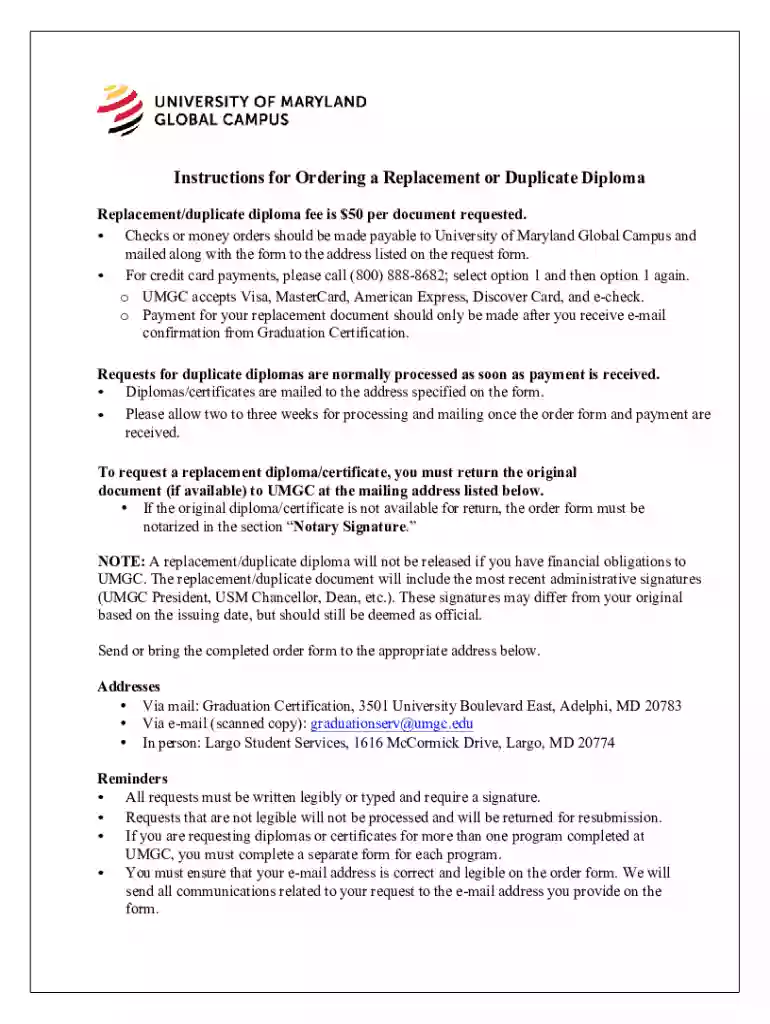
The "Diploma Issue and Replacement (Duplicate Diploma Request" is a formal process that allows individuals to obtain a replacement for their original diploma. This process is typically necessary in cases where an original diploma is lost, damaged, or destroyed. The request ensures that a duplicate copy is issued, maintaining the integrity and legitimacy of the document. Replacement diplomas are often required for professional applications, continued education, or as personal records.
To utilize this form, individuals need to accurately complete the required fields with personal and institutional information. This generally includes the applicant's name, contact details, educational institution, and specific program or degree received. The form facilitates the communication with the issuing authority, ensuring that the request for a duplicate diploma is properly processed and tracked.
Understanding the terms related to the diploma replacement process helps clarify the requirements and expectations:
Different states may have varying guidelines regarding the issuance of duplicate diplomas:
To ensure a smooth application process, applicants should prepare the following documents:
The duplicate diploma holds the same legal standing as the original document. This validation allows individuals to use it for:
Submitting the diploma request form can be done through several methods, each offering its conveniences:
Each of these methods may have distinct timelines and requirements for documents, so it is essential to verify with the specific institution.
We've got more versions of the Diploma Issue and Replacement (Duplicate Diploma Request form. Select the right Diploma Issue and Replacement (Duplicate Diploma Request version from the list and start editing it straight away!
At DocHub, your data security is our priority. We follow HIPAA, SOC2, GDPR, and other standards, so you can work on your documents with confidence.


